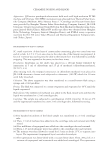
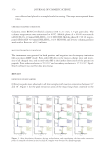
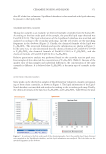
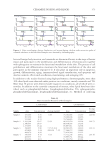
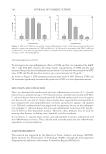
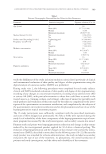
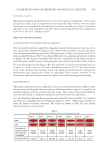
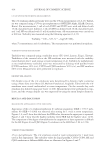
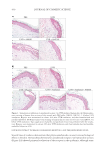
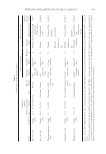
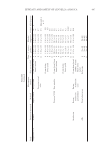
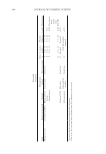
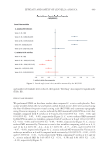
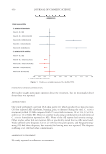
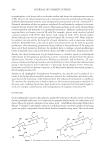
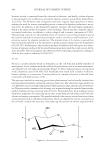
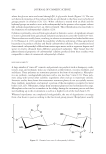
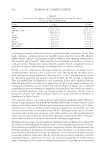
JOURNAL OF COSMETIC SCIENCE 372 areas of the fi rst-order extraction peaks of the major ceramides in the volunteer blood sample. In the four blood samples, C20H39NO3 and C42H85NO3 showed good and stable concentrations (Table II). Therefore, we believe that C20H39NO3 and C42H85NO3 are the main types of ceramide present in the blood. DISCUSSION The skin plays an important role in protection and defense as the fi rst physiological bar- rier of the human body (13). Lipid components play an important role in the skin barrier and cooperate to maintain the health of the epidermis. Triglycerides (TG) mainly store and provide energy, phospholipids are the main components of biofi lms to prevent water Figure 3 . According to the matching identifi cation information in the LipidSearch database, the structure and information of the corresponding compound can be found in the LIPID MAPS. Table I M a jor Long-Chain Ceramides Measured in the Epidermis Sample C42H85NO3 Area Concentration Average (ng/ml) Sample 1 13,718,882 34.25 33.63 13,254,807 32.91 13,538,412 33.73 Sample 2 11,638,420 28.22 27.59 11,503,732 27.83 11,123,588 26.72 Sample 3 17,879,947 43.09 43.06 17,690,822 42.70 18,031,713 43.40 Sample 4 8,222,066 23.34 22.78 7,765,799 22.40 7,856,601 22.59

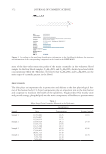
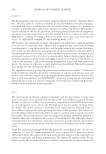
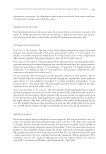
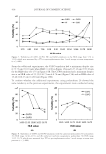
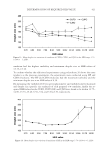
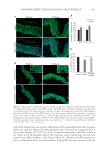
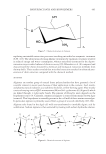
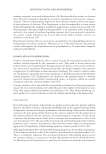
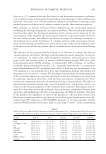
CERAMIDE IN SKIN AND BLOOD 373 loss and foreign body invasion, and ceramides are the main effectors in the stage of barrier repair and participate in the proliferation and differentiation of keratinocytes together with sphingosine to maintain the functional metabolism of the skin. The process of cell proliferation and differentiation maintains the functional metabolism of the skin and participates in the immune response (14). It also plays an important role in apoptosis, growth, differentiation, aging, immune-related signal transduction, and apoptosis and also has cosmetic effects such as adhesion, moisturizing, and antiaging (15). In addition to the results obtained using high-performance chromatography, more than 300 other lipids were detected under positive ion conditions, mainly ceramide and TG. More than 30 species were detected under negative ion conditions, all of which were ce- ramides. In addition to the ceramide compounds of interest, other lipids have been iden- tifi ed, such as phosphatidylcholine, lysophosphatidylcholine, TG, sphingomyelin, phosphatidylethanolamine, lysophosphatidylethanolamine, etc. Methods of collecting Figure 4. After centrifuging, drying, dissolution, and recentrifuging, the fi rst-order extraction peaks of ceramide subclasses in the four blood samples were obtained by chromatography. Table II Major Ceramides Measured in Blood Samples Sample C20H39NO3 C42H85NO3 Area Concentration Average (ng/ml) Area Concentration Average (ng/ml) Sample 1 481,000 5.76 6.05 75,182,885 212.59 220.99 507,350 6.06 79,309,046 224.56 531,062 6.33 79,746,893 225.83 Sample 2 1,293,308 15.07 15.52 86,415,078 245.18 246.73 1,380,635 16.07 88,538,303 251.34 1,325,935 15.44 85,897,911 243.68 Sample 3 498,855 5.96 7.17 (5.38 × 200/150 = 7.17) 80,564,935 228.20 220.13 435,820 5.24 77,344,272 218.86 408,079 4.92 75,436,264 213.32 Sample 4 540,450 6.44 6.13 73,712,246 208.32 203.46 493,675 5.9 70,995,731 200.44 505,256 6.04 7,1,401,759 201.62
Purchased for the exclusive use of nofirst nolast (unknown)
From: SCC Media Library & Resource Center (library.scconline.org)