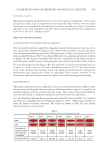
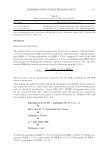
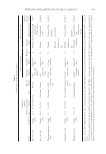
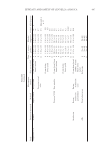
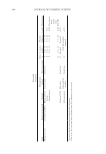
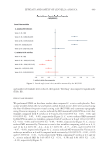
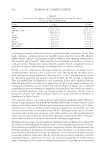
JOURNAL OF COSMETIC SCIENCE 492 to a strong gel network, and a great resistance to penetration and compression. On the other hand, emulsions containing natural or modifi ed polysaccharides (carob, HE cellulose, HPM cellulose, HP guar, and xanthan) displayed different shear thinning characteristics, low viscosity, and G′ and G″ values and were less structured as behaving as viscous or weak gel systems. Among these polysaccharides, xanthan showed a singular behavior, in particular in terms of shear thinning and deformability it confers to emulsion. Kettler et al. (61), characterized rheological properties of emulsions containing C10–C30 acrylate polymeric thickener (close to polyacrylic acid). They found that the physical net- work built up by acrylate polymers in the range of 0.1–1 wt% was the dominant factor for rheological properties and increases both the moduli and the viscosity of emulsions. They also showed that oil droplets size and distribution do not affect emulsion elasticity when the polyacrylate concentration is higher than 0.1 wt%. Concerning emulsions con- taining polysaccharides, very few studies deal with the impact of droplet size or chemical composition on textural or rheological properties of the emulsions most results are related to much simplifi ed emulsions, with very limited number of ingredients (62,63), and not necessarily cosmetic ones. The rheological behavior of various polymers in emulsions is highlighted in Tables I and II. Nano-emulsions and p rocessing challenges. Future directions fo r emulsions include the poten- tial use of nano-emulsions which would potentially yield benefi ts in terms of optical clarity and potential enhancement of skin stratum corneum penetration of various actives. Nano- emulsions are a form of emulsion whose formation, properties, and stability are well discussed and reviewed in two publications (64,65). Although several articles on nano- emulsions indicate that nano-emulsions can be stable even by years, the small droplet size makes nano-emulsions break by the Ostwald ripening mechanism (66–68) in time peri- ods too short so that to constitute a limitation for developing applications. Emulsifi cation proce ssing can pose signifi cant challenges. Kim and Mason (55) conclusively state that it is still challenging to formulate and to tailor emulsifi cation processes for large- scale production of emulsions having desired compositions, droplet sizes distributions, and rheological properties. Formulators still regularly design emulsions and emulsifi cation pro- cesses for particular applications based on modifying a set of compositional parameters and processing conditions empirically, often by trial-and-error or iterative approaches, until the resulting emulsion composition, structure, and rheological properties are within desired ranges. Although a lack of control over droplet polydispersity is typically one reason for the Table II Viscoelasticity Data (Means ± SD) Obtained from the Strain and Time Sweep Tests for the Nine O/W Emulsions Product G′ (Pa) G″ (Pa) PAA 1,841.0 ± 15.0 335.8 ± 3.4 AADMT–co-VP 1,268.7 ± 43.3 263.1 ± 10.1 PA 668.0 ± 13.2 161.1 ± 3.3 Control 84.3 ± 1.6 31.0 ± 0.5 Xanthan 62.6 ± 0.3 17.6 ± 0.1 Carob 58.9 ± 0.0 51.3 ± 0.1 HP guar 56.5 ± 0.9 35.0 ± 0.4 HPM cellulose 48.6 ± 0.3 27.2 ± 0.4 HE cellulose 46.6 ± 0.3 36.2 ± 0.4

RHEOLOGY OF COSMETIC PRODUCTS 493 persistence of empirical formulation approaches, other factors, such as the possibility of at- tractive interactions between droplets, can also be important in some cases. Although much progress has been made, there is still considerable room for improvement in the develop- ment of predictive tools for the design and formulation of emulsions, and no single theory or simulation yet describes emulsion rheology over the very broad range of possibilities of compositions and fl ow histories of these interesting systems. CONCLUSION The colloidal and complex fl uid properties are critical in optimizing the performance of cosmetic products. In this review, it was described how the microstructural properties of various materials used in the formulation of cosmetic products affect and infl uence the rheological performance of the formulations. A deep understanding of rheology and fac- tors that infl uence and govern it as well as its properties and the vast applications of rheology in the cosmetic industry is key in establishing structure–property–performance linkages. This is critical to the engineering and formulation of novel cosmetic products. As the new trends in cosmetics are moving toward increased personalization of cosmetic products and sustainability (69), a profound knowledge of rheology is an important skill that should be harnessed in ensuring that consumer needs are satisfi ed at all times. The future direction of complex fl uids used in cosmetic products is the utilization of bio- ingredients such as bio-surfactants (19,70), and biopolymers (71) as well as the utiliza- tion of an automated formulation platform which makes it possible to vary the formulation composition of each sample simultaneously thereby saving time and cost (72). The mass introduction of automated formulation into the cosmetic industry (production line) will be benefi cial to formulation and postformulation processes in the industry because it en- ables its operator to perform complex formulations simultaneously as customized opera- tions for consumers. REFERENCES (1) F. Begum, L. Xu, and S. Amin, “Surfactants,” in Kirk-Othmer Encyclopaedia of Chemical Technology, Wiley Online Library, Hoboken, NJ (2000), pp. 1–34. (2) R. J. Underwood, The tribological effects of contamination in rolling element bearings (Doctoral dis- sertation, Imperial College London, 2008). (3) N. Gitis and R. Sivamani, Tribometrology of skin, Tribol. Trans., 47(4), 1–9 (2004). (4) J. K. Prall, Instrumental evaluation of the effects of cosmetic products on skin surfaces with particular reference to smoothness, J. Soc. Cosmet. Chem., 24, 693–707 (1973). (5) M. Lodén, H. Olsson, L. Skare, T. Axéll, and A. H. Ab, Instrumental and sensory evaluation of the frictional response of the skin following a single application of fi ve moisturizing creams, J. Soc. Cosmet. Chem., 43, 13–20 (1992). ( 6) E. L. Cussler, S. J. Zlotnick, and M. C. Shaw, Texture perceived with the fi ngers, Percept. Psychophys., 21(6), 504–512 (1977). ( 7) S. Nacht, J. A. Close, D. Yeung, and E. H. Gans, Skin friction coeffi cient: changes induced by skin hydration and emollient application and correlation with perceived skin feel, J. Soc. Cosmet. Chem., 32(2), 55–65 (1981). ( 8) A. R. Davies and S. Amin, Microstructure design of CTAC: FA and BTAC: FA lamellar gels for opti- mized rheological performance utilizing automated formulation platform, Int. J. Cosmet. Sci., 42(3), 259–269 (2020). ( 9) Y. Zhou, S. Harne, and S. Amin, Optimization of the surface activity of biosurfactant-surfactant mix- tures, J. Cosmet. Sci., 70(3), 127–136 (2019).
Purchased for the exclusive use of nofirst nolast (unknown)
From: SCC Media Library & Resource Center (library.scconline.org)