732 Address all correspondence to Lyndsay Leal, lmleal@dow.com Enhanced Natural Oil Deposition Using Acrylic Copolymers LYNDSAY LEAL, MICHAELEEN PACHOLSKI, BETH JOHNSON, JENNIFER KOENIG, SHANNON GOLDEN AND LU BAI The Dow Chemical Company, Collegeville, Pennsylvania, USA (L.L., M.P., J.K.) The Dow Chemical Company, Midland, Michigan, USA (B.J., S.G., L.B.) Synopsis Natural oils have become increasingly prevalent in hair care products over the past decade and continue to gain traction in the market. While analytical methods exist in the field to understand the deposition and mechanism of action for silicone emulsions, which are chemically distinct from hair fibers, the visualization of natural oils on the hair surface has been an analytical challenge. In this work we showcase a new class of oil-soluble acrylic copolymers that structure coconut oil and enhance the deposition of the active onto the hair fibers. Additionally, we highlight the use of secondary ion mass spectrometry and depth profiling of the hair fibers to visualize the deposition of structure oils onto the hair surface. Lastly, we explore the utility of these structured oils in hair conditioning applications. INTRODUCTION In recent years, coconut oil has been a very popular ingredient in personal care formulations. This triglyceride oil is extracted from the coconut palm (Cocos nucifera) and is a source of long-chain saturated fatty acids (1). Over the past decade, the use of coconut oil in hair care products has grown in popularity across big and small labels all around the globe (2). Coconut oil has been shown to reduce hair damage when used as a prewash conditioner to improve the appearance of bleached, damaged hair (3). Data also show coconut oil outperformed sunflower oil and mineral oil, and coconut oil was the only oil that reduced protein loss due to excessive brushing and combing (4). As this natural oil becomes increasingly popular in shampoos and rinse-off conditioners, the need to efficiently deposit this material on the hair fiber is important. While cationic deposition aid technologies can be used to increase the deposition efficiency of the emulsified oils (5), we hypothesized that structured oil would have greater persistence on the hair surface. To this end, oil-soluble acrylic copolymers that can swell in the presence of natural oils were developed to provide structuring and increased viscosity of the oil phase (Figure 1). These polymers contain a lightly cross-linked hydrophobic acrylic backbone that is compatible with triglyceride oils. Once dispersed in the oil, the polymer swells and provides viscosity through a space-filling mechanism. Excellent thickening efficiency and J. Cosmet. Sci., 72, 732–740 (November/December 2021)

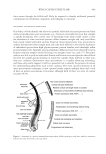
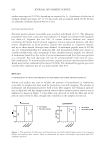
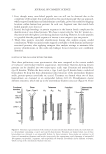
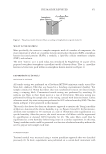
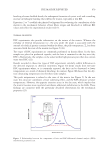
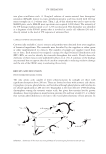
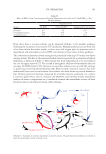
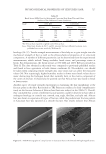
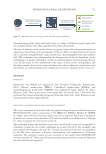
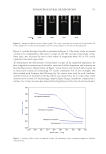
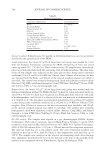
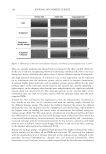
733 ENHANCED NATURAL OIL DEPOSITION shear-thinning profiles along with high clarity in a range of different natural triglyceride oils and their blends with other ingredients have been observed (6). The way oil deposits on the surface of hair can greatly impact the consumer perception in slipperiness, smoothness, and overall quality of the hair fibers (7). Quantification of natural oils is relatively straightforward using standard gas chromatography–mass spectrometry (GC–MS) techniques, but understanding the homogeneity of the oil deposition can be challenging to visualize, although it can have a profound impact on friction along the hair tress. In this study, we have demonstrated the utility of these acrylic cross-polymers and the improvements observed in coconut oil deposition, and we showcase visualization tools that further our understanding of the codeposition of acrylic copolymer with coconut oil. METHODS MATERIALS Methacrylic acid (MAA) was supplied by Dow Chemical (Collegeville, Pennsylvania, USA). Isobutyl methacrylate (IBMA), 2-ethylhexyl methacrylate (EHMA), and trimethylolpropane diallyl ether (TMPDE) were supplied by Sigma Aldrich (St. Louis, Missouri, USA). Three gram tresses of European hair, 8 hour bleached, 1 inch wide, was purchased from International Hair Importers (Glendale, New York, USA). Refined coconut oil was purchased from Sigma Aldrich. STRUCTURED OIL PREPARATION AND HAIR TRESS TREATMENT The acrylic copolymer used in this study was prepared using the process detailed in patent WO2020092032A1 with a composition of 79.5 IBMA/19.5 EHMA/1 MAA/0.10 TMPDE by weight. Latex emulsion was spray-dried and used as prepared. Spray-dried copolymers powders and coconut oil were heated to 50°C and mixed with an overhead mixer at 500 rpm for 1 hour to prepare the structured coconut oil. The prewashed 8 hour bleached hair tresses were treated with coconut oil (as supplied) or structured coconut oil (2% acrylic copolymers in coconut oil), left to dry overnight, and then washed with shampoo the next day. Coconut oil retained on the hair was quantified by GC–MS after extraction in hexanes, derivatization, and comparison to calibration standards. The extracted coconut oil was converted to the methyl esters (KOH/MeOH) and quantified by GC–MS using calibration standards prepared from coconut oil following the same derivatization protocol. Natural triglyceride oils (e.g., coconut oil) or natural oil- containing blends Spray-dried powder Structured/thickened oil Use thickened oil as-is (conditioning hair oil) Or emulsify into rinse- off conditioner Oil deposition Benefits from oil (conditioning) Oil wasted Greasiness Figure 1. Mechanism for structuring natural oils with acrylic copolymers.
Purchased for the exclusive use of nofirst nolast (unknown)
From: SCC Media Library & Resource Center (library.scconline.org)