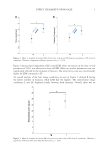
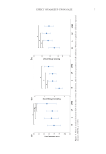
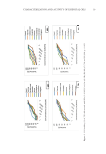
11 EFFECT OF MAKEUP UPON GAZE visible imperfections on the skin, and foundation application may have helped to distract from them (14). Although images in this study featured women of different skin types (skin types II–IV), there are opportunities to expand the concept of perceived skin health through analysis across different ethnicities (e.g., African versus Caucasian skin) and also on male participants, as makeup application continues to grow in this area. In terms of perceived age, results from this study did not show any significant shift under varying makeup conditions panelists with bare skin were perceived to be of very similar age as those with all makeup products applied. These results challenge some findings from existing studies that the application of makeup can cause a person’s face to look younger (1). However, this outcome could be explained by the insights reported by Fink et al., which showed that the age perception of women was more affected by skin surface topography (e.g., fine lines or wrinkles) than by changes in skin color distribution (11). The effect of makeup on age perception has been shown to be age-dependent, as it has been previously reported that women in their 40s to 50s look younger with makeup applied, and women in their 20s look older, while makeup does not affect age perception of women in their 30s. It is noteworthy to add that these makeup conditions were created with the support of a makeup artist and a greater variety of products were applied, such as blush, eyeliner, eye shadow, and lip-liner, and could therefore account for significant differences versus our findings (15). Figure 10. Example of a scene with four different conditions displayed: (A) LF (B) LFM (C) LF with mask and (D) LFM with mask.

12 JOURNAL OF COSMETIC SCIENCE Our investigation, despite uncovering new insights about the additive effect of makeup on gaze and attraction, suffers from some limitations. First, the limited sample of viewers warrants investigation with bigger panels, although some of the findings (e.g., mascara boosting effect) could be replicated with a distinct viewing panel under two different conditions: with facial masks on and without masks. The stimuli used in this study being static, and more sophisticated methodologies using video or live eye-tracking, would further confirm the boosting effect upon gaze imparted by makeup. Lastly, the study was conducted with a selection of makeup, and care must be taken when extrapolating results for other makeup products/brands, although a similar effect can be expected with regard to color contrast, evening out of the skin, or enhancement of lashes’ appearance. It would be of value to also expand on other makeup products, for instance eyebrow pencils, although their use is not as widespread as mascara. Among other factors of interest worth investigating would be the impact of makeup finishes (e.g., satin, matte). Going forward, thoughts also turn to the idea of combining physiological measurements, such as heart rate, galvanic skin response, or pupillometry with eye-behavioral measurements, to further cement the links between gaze and perception to attractivity (16). CONCLUSION Our findings indicate that combined makeup product application (lipstick, foundation, mascara) may have a positive, incremental effect on gaze and perceived attraction versus bare skin (no makeup) or application of a stand-alone makeup product. This incremental effect may help to demonstrate the value of applying multiple makeup products to consumers and, in parallel, encourage postpandemic makeup product sales. Lipstick and mascara products were found to have the greatest “eye-catching” effect, with application of foundation showing the greatest impact on perceived health. However, no differences in terms of perceived age were observed in the present study. A rise in the need for consumers to look more attractive post–COVID-19 will likely see the comeback of daily multistep makeup routines, which have recently been neglected. The “boosting” effect of mascara may, however, also be observed when a face mask is worn. ACKNOWLEDGMENTS The authors would like to thank Eurofins Dermscan for the acquisition of the images under various makeup conditions. The authors would also like to thank Céline Marque and Marcos Bezerra for their contribution in reviewing this article and providing valuable input. REFERENCES (1) A. Porcheron, E. Mauger, and R. Russell, Aspects of facial contrast decrease with age and are cues for age perception. PLoS One, 8(3), e57985 (2013). (2) I. D. Stephen and A. M. McKeegan, Lip colour affects perceived sex typicality and attractiveness of human faces. Perception, 39(8), 1104–1110 (2010). (3) D. G. Kwart, T. Foulsham, and A. Kingstone, Age and beauty are in the eye of the beholder. Perception, 41(8), 925–938 (2012).
Purchased for the exclusive use of nofirst nolast (unknown)
From: SCC Media Library & Resource Center (library.scconline.org)