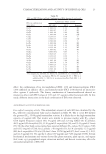
56 JOURNAL OF COSMETIC SCIENCE product must at least not be inferior to that achieved by the reference product: 60% (v/v) propan-2-ol. Both the reference product and ABHS F#8 had a reduction factor of 2.88 logs (Table VI). To evaluate the noninferiority of the test product, the Hodges–Lehmann upper one-sided 97.5% confidence limit for the difference in log reductions between the reference product and test product must be under 0.6 log units (14). As the value obtained was 0.31 log units, one can conclude that ABHS F#8 is noninferior to the reference product. ABHS F#8 has been proven to have antimicrobial efficacy, as it complies with the European standards EN 13727, EN 13624, EN 14476, and EN 1500. Ethanol antimicrobial mechanism of action consists of the denaturation of proteins, leading to damages in the microorganism’s membranes and in virus envelopes (47,48). This mechanism is supported by the observation that mixtures of ethanol and water are more bactericidal than absolute ethanol, because proteins are denatured more quickly in the presence of water (47). The efficacy of ethanol in ABHS can be reduced by the other ingredients (emollients, emulsifiers, and others) incorporated in the ABHS formulation (4). This was not the case with ABHS F#8, which can provide dermoprotection for the user’s hands and still have antimicrobial efficacy. FORMULATION SAFETY In vitro irritation. It is very important to note the potential of ABHS to induce skin irritation (hazards), because they are directly applied to the skin several times per day (49). According to the United Nations, “skin irritation” refers to reversible damage to the skin following the application of a substance for up to 4 hours (50). In the European Union, skin irritation Table V CFU/mL of the Initial Microorganisms’ Suspensions and the Suspensions After 15 Seconds of Contact with ABHS F#8, at Different Concentrations, and the Respective Logarithmic Reductions Test microorganisms Initial suspension (CFU/mL) ABHS F#8 at 80% (v/v) ABHS F#8 at 8% (v/v) ABHS F#8 at 0.08% (v/v) CFU/mL Log reduction CFU/mL Log reduction CFU/mL Log reduction S aureus 3.21 × 10⁷ 1.40 × 10² 5 3.30 × 10⁴ 3 3.30 × 10⁴ 3 P aeruginosa 2.99 × 10⁷ 1.40 × 10² 5 3.30 × 10⁴ 3 3.30 × 10⁴ 3 E hirae 3.10 × 10⁷ 1.40 × 10² 5 3.30 × 10⁴ 4 3.30 × 10⁴ 4 E coli 2.85 × 07 1.40 × 10² 5 3.30 × 10⁴ 3 3.30 × 10⁴ 3 C albicans 3.21 × 10⁶ 1.40 × 10² 4 3.30 × 10⁴ 2 3.30 × 10⁴ 2 Table VI Cellular Log Cycles (Mean ± SD) of Initial and Final Values and Their Difference for the Reference and Test Products 60% (v/v) propan-2-ol (reference product) ABHS F#8 (test product) Hodges–Lehmann upper one-sided 97.5% confidence limit Log prevalues 6.11 ± 0.49 6.12 ± 0.35 N/Aa Log postvalues 3.23 ± 0.62 3.25 ± 0.75 N/A Log difference 2.88 ± 0.69 2.88 ± 0.74 0.31 a Different letters (a, b) under the column drying time indicate statistically significant differences (p 0.05) determined by the post hoc Duncan’s Multiple Range test.

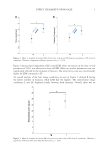
57 MULTIDISCIPLINARY PROCESS OF HAND SANITIZER in vitro is determined by the standard procedure OECD TG 439, which describes topical exposure of the neat test chemical to an RhE model, followed by a cell viability test (16). Before assessing the RhE viability, the authors evaluated whether ABHS F#8 interfered with the MTT detection method through direct reduction. The formulation does not convert MTT to formazan salts. Therefore, no specific correction procedures were needed for this study. Results for the in vitro skin irritation test using the RhE EpiDerm™ (EPI- 200-SIT, MatTek Corporation, Ashland, United States) model are shown in Figure 3. The results obtained were in accordance with the OECD TG 439 test acceptance criteria: the negative control OD was between 1.0 and 2.8 (2.043), the positive control tissue viability was below 20% (13.93%), and the study substance SD was not higher than 18% (8.37%) (16), validating this experiment. ABHS F#8 showed a higher viability than the positive control and exceeded the threshold of 50% to be considered a nonirritant substance (Figure 3). This result is consistent with other studies, where ABHS formulations caused little or no skin irritation (39,40,51). Ex vivo topical applications. To complement the in vitro results, the authors performed an ex vivo experiment to assess possible toxicological effects of the formulation. Although in vitro skin models have proven useful in toxicity studies and were adopted in several OECD guidelines, they are not exact copies of the 3D organization of human skin in vivo (52). Human ex vivo skin is the current experimental model that most closely matches in vivo conditions for safely and effectively testing substances, without using animal testing (53). Figure 4 shows the histological analysis of human skin before (A) and after (B) ABHS F#8 was topically applied twice a day for 3 days, using conventional hematoxylin &eosin staining. In both images, normal dermis characteristics are observed. It can therefore be concluded that the epidermis and dermis are unaffected by several applications of ABHS F#8. These results are consistent with the in vitro irritation test and other studies verifying that ABHS do not have toxic effects on the skin and are safe to use (54,55). Figure 3. Mean (+SD) values obtained for tissue viability of the reference substance negative control, ABHS F#8, and reference substance positive control.
Purchased for the exclusive use of nofirst nolast (unknown)
From: SCC Media Library & Resource Center (library.scconline.org)