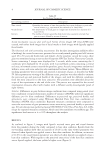
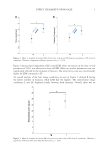
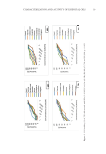
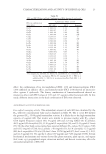
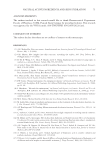
50 JOURNAL OF COSMETIC SCIENCE membrane and resealing the intracellular contents (2). Therefore, formulations with 70% (v/v) alcohol were the first to be developed, because this is an average concentration. Ethanol was the alcohol that was chosen, because it is the least irritating to the skin (2) compared with the other ones that are frequently used, such as isopropanol and n-propanol. Addition of emulsifier. ABHS usually contain emulsifiers to thicken the solution and prevent ingredient separation (18). To evaluate the best emulsifier, two formulations, F#1 and F#2, were made with PEG-40 hydrogenated castor oil, PEG-7 glyceryl cocoate, and polyacrylate crosspolymer-6. They were tested for their impacts on skin parameters and sensorial evaluation. PEGs are composed of polyether compound repeating ethylene glycol units according to the constituent monomer or parent molecule (19). In cosmetic formulations, PEG-40 hydrogenated castor oil is obtained via Rincinus communis plant seeds by cold pressing and is used as a nonionic solubilizer and emulsifying agent (19). PEG-7 glyceryl cocoate is used as a skin-conditioning agent, emollient, surfactant, and nonionic emulsifying agent and is produced from coconut oil fatty acids (20). Polyacrylate crosspolymer-6 is a polymer with a high molecular weight that is biodegradable and nonmicroplastic. When used in cosmetic formulations, it creates a film over the skin that prevents water loss (21,22). Both F#1 and F#2 significantly increased skin hydration and decreased skin TEWL and pH (Table III). However, F#1 led to a more significant increase in skin hydration than F#2, although they had the same concentrations of humectants and emollients (Figure 1). This may be explained by the fact that PEG-7 glyceryl cocoate, aside from being an emulsifier, also has emollient proprieties and creates a barrier at the skin’s surface that increases moisture retention (20). Hydration was assessed with a Corneometer® CM 825 probe (Courage and Khazaka, Cologne, Germany), which measures the electric capacity and the conductance of the skin’s surface—properties that relate to the skin’s water content. A higher water content in the skin Table II Compositions of Tested ABHS Formulations Formulations Disinfectant agents (%v/v) Emulsifiers (%w/w) Emollients (%w/w) Humectants (%w/w) Others (%w/w) F#1 70% ethanol 0.5% PEG-40 hydrogenated castor oil and 2% PEG-7 glyceryl cocoate 0.2% squalane 0.1% glycerin water F#2 70% ethanol 0.1% polyacrylate crosspolymer-6 0.2% squalane 0.1% glycerin water F#3 70% ethanol 0.2% polyacrylate crosspolymer-6 0.2% squalane 0.2% glycerin water F#4 70% ethanol 0.2% polyacrylate crosspolymer-6 0.2% squalane 0.4% glycerin water F#5 70% ethanol 0.2% polyacrylate crosspolymer-6 0.2% squalane 0.6% glycerin water F#6 75% ethanol 0.2% polyacrylate crosspolymer-6 0.2% squalane 0.2% glycerin water F#7 80% ethanol 0.2% polyacrylate crosspolymer-6 0.2% squalane 0.2% glycerin water F#8 80% ethanol 0.05% polyacrylate crosspolymer-6 0.4% hemisqualane 0.2% glycerin water and 0.2% cetyl alcohol

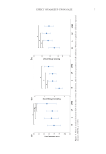
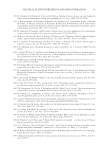
51 MULTIDISCIPLINARY PROCESS OF HAND SANITIZER Figure 1. Fold change in hydration and TEWL and pH value after the application of different ABHS prototypes (A.1 to C.3) and the final formulation F#8 compared to the benchmark (D.1 to D.3). *p 0.05 **p 0.01 ***p 0.001 NS means there were no significant differences (p 0.05).
Purchased for the exclusive use of nofirst nolast (unknown)
From: SCC Media Library & Resource Center (library.scconline.org)