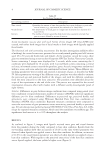
46 JOURNAL OF COSMETIC SCIENCE The formulations were prepared by slowly mixing distilled water with the emulsifier until a homogeneous mixture was formed. Then, the emollient and humectant were mixed in. Finally, the ethanol was added, and the formulation was vigorously mixed until it was homogeneous. The benchmark used in this study was Sterillium (BODE Chemie GmbH, Hamburg, Germany). MEASUREMENT OF SKIN PARAMETERS Volunteers were recruited to test the formulations’ impacts on the skin. Volunteers were healthy women between the ages of 25 and 35, with no skin diseases and clear skin on the investigation site (for example, no scars, tattoos, long hair, etc.). They were asked to not apply any cosmetic or skin-care products to their hands during the 12-hour period before the measurement. All volunteers consented to participate by signing a clinical trial agreement, after receiving a detailed explanation of the purpose and contents of the study. This project was validated by the university’s Commission of Ethics for Health before its execution. Additionally, the team members proceeding with the trials were certified with the International Council for Harmonization of Technical Requirements for Pharmaceuticals for Human Use good clinical practice E6 (R2) recognized by the Global Health Training Centre. Skin measurements were performed before and after the application of the different hand sanitizers. Measurements were performed using a Multi Probe Adapter MPA 6 (Courage and Khazaka, Cologne, Germany) coupled with different probes: the Corneometer® CM 825 probe was used to measure skin hydration, the Tewameter® TM Hex probe measured skin TEWL, and the probe Skin-pH-meter PH 905 measured pH (all probes are from Courage and Khazaka, Cologne, Germany). Before the initial measurements, the volunteers were placed and seated in a quiet, temperature- controlled room (21 ± 1°C 48 ± 8% relative humidity) for 15 minutes for acclimatization. For each hand, three measurements per probe were performed in neighboring skin sites, in the center of the back of the hand. For each probe, the measurements were performed according to the manufacturer’s instructions. Skin pH was always measured last, so that the moist part of the probe would not interfere with the hydration and TEWL measurements. After the baseline measurements, the volunteers applied 3 mL of hand sanitizer and spread it evenly in both hands. The hand sanitizer application was performed 3 times with 10-minute intervals between applications. Finally, the volunteers waited 30 minutes to ensure that the product was absorbed, and the skin parameters were measured again, as previously described. The different hand sanitizers were evaluated on different days. Table I Desired Product Attributes and Corresponding Performance Tests ABHS characteristics Performance tests Functional Antimicrobial activity EN1500, EN13727, EN13624, and EN14476 Moisturizing effect Variation in skin surface hydration and TEWL was evaluated after three applications of the ABHS Safe to use OECD TG 439 and ex vivo topical applications Physical/sensorial Good spreadability Viscosity measurement and sensorial evaluation Short drying time Drying time measurement and sensorial evaluation No residue on skin after application Sensorial evaluation

47 MULTIDISCIPLINARY PROCESS OF HAND SANITIZER For each volunteer, and for each probe and each time point (before and 30 minutes after application), measurements were made in triplicate, and only the average value was considered for future data analysis. Hydration and TEWL fold change were calculated according to the following formula: fold change =(average of three applications − baseline average/baseline average) *100. VISCOSITY ANALYSIS Viscosity was measured using a Vibro Viscometer SV-10 (A&D Company, Tokyo, Japan) following the manufacturer’s instructions. Briefly, 10 mL of ABHS was placed into a polycarbonate cup that was lifted until the center of the narrow part of the sensor plates was aligned with the liquid surface. Viscosity was measured until a stable value was obtained. DRYING TIME MEASUREMENTS To measure the formulations’ drying time, six volunteers performed hand rubbing according to the WHO’s “How to Hand Rub” technique using 1.5 mL of formulation (10). The drying time was recorded with a stopwatch from the moment the volunteer began to rub to when the person indicated that her/his hands felt dry. This was performed twice for each formulation on different days, and only the average of both measurements was considered for statistical analysis. All formulations were tested by the same six volunteers. SENSORY CHARACTERISTICS EVALUATION Small-scale consumer evaluations were performed with the volunteers that participated in the skin parameter measurements. After the first application, volunteers evaluated the following attributes: formulation texture (how pleasant the product felt between the fingers), spreadability (ease of distributing the product over the skin), drying time (how fast the product dried in the skin), afterfeel (how soft and smooth the skin felt), and overall opinion of the product. These attributes were classified on a scale of 1 to 9 (1 was extremely dislike 5 was indifferent and 9 was extremely like). The formulations were evaluated on different days and kept in an uncharacterized container. For the final formulation, a consumer evaluation was performed in a hospital in the Oporto region. For 3 days, the benchmark was replaced by the formulation developed in this study and the workers were given access to an online questionnaire, via a QR code, to evaluate the new ABHS. The questionnaire asked the hospital workers to evaluate the same attributes previously described (same scale) and to compare the new ABHS to the benchmark that is usually used in the hospital, on a scale of 1 to 5 (1 was much worse 3 was equal and 5 was much better). Answering the questionnaire was done anonymously and was optional. PRODUCT ANTIMICROBIAL EFFICACY The ABHS bactericidal and yeasticidal efficacy were evaluated, respectively, according to EN 13727 (11) and EN 13624 (12), using the dilution–neutralization method. In short, ABHS at concentrations of 80% (v/v), 8% (v/v), and 0.08% (v/v), after dilution in distilled water, was added to microbial suspensions in the presence of a solution with an interfering
Purchased for the exclusive use of nofirst nolast (unknown)
From: SCC Media Library & Resource Center (library.scconline.org)