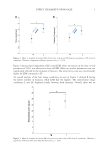
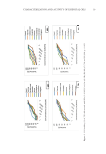
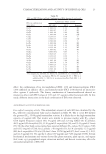
58 JOURNAL OF COSMETIC SCIENCE CONSUMER EVALUATION Traditionally, products’ sensorial characteristics have been evaluated by a group of trained assessors who objectively give a quantitative description (29). This approach provides reliable and consistent results, but it also has the drawback of being very time-consuming (56). Additionally, according to Worch et al. (57), the use of untrained consumers is a good alternative to the classical sensory profile provided by a trained panel. Furthermore, understanding how consumers interact with products in real-life situations is beneficial. because it allows the identification of innovation opportunities and the assessment as to whether the product under evaluation delivers its promises and outperforms benchmarks (58). For this reason, the consumer evaluation of the final ABHS formulation was performed in a local hospital. ABHS F#8 was available for 3 days instead of the benchmark, and the hospital workers were free to use and evaluate the formulation by answering an online questionnaire. In total, 59 nurses participated in this evaluation. A total of 83% were female and 17% were male, with a large range of ages: 8% were 18 to 25, 34% were 26 to 35, 34% were 36 to 45, 19% were 46 to 55, and 5% were 56 to 65. The four sensorial attributes evaluated (texture, spreadability, drying time, and afterfeel) and the overall product opinion had the same rounded average value: a 7. (On a scale of 1–9, this corresponds to “moderately like.”) When comparing ABHS F#8 to the benchmark, the sensorial attributes had a rounded average value of 4, on a scale of 1 to 5 this indicates it is better than the benchmark. Considering this extremely positive evaluation of ABHS F#8 by consumers, and the fact that it possesses all of the attributes listed in Table I, no further alterations were deemed necessary. Figure 4. Histological sections of ex vivo human skin control (A) and after topical application of ABHS F#8 (B).

59 MULTIDISCIPLINARY PROCESS OF HAND SANITIZER CONCLUSION Developing multi-functional formulations presents several challenges. In this case, it was difficult to stabilize the emollients’ squalane/hemisqualane in a low-viscosity solution using plant-based and eco-friendly ingredients. After several attempts (not all of which have been presented) a formulation was developed that was practical to use, because it had a short drying time for the hands and improved skin health, increased skin hydration, and reduced water loss. The final formulation also proved to be efficient and secure to use, having bactericidal, virucidal, and yeasticidal activity without introducing any kind of irritation and/or toxicity to the user’s skin. Finally, this formulation was well-accepted by consumers, because it was superior to the benchmark. ABHS F#8 is safe, effective, and sensorially pleasant, and it is ready for future commercialization. ACKNOWLEDGMENTS The authors acknowledge the financial support provided by the project HC-COVID19: Amyris Handcare COVID-19 with the reference POCI-01-02B7-FEDER-062592 funded by the Portuguese Government (AICEP). The funding agency was not involved in the study design, the data collection, the analysis and interpretation, the writing of the manuscript, or the decision to submit the article for publication. REFERENCES (1) P. L. J. M. Zeeuwen, M. Kleerebezem, H. M. Timmerman, and J. Schalkwijk, Microbiome and skin diseases, Curr. Opin. Allergy. Clin. Immunol., 13(5), 514–520 (2013). (2) J. L. J. Jing, T. Pei Yi, R. J. C. Bose, J. R. McCarthy, N. Tharmalingam, and T. Madheswaran, Hand sanitizers: a review on formulation aspects, adverse effects, and regulations, Int. J. Environ. Res. Public Health., 17(9), 3326 (2020). (3) G. A. Johnston and J. S. C. English, The alcohol hand rub: a good soap substitute? Br. J. Dermatol., 157(1), 1–3 (2007). (4) J. Marumure, Z. Makuvara, R. Alufasi, L. Chapungu, and C. Gufe, Effectiveness of hand sanitizers in the prevention of COVID-19 and related public health concerns: a review, Cogent Public Health, 9(1), 2060904 (2022). (5) E. L. Larson and H. E. Morton, “Alcohols,” in Disinfection, Sterilization and Preservation, 4th Ed. S. S. Block. Ed. (Lea and Febiger, Philadelphia, 1991), pp. 191–203. (6) J. Brooks, F. Cowdell, S. J. Ersser, and E. D. Gardiner, Skin cleansing and emolliating for older people: a quasi-experimental pilot study, Int. J. Older People Nurs., 12(3), e12145 (2017). (7) K. Nolan and E. Marmur, Moisturizers: reality and the skin benefits, Dermatol. Ther., 25(3), 229–233 (2012). (8) C. Faria-Silva, A. Ascenso, A. M. Costa, J. Marto, M. Carvalheiro, H. M. Ribeiro, and S. Simões, Feeding the skin: a new trend in food and cosmetics convergence, Trends Food Sci. Technol., 95, 21–32 (2020). (9) A. Barbulova, G. Colucci, and F. Apone, New trends in cosmetics: by-products of plant origin and their potential use as cosmetic active ingredients, Cosmetics, 2(2), 82–92 (2015). (10) World Health Organization, WHO Guidelines on Hand Hygiene in Health Care (Geneva, Switzerland: WHO 2009), accessed June 6, 2023, https://www.who.int/publications/i/item/9789241597906. (11) European Committee for Standardization, European Standard EN 13727: 2012 +A2: 2015—Chemical Disinfectants and Antiseptics—Quantitative Suspension Test for the Evaluation of Bactericidal Activity in
Purchased for the exclusive use of nofirst nolast (unknown)
From: SCC Media Library & Resource Center (library.scconline.org)