48 JOURNAL OF COSMETIC SCIENCE substance. The mixtures were conducted at 20°C ± 1°C, and the contact time was 15 seconds. After this contact time, an aliquot was removed and immediately neutralized. The number of cells recovered was determined by plate count, and the reduction was calculated considering the initial suspension log. The bactericidal tests were performed with Staphylococcus aureus (ATCC 6538), Pseudomonas aeruginosa (ATCC 15442), Enterococcus hirae (ATCC 10541), and Escherichia coli K12 (NCTC 10538). The yeasticidal test was performed with Candida albicans (ATCC 10231). Virucidal activity was verified following EN 14476 (13). In summary, the ABHS at 50% (v/v), after dilution in distilled water, was added to a suspension of Modified vaccinia virus Ankara (ATCC 1508), at 20°C ± 1°C for 30 seconds. At the end of this contact time, an aliquot was taken and immediately suppressed by diluting the samples in an ice-cold cell maintenance medium. The dilutions were transferred to wells in microtiter plates with a monolayer of BHK-21 cells (ATCC® CCL10™, American Type Culture Collection, Manassas, United States). Infectivity tests were done by quantal tests. Reduction of virus infectivity was calculated from differences of log 10 virus titers before (virus control) and after treatment with the ABHS. Finally, the ABHS hand hygiene performance was assessed in vivo according to EN 1500 (14) in 18 people. Briefly, an evaluation was performed on the number of microorganisms (E coli K12, NCTC 10538) released from the fingertips of volunteers’ hands, which were artificially contaminated, before and after hand sanitizing with the product under testing (ABHS formulation) and with a reference product (60% v/v propan-2-ol). All materials and reagents (including culture mediums, interfering substances, neutralizers, reference substances, etc.), detailed methods, and experimental conditions are described in the referenced European standards (EN 13727, EN 13624, EN 14476, and EN 1500). Additionally, the validation assay criteria and controls, as defined in each European standard, were found to be effective in all experiments, indicating validity of the presented data. IN VITRO SKIN IRRITATION TEST To test potential skin irritation, the ABHS was topically applied to a reconstructed human epidermis (RhE) model followed by a cell viability test. The authors used the commercial RhE model EpiDerm™ (EPI-200-SIT, MatTek Corporation, Ashland, United States) following the standard operating procedures of the test system provider (15). Cell viability was measured by mitochondrial dehydrogenase conversion of (3-4,5-dimethyl thiazole 2-yl)2,5- diphenyltetrazoliumbromide (MTT) into a blue formazan salt, whose OD was measured at 570 nm after extraction from tissues. According to the OECD TG 439, the test substance can be classified as nonirritant if the measured viability of epidermal cells is 50%, or it can be classified as an irritant of category 2 if the measured viability of epidermal cells is ≤50% (16). Three RhE tissues were used for each condition: test substance (ABHS F#8), negative control (phosphate buffered saline without Ca2+ and Mg2+), and positive control (5% sodium dodecyl sulphate). Data are presented as relative viability (%)calculated following OECD TG 439 (16). EX VIVO SKIN MODEL AND HISTOLOGICAL ANALYSIS An ex vivo study was performed by Genoskin (Toulouse, France) that followed all legal authorizations necessary from the French government and the appropriate ethics committee.

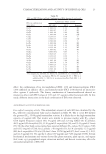
49 MULTIDISCIPLINARY PROCESS OF HAND SANITIZER Briefly, skin biopsies were embedded in a proprietary biological matrix in Transwell® (Millicell, Darmstadt, Germany) according to the patented NativeSkin® procedure developed by Genoskin (Toulouse, France), with the dermal compartment immersed in the matrix and the epidermal surface left in contact with the air. The models were cultured for up to 5 days in 12-well plates in a proprietary and chemically defined hydrocortisone- and serum-free medium in the presence of 100 µg/mL of penicillin and 100 µg/mL of streptomycin. For treatment studies, 10 µL of formulation was topically applied twice per day for a period of 3 days. After the treatment, skin specimens were fixed with 10 %(v/v) formalin, dehydrated, embedded in paraffin, and cut into 5-µm sections. Tissue sections were stained with Hematoxylin &Eosin (Bio-Optica, Milan, Italy) following routine protocols. All samples were examined under an Axio Imager. M2 microscope (Zeiss, Oberkochen, Germany), using ZEN Blue 3.2 software (also Zeiss, Oberkochen, Germany). Images were acquired using the same software settings and histograms. STATISTICAL ANALYSIS Data were statistically analyzed with the software IBM SPSS Statistics, Version 28 (IBM Corp, Armonk, United States), and normality was assessed with the Shapiro-Wilk test. For all analyses, p 0.05 was considered statistically significant. Differences between two means obtained by measuring skin parameters were evaluated using the paired student’s t-test (for normal distributed data) or the Wilcoxon signed- rank test (for non-normal distributed data). Differences between more than two means were accessed with one-way analysis of variance, followed by Duncan’s Multiple Range test (normal data) or by the Kruskal–Wallis test, and then followed by the Dunn test (non- normal data). For the European standard EN 1500, after fulfilling the norm’s validation criteria, results analysis was done with the Wilcoxon signed-rank test. RESULTS AND DISCUSSION FINAL PRODUCT DEVELOPMENT AND PROCESS DEVELOPMENT The development workflows of the formulations responding to the challenges of each process are described as follows, and each formulation composition is depicted in Table II. Base formulation development. The first step was to develop a base formulation, as the components were selected based on their source, market availability, and cost, along with the team’s experience with the ingredients’ performance. Hand sanitizers traditionally contain alcohol (the active ingredient responsible for the antimicrobial activity), viscosity enhancers, emollients, fragrances, and colorants (2,4). The list of the most important tested ABHS formulations can be found in Table II. No fragrances or colorants were added to the formulations, since they are the most common source of irritant and allergic contact dermatitis due to cosmetic use, although only a small percentage of the general population experiences a cosmetic allergy (17). The majority of effective ABHS contain an alcohol concentration of 60% (v/v) to 95% (v/v). They are capable of inactivating microbes, such as bacteria and viruses, by lysing the lipid
Purchased for the exclusive use of nofirst nolast (unknown)
From: SCC Media Library & Resource Center (library.scconline.org)