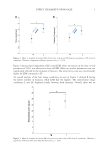
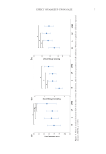
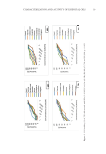
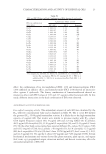
54 JOURNAL OF COSMETIC SCIENCE glycerol, was added as a humectant. This is because it helps the skin to retain moisture by attracting water, by absorption and adsorption, and by decreasing evaporation (6). Glycerin results from the hydrolysis of fats and oils that naturally exist in animals and plants (33) in this study, the glycerin used was from plant origin. Skin products, including ABHS, usually contain humectants to increase skin water content and provide relief from dryness (34). Formulations F#3, F#4, and F#5 significantly increased skin hydration and decreased skin TEWL and pH when comparing the baseline and application values (Table III). When the three formulations were compared with each other, F#5 (0.6% glycerin) significantly increased skin hydration more than the other two (Figure 1). However, once again, this was associated with a worse sensorial evaluation (Figure 2). Glycerin is considered the most effective humectant for increasing skin hydration. Still, an excessive concentration of it causes a sticky feeling on the skin (35), which is what was observed in this study. Therefore, formulations F#4 and F#5 were discarded. Improvement of drying time for hands. The short drying time for ABHS is important in hospital settings, because lack of time has been identified as a reason that health-care workers skip disinfecting their hands (36,37). Hand rubbing was timed until the volunteers felt that their hands were dry. The same set of volunteers was used for all of the tested formulations, because there was a significant correlation between hand surface area and drying time (38). Formulation F#3’s drying time was equal to the benchmark (Table IV). To try to reduce this amount of time, it was decided that the formulation viscosity would be reduced— first by increasing the ethanol concentration and then by decreasing the emulsifier amount. Increasing the ethanol led to formulations F#6 and F#7. The ethanol increments in formulations reduced the viscosity and significantly reduced drying time (Table IV). However, although the results were not statistically significant, this had a negative impact on skin hydration and TEWL (Figure 1). These results are consistent with previous studies, where the short-term use of ABHS decreased skin hydration and increased TEWL (39,40). Decrease of formulation’s viscosity with replacement of squalene by a chemically shorter compound. Formulation F#7’s viscosity was still much higher than that of the benchmark formulation and the formulations recommended by the WHO (41). Additionally, viscosity enhancers have the potential to compromise antimicrobial efficacy (4). To reduce the formulation viscosity, the authors reduced the emulsifier polyacrylate crosspolymer-6 to 0.05% (w/w). However, this reduction led to a new challenge: the squalene oil phase split out from the formulation. These difficulties are to be expected in the development of multifunctional products, as there is the need to combine incompatible ingredients into a single delivery system (42). Considering the fact that the main function of the ABHS is hand disinfection, a new emollient was tested: hemisqualane, which is also obtained from green sources or sustainable processes of production. Hemisqualane is a nonpolar C15 hydrocarbon that Table IV Viscosity and Drying Time (Mean ± SD) of Formulations F#3, F#7, and F#8, and Benchmarka Formulation Viscosity (mPa s) Drying time (seconds) F#3 89.2 26.92 ± 4.28 b F#7 56.5 22.08 ± 1.9 a F#8 5.4 22.92 ± 3.26 ab Benchmark 2.5 26.92 ± 2.79 b a Different letters (a, b) under the column drying time indicate statistically significant differences (p 0.05) determined by the post hoc Duncan’s Multiple Range test.

55 MULTIDISCIPLINARY PROCESS OF HAND SANITIZER is used in skin-care products as a nonvolatile emollient, which leaves the skin soft and smooth (43). Several formulations were tested (data not shown), but the one with 0.05% (w/w) of polyacrylate crosspolymer-6 was the one capable of incorporating 0.4% (w/w) of hemisqualane without the oil phase splitting out. Improvement of TEWL by addition of an occlusive agent. Since a reduction in the TEWL decrease was observed with formulation F#7 (Figure 1. C.2), an occlusive ingredient was added to the formulation. This compound, cetyl alcohol, is a fatty alcohol obtained from the reduction of coconut, palm, or other vegetable oil. This is because it slows down evaporation and water loss by forming a hydrophobic film on the skin’s surface (44,45). These alterations led to formulation F#8 (Table II). Formulation F#8 has a low viscosity and a short drying time (Table IV). Compared with the benchmark, F#8 has the capability to increase skin hydration, and it has a similar effect in reducing the TEWL (Table III and Figure 1). Appropriate skin hydration and intact skin barrier function are essential for maintaining healthy skin (25,46). The frequent use of ABHS can cause adverse effects such as skin dryness, pruritus, erythema, and bleeding, in severe cases. For health-care workers, these adverse effects are more common, because they must frequently cleanse their hands (2). Therefore, it is important to select an ABHS with a good balance between antimicrobial effectiveness and skin protection. As formulation F#8 has the desired sensorial characteristics (Table I), a moisturizing effect, and 80% (v/v) ethanol (therefore antimicrobial activity is expected), it was selected for final validation. ABHS PERFORMANCE TESTS Antimicrobial efficacy. The results of bactericidal and yeasticidal activity are shown in Table V, using colony-forming units (CFU)/mL. When diluted at 80% (v/v), the ABHS F#8 had a log reduction of at least 5 logs for bacteria and 4 logs for C albicans, using an interfering substance (dirty conditions) after a contact time of 15 seconds. According to the European standards EN 13727 and EN 13624, formulations displaying 5 logs of reduction for bacteria and 4 logs of reduction for yeast/fungi are considered effective (11,12). Thus, the conclusion was that the developed formulation has bactericidal and yeasticidal activity. When diluted at 8% (v/v) and 0.08% (v/v), the formulation was not active. The test for virucidal activity was done following the European standard EN 14476. ABHS F#8 was evaluated at 50% (v/v) of its concentration for 30 seconds, but it was cytotoxic against the cell line used. Therefore, following the standard indications (13), the residual virus titer was determined by the large volume plating, at a dilution of 1:10,000. The result was no residual virus out of 528 cell cultures. The number of infectious virus particles was determined by the Poisson distribution (13) and resulted in 2.75 log 10 TCID 50 (tissue culture infectious dose 50%). As the control virus titer was 9.5 log 10 TCID 50 ,the reduction factor of ABHS F#8 was 6.75 log 10 TCID 50 (9.5−2.75). According to EN 14476 (13), a disinfectant is effective in inactivating a virus if the titer is reduced by at least 4 log 10 steps within the exposure time. Thus, ABHS F#8 is considered to possess virucidal activity against enveloped viruses after an exposure time of 30 seconds. Finally, antimicrobial activity was accessed in vivo following EN 1500, and the results are presented in Table VI. This standard establishes whether a product for hand hygiene can, by friction, reduce the release of transitory microbial flora (14). For a product to be validated, the reduction of the release of the test organism (E coli) achieved with the test
Purchased for the exclusive use of nofirst nolast (unknown)
From: SCC Media Library & Resource Center (library.scconline.org)