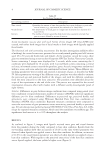
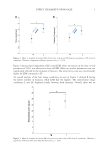
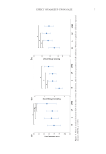
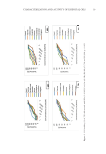
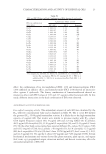
37 Silver Nanoparticles of Bee Honey or unsaturated, dimerized, or associated. However, the band under 1,026 cm−1 cannot be distinguished from C-H bending bands. PARTICLE SIZE DISTRIBUTION The average particle size was found to be 273 nm with a polydispersity index (PDI) value of 0.314 (Figure 4). Thus, the results indicate that the bee honey has been found to be capable of synthesizing silver nanoparticles. Figure 3. FTIR spectrum of the biosynthesized AgNPs–bee honey nanoparticles. Figure 4. Particle size distribution of AgNPs–bee honey nanoparticles.

38 JOURNAL OF COSMETIC SCIENCE ANTIOXIDANT ACTIVITY DPPH–free radical scavenging. The scavenging activity of bee honey and AgNPs–bee honey nanoparticles samples were measured by using DPPH assay, and BHT was used as positive control. The unpaired electron of DPPH forms a pair with a hydrogen donated by free radical scavenging antioxidant from bee honey and AgNPs–bee honey nanoparticles, thus converting the purple colored odd electron DPPH to its reduced form of yellow (13). The degree of decolorization would be measured by UV-visible spectrophotometer to determine the scavenging activity of all bee honey samples. It was found that the percentage of radical scavenging activity of BHT was higher than all bee honey samples. The percentage of radical scavenging activity of bee honey samples is lower than AgNPs–bee honey nanoparticles samples because it requires a lesser amount of radical scavenger from the bee honey to reduce DPPH. The DPPH assays confirmed significant antioxidant activity of green synthesized AgNPs, which indicates the direct role of secondary metabolites, namely, phenolic compounds, terpenoids, and so on in removing exposed radicals. DPPH radical solution, which showed a deep purple color with maximum absorbance at 517 nm, turns into yellow color when it accepts an electron. Discoloration of DPPH started after adding AgNPs–bee honey nanoparticles due to the antioxidant ability radical scavenging activity of the bee honey sample increased with concentration from 125 to 500 μg/ml in the percentage of inhibition ranging from 43% to 95% (Figure 5). The AgNPs–bee honey nanoparticles exhibited the highest percentage of radical scavenging activity of 45% even with the lowest concentration of 125 μg/ml. Nevertheless, the lowest concentration of the AgNPs–bee honey nanoparticles (125 μg/ml) exhibited the highest percentage of radical scavenging activity, which is similar to that of the 125 μg/ml bee honey sample. Nanoparticles showed excellent antioxidant activity compared with that of the bee honey sample or other medicinal plants (14). Among tested samples, the strongest reducing antioxidant power measured by the FRAP test was found to be higher for AgNPs–bee honey nanoparticles than other bee honey samples (Figure 6). Figure 5. DPPH–free radical scavenging assay of bee honey samples (A, B, and C were bee honey from longan flowers, wildflowers, and benjaphan flowers, respectively) and the AgNPs–bee honey nanoparticles (a, b, and c were bee honey nanoparticles from longan flowers, wildflowers, and benjaphan flowers, respectively) at different concentrations demonstrated the percentage of radical scavenging activity.
Purchased for the exclusive use of nofirst nolast (unknown)
From: SCC Media Library & Resource Center (library.scconline.org)