1 J. Cosmet. Sci., 74, 1–13 (January/February 2023) Address all correspondence to Cyril Messaraa, cyril.messaraa@oriflame.com Is There an Additive Effect of Makeup Upon Gaze and Perception? A Pilot Study CYRIL MESSARAA, MICHELLE MANGAN AND MICHELLE CROWE Oriflame Research and Development Ltd., Bray, Ireland (C.R., M.M., M.C.) Accepted for publication April 18, 2023. Synopsis This study explores the added value of combined makeup product application versus bare skin or stand-alone makeup products. Mascara effect upon gaze was also investigated when wearing a facial mask versus without. Front images of 20 women aged 19 to 60 years old were captured using an imaging booth under varying makeup conditions: Bare skin (B), Lipstick (L), Lipstick +Foundation (LF), and Lipstick +Foundation +Mascara (LFM). A mixed male and female panel assessed perceived age, health, and attractivity of the images while their gaze was monitored. The experiment was replicated with facial masks on LF and LFM images to assess mascara effect. Lipstick application received increased gaze and fixations versus bare skin. An incremental effect of adding other makeup products was observed, with mascara concomitant with higher perceived attraction. No differences in perceived age were observed. Foundation positively affected perceived health. Mascara effect on gaze was still observed when wearing facial masks. Lipsticks and mascaras are key makeup contributors to increased gaze on images. A positive effect of foundation on perceived health was observed. No significant difference in perceived age was observed, likely due to skin color distribution focus versus skin surface topography. INTRODUCTION Why is makeup such a popular category of product? As reported in the literature, one may assume that the use of color cosmetics, or makeup, can allow a person’s face to look younger. This is thanks to an increase in contrast between facial features (both size and color) and skin tone homogeneity, through the application of makeup products (1). Such contrasts enhance the sexual dimorphic attributes of the face (in particular, the lip and eye areas), which is in turn associated with “attractiveness” (2). Attractive, as an adjective, can be defined as “appealing to look at” or “sexually alluring.” Indeed, it can also mean “having qualities or features which arouse interest.” Typically, faces that look younger are also perceived as more attractive, and we can consider both qualities intrinsically linked (3). The perception of attraction is also linked to social representation, in that people who are considered attractive have certain advantages over less attractive people. For example, people who apply makeup are associated with greater earning potential and more prestigious jobs, in contrast to those who do not apply color products (4). Although judgmental from

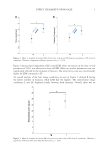
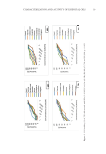
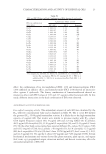
2 JOURNAL OF COSMETIC SCIENCE a societal perspective, these findings reflect the current pressure associated with beauty, further exacerbated by modern social media platforms. Some associations have already been established between eye movements and the perception of attraction. Kwart et al. demonstrated that judgment of age and attractiveness was strongly associated with a fixation on the eye area, as well as the nose and the mouth (3). Similar findings were found in another study, where attractivity correlated to the amount of gaze received from images, highlighting that skin tones with even color distribution are more likely to capture visual attention (5). Studies reporting that makeup can improve feelings of confidence and happiness would point in this direction (6). Moreover, women who wear heavy makeup tend to be perceived as more attractive and more competent (7). In the present study, we aimed at exploring the added value of combined makeup product application (lipstick, foundation, mascara), versus bare skin (no makeup) or application of a stand-alone makeup product. Not unlike the benefits of a multistep skincare routine, we expected the application of multiple makeup products to yield greater benefits in terms of attention, attractivity, and perception of age/health, compared to applying a stand- alone makeup product or bare skin. An additional objective was to evaluate the potential amplified effect of mascara upon gaze when wearing facial masks. MATERIALS AND METHODS IMAGE ACQUISITION UNDER VARIOUS MAKEUP CONDITIONS Front images of 20 women aged 19 to 60 years old (skin types II to IV) were captured using an imaging booth (Colorface®, Newtone, Lyon, France) using standard light 60° under a variety of different makeup conditions. Product characteristics are outlined in Tables I to III. Volunteers were free to select their preferred lipstick shade out of a selection of 10 shades, as there is no universal lipstick shade that suits every skin tone. Lipstick was self-applied, while the foundation was applied under the supervision of a technician. The mascara application was performed by a technician. CREATION OF MASK CONDITIONS Lipstick +Foundation (LF) and Lipstick +Foundation +Mascara (LFM) image conditions were retained, and the facial covering was digitally applied. Figure 1 details all the image conditions generated. Table I Lipstick Characteristics Formulation type: Liquid lipstick: anhydrous and oil technology Main visual effect: High pigmentation with a high-shine finish INCI: Polybutene, hydrogenated polyisobutene, caprylic/capric triglyceride, octyldodecanol, isohexadecane, glyceryl rosinate, ricinus communis seed oil, polyethylene, ethylene/propylene/styrene copolymer, hydrogenated castor oil, butylene/ethylene/styrene copolymer, mica, parfum, glyceryl caprylate, ascorbyl palmitate, tocopherol, bht, +/−: ci 15850, ci 42090, ci 45410, ci 77491, ci 77492, ci 77499, ci 77891 INCI: International Nomenclature Cosmetic Ingredient
Purchased for the exclusive use of nofirst nolast (unknown)
From: SCC Media Library & Resource Center (library.scconline.org)