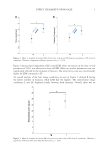
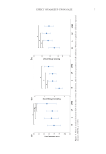
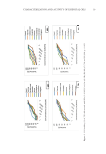
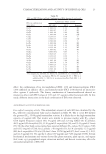
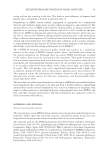
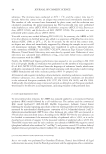
24 JOURNAL OF COSMETIC SCIENCE Total phenolic content. Phenolic compounds (like tannins, phenols, phenolic acids, flavonoids, or phenyl praponoids) of EOs are responsible for their antioxidant properties (60). In Table VI, the TPC of antibacterial effective EOs is presented. The highest TPC was detected at oregano EO with a 3.087 mg GAE/l value. The other EOs had lower contents of TPC ranging from 0.113 to 1.778 mg GAE/ml (in descending order: cinnamon laurel lemon tea tree lavender sandalwood eucalyptus). In previous studies, similar and different results were reported. For oregano 4.69 mg GAE/ml (37) for tea tree 0.034 mg GAE/g (61) and 14.79 mg GAE/g (62) for sandalwood 4.97 mg GAE/g (63) for lavender 137.52 mg GAE/l (30) for cinnamon 149.15 mg GAE/g (64), 8.3 mg GAE/g (65), and 210 GAE mg/g (56) and for lemon 0.155 mg GAE/g (66) and 14.73 mg GAE/g (67). The differences may be related to the plant chemotype or organ, climatic conditions, or measurement techniques (68,69). Also, some inorganic substances like iron sulfate, hydrazine, and hydroxyl ammonium can react with the Folin–Ciocalteu reagent and increase the phenolic concentration (70,71). CYTOTOXIC EFFECTS OF 8 ESSENTIAL OILS The cytotoxicity of various concentrations (2–0.0625% [v/v]) of EOs on 3T3 cells was evaluated by MTT assay after 24, 48, 72, and 96-hour incubation periods. The cytotoxicity of EOs is shown in Figure 1. The IC 50 values are displayed in Table VII. It is difficult to Table V FIC and FICI Values in Dual Combinations of EOs Against C acnes EOs in combination (EO1/EO2) C acnes ATCC 6919 FIC1/FIC2 FICI Remarks Or/Te 16.00/1.00 17.00 A Or/Ci 32.00/0.50 32.50 A Or/La 1.00/0.063 1.063 NI Or/Lau 1.00/2.00 3.00 NI Eu/Or 0.50/32.00 32.50 A Sa/Or 1.00/1.00 2.00 NI Ci/Te 2.00/1.00 3.00 NI Ci/La 0.063/0.015 0.078 S Ci/Eu 1.00/0.25 1.25 NI Ci/Sa 0.031/0.25 0.281 S Ci/Lau 0.50/0.063 0.563 AD Sa/Te 0.0313/8.00 8.0313 A Sa/Lau 0.25/4.00 4.25 A Te/Eu 1.00/0.25 1.25 NI Eu/La 0.125/2.00 2.125 NI La/Sa 1.00/0.016 1.016 NI Lau/La 0.031/0.016 0.047 S Lau/Eu 2.00/0.125 2.125 NI Te/La 2.00/1.00 3.00 NI Te/Lau 1.00/4.00 5.00 A Eu/Lau 0.125/2.00 2.125 NI Eu/Sa 0.016/2.00 2.016 NI Or: oregano La: lavender Le: lemon Sa: sandalwood Ci: cinnamon Te: tea tree Eu: eucalyptus Lau: laurel FICI ≤ 0.5: synergy (S) 0.5 FICI ≤ 1: additive (AD) 1 FIC I ≤ 4: no interactive effect (NI) FICI 4: antagonistic (A).

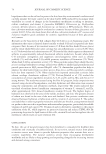
25 CHARACTERIZATION AND ACTIVITY OF ESSENTIAL OILS compare these data with the previous studies due to the differences in plant component ratios. Cytotoxicity of EOs correlates with interactions between their components (72,73). In a study by Chen et al., a significant reduction in mammalian cell (3T3 mouse fibroblast) viability was observed after carvacrol and eugenol treatment (74). The MTT test is more sensitive than in vivo assays because cells are directly exposed to the product (75). In in vivo oral and topical applications, as the product penetrates the cells, metabolic reactions activate and this reduces the toxicity. In addition, the dose and frequency of administration may affect the toxicity rate (76). Low-dose applications also can cause allergic reactions like skin irritations in sensitive patients (77). In vivo studies on the toxic effects of EOs should be carried out to evaluate the efficacy of their dose and the route of application. CONCLUSION Our results revealed that oregano, cinnamon, lavender, and tea tree EOs showed strong antibacterial activity against S epidermidis ATCC 12228 and C acnes ATCC 6919 strains. The main chemical components were terpenes, ethers, terpene alcohols, ketones, aldehydes, and phenolic derivates. The combination of cinnamon with lavender and sandalwood showed a synergistic effect (FICI ≤ 0.05) the binary combinations of other EOs exhibited additive, indifference, and antagonistic effects against both bacteria. The greatest antioxidant activity was detected in C verum EO. The highest TPC was found at O vulgare EO. Low cytotoxicity concentrations of EOs may be helpful in the local application. Further in vitro and in vivo experiments with clinical isolates are required to identify the effective and safe doses of EOs. Table VII Cytotoxic Activity [IC50 (v/v %)]of the 8 EOs Against 3T3 Cells %Lau Te Sa La Le Eu Ci Or 24h 0.32 0.49 0.14 1.20 0.42 0.37 0.50 0.37 48h 0.10 0.40 0.06 0.20 0.60 1.90 0.20 1.10 72h 1.30 1.19 1.20 0.96 0.30 1.09 0.80 0.90 96h 1.12 0.39 1.70 0.63 0.71 1.60 0.60 1.30 Lau: laurel Te: tea tree Sa: sandalwood La: lavender Le: lemon Eu: eucalyptus Ci: cinnamon Or: oregano. Table VI The Values of DPPH [IC50 (µg/ml)] and TPC (mg GAE/L) of EOs EOs DPPH IC50 (µg/ml) TPC (GAE mg/L) Oregano 66.68 3.087 ± 0.002 Cinnamon 35.08 1.778 ± 0.215 Lavender 53.22 0.162 ± 0.030 Tea tree 53.85 0.758 ± 0.021 Sandalwood 126.61 0.132 ± 0.021 Eucalyptus 79.24 0.113 ± 0.023 Lemon 80.14 0.993 ± 0.077 Laurel 72.45 1.269 ± 0.122 Each TPC value was calculated as the mean value ± SD.
Purchased for the exclusive use of nofirst nolast (unknown)
From: SCC Media Library & Resource Center (library.scconline.org)