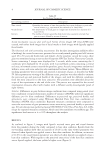
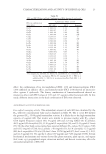
25 CHARACTERIZATION AND ACTIVITY OF ESSENTIAL OILS compare these data with the previous studies due to the differences in plant component ratios. Cytotoxicity of EOs correlates with interactions between their components (72,73). In a study by Chen et al., a significant reduction in mammalian cell (3T3 mouse fibroblast) viability was observed after carvacrol and eugenol treatment (74). The MTT test is more sensitive than in vivo assays because cells are directly exposed to the product (75). In in vivo oral and topical applications, as the product penetrates the cells, metabolic reactions activate and this reduces the toxicity. In addition, the dose and frequency of administration may affect the toxicity rate (76). Low-dose applications also can cause allergic reactions like skin irritations in sensitive patients (77). In vivo studies on the toxic effects of EOs should be carried out to evaluate the efficacy of their dose and the route of application. CONCLUSION Our results revealed that oregano, cinnamon, lavender, and tea tree EOs showed strong antibacterial activity against S epidermidis ATCC 12228 and C acnes ATCC 6919 strains. The main chemical components were terpenes, ethers, terpene alcohols, ketones, aldehydes, and phenolic derivates. The combination of cinnamon with lavender and sandalwood showed a synergistic effect (FICI ≤ 0.05) the binary combinations of other EOs exhibited additive, indifference, and antagonistic effects against both bacteria. The greatest antioxidant activity was detected in C verum EO. The highest TPC was found at O vulgare EO. Low cytotoxicity concentrations of EOs may be helpful in the local application. Further in vitro and in vivo experiments with clinical isolates are required to identify the effective and safe doses of EOs. Table VII Cytotoxic Activity [IC50 (v/v %)]of the 8 EOs Against 3T3 Cells %Lau Te Sa La Le Eu Ci Or 24h 0.32 0.49 0.14 1.20 0.42 0.37 0.50 0.37 48h 0.10 0.40 0.06 0.20 0.60 1.90 0.20 1.10 72h 1.30 1.19 1.20 0.96 0.30 1.09 0.80 0.90 96h 1.12 0.39 1.70 0.63 0.71 1.60 0.60 1.30 Lau: laurel Te: tea tree Sa: sandalwood La: lavender Le: lemon Eu: eucalyptus Ci: cinnamon Or: oregano. Table VI The Values of DPPH [IC50 (µg/ml)] and TPC (mg GAE/L) of EOs EOs DPPH IC50 (µg/ml) TPC (GAE mg/L) Oregano 66.68 3.087 ± 0.002 Cinnamon 35.08 1.778 ± 0.215 Lavender 53.22 0.162 ± 0.030 Tea tree 53.85 0.758 ± 0.021 Sandalwood 126.61 0.132 ± 0.021 Eucalyptus 79.24 0.113 ± 0.023 Lemon 80.14 0.993 ± 0.077 Laurel 72.45 1.269 ± 0.122 Each TPC value was calculated as the mean value ± SD.

26 JOURNAL OF COSMETIC SCIENCE AUTHOR CONTRIBUTIONS M.A.: laboratory studies and writing of the article N.Y.: laboratory studies B.M.Y.: statistical analysis. FUNDING SOURCE This study was supported by the Canakkale Onsekiz Mart University Scientific Research Projects Unit (Project ID: FBA-2020-3412). REFERENCES (1) G. M. White, Recent findings in the epidemiologic evidence, classification, and subtypes of acne vulgaris, J. Am. Acad. Dermatol., 39, 34–37 (1998). (2) T. Vos, A. D. Flaxman, M. Naghavi, R. Lozano, C. Michaud, M. Ezzati, et al., Years lived with disability (YLDs) for 1160 sequelae of 289 diseases and injuries 1990–2010: a systematic analysis for the Global Burden of Disease Study 2010, Lancet, 380 (9859), 2163–2196 (2012). (3) B. Bergler-Czop, The aetiopathogenesis of acne vulgaris—what’s new?, Int. J. Cosmetic Sci., 36, 187–194 (2014). (4) R. S. Porter and J. L. Kaplan, Eds., The Merck Manual of Diagnosis and Therapy, 19th Ed. (Merck Sharp &Dohme Corp., Whitehouse Station, NJ, 2011). (5) D. Singh, B. Hatwar, and S. Nayak, Herbal plants and Propionibacterium acnes: an overview, IJBR, 2, 486–498 (2011). (6) S. Nishijima, I. Kurokawa, N. Katoh, and K. Watanabe, The bacteriology of acne vulgaris and antimicrobial susceptibility of Propionibacterium acnes and Staphylococcus epidermidis isolated from acne lesions, J. Dermatol., 27, 318–323 (2000). (7) C. R. Drucker, Update on topical antibiotics in dermatology, Dermatol. Ther., 25, 6–11 (2012). (8) K. Chen, T. J. White, M. Juzba, and E. Chang, Oral isotretinoin: an analysis of its utilization in a managed care organization, J. Manag. Care Pharm., 8, 272–277 (2002). (9) S. Enshaieh, A. Jooya, A. H. Siadat, and F. Iraji, The efficacy of 5% topical tea tree oil gel in mild to moderate acne vulgaris: a randomized, double-blind placebo-controlled study, Indian J. Dermatol. Venereol. Leprol., 73, 22–25 (2007). (10) S. Kapoor and S. Saraf, Topical herbal therapies and complementary choice to combat acne, Res. J. Med. Plant., 5, 650–669 (2011). (11) T. H. Oh, S. S. Kin, W. J. Yoon, J. Y. Kim, E. J. Yang, N. H. Lee, and C. G. Hyun, Chemical composition and biological activities of Jeju Thymus quinquecostatus essential oil against Propionibacterium species inducing acne, J. Gen. Appl. Microbiol., 55, 63–68 (2009). (12) J. Viyoch, N. Pisutthanan, A. Faikreua, K. Nupangta, K. Wangtorpol, and J. Ngokkuen, Evaluation of in vitro antimicrobial activity of Thai basil oils and their microemulsion formulas against Propionibacterium acnes, Int. J. Cosmet. Sci., 28, 125–133 (2006). (13) L. Chularojanamontri, P. Tuchinda, K. Kulthanan, and K. Pongparit, Moisturizers for acne: what are their constituents?, J. Clin. Aesthet. Dermatol., 7, 36–44 (2014). (14) E. Alkhawaja, S. Hammadi, M. Abdelmalek, N. Mahasneh, B. Alkhawaja, and S. M. Abdelmalek, Antibiotic resistant Cutibacterium acnes among acne patients in Jordan: a cross sectional study, BMC Dermatol., 20, no. 17 (2020). (15) V. Cirik, E. Efe, The use of complementary and alternative medicine in children, J. Fam. Med. Community Health, 2, 1031–1034 (2015). (16) K. J. Kemper, S. Vohra, and R. Walls, The use of complementary and alternative medicine in pediatrics, Pediatrics, 122, 1374–1386 (2008).
Purchased for the exclusive use of nofirst nolast (unknown)
From: SCC Media Library & Resource Center (library.scconline.org)