45 MULTIDISCIPLINARY PROCESS OF HAND SANITIZER acting, and are less irritating to the skin. This leads to more adherence to frequent hand hygiene and, consequently, a decrease in infection rates (3). Formulations of ABHS contain ethanol, isopropanol or n-propanol (or a combination thereof), and emollients, humectants, viscosity enhancers, fragrances, and colorants (4). The antimicrobial activity of ABHS results from the alcohol’s ability to denature proteins and depends on its percentage, being that solutions with 60% to 80% alcohol are the most effective (5). ABHS can damage skin and provoke irritation and/or dryness, which can cause the skin to crack or peel. However, adding emollients and humectants to the formulations helps to alleviate these symptoms (2). Emollients leave the skin looking and feeling soft and smooth and may benefit those that suffer from skin conditions such as eczema, psoriasis, or other inflammatory skin diseases (6). Humectants attract moisture to the skin surface, which helps to prevent skin drying with frequent use of ABHS (7). The COVID-19 pandemic threatened public health and resulted in a significant increase in the usage of ABHS in homes, public places, and health-care systems by the overall population (4). Although there are several ABHS formulations available in the market, they do not all correspond to the consumers. They prefer formulations that use natural ingredients with active functions on their skin and are obtained from sustainable and environmentally friendly sources (8). An excellent way to achieve this is to use plant and/or food waste (skins, seeds, stems, leaves, pulp, and other types of waste). This will produce new active ingredients/compounds with a high value in different industrial fields, such as nutraceutics, pharmaceutics, and cosmetics (9). This approach allows the substitution of synthetic chemicals and active ingredients deriving from animal sources for effective, inexpensive, and biosustainable plant- based ingredients (8,9). The main objective of this research work was to develop an ABHS with sustainable and plant- based ingredients that could protect the skin and keep it healthy without compromising antimicrobial activity. Several formulations were tested on volunteers to determine their impact in skin parameters—including hydration, transepidermal water loss (TEWL), and pH—and their sensorial characteristics. The final formulation was analyzed to verify its safety and antimicrobial efficacy. MATERIALS AND METHODS PRODUCT DEVELOPMENT PROCESS The target product was an ABHS with sustainable resourced ingredients and dermoprotective properties. Table I shows the functional, sensorial, and physical quality factors that were important for the final product formula and how these factors were evaluated. The materials used for the ABHS formulations were 96% ethanol (Labchem, Zelienople, United States CAS: 64-17-5), polyethylene glycol (PEG)-40 hydrogenated castor oil (Kao Corporation, Tokyo, Japan CAS: 61788-85-0), PEG-7 glyceryl cocoate (Kao Corporation, Tokyo, Japan CAS number: 68201-46-7), polyacrylate crosspolymer-6 (SEPPIC, Courbevoie, France CAS: 1439374-06-7), glycerin (Acofarma, Terrassa, Spain CAS: 56-81-5), cetyl alcohol (Lotioncrafter, Eastsound, United States CAS: 36653-82-4), squalane (Aprinnova, Emeryville, United States CAS: 111-01-3) and hemisqualane (Aprinnova, Emeryville, United States CAS: 3891-98-3).

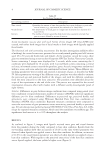
46 JOURNAL OF COSMETIC SCIENCE The formulations were prepared by slowly mixing distilled water with the emulsifier until a homogeneous mixture was formed. Then, the emollient and humectant were mixed in. Finally, the ethanol was added, and the formulation was vigorously mixed until it was homogeneous. The benchmark used in this study was Sterillium (BODE Chemie GmbH, Hamburg, Germany). MEASUREMENT OF SKIN PARAMETERS Volunteers were recruited to test the formulations’ impacts on the skin. Volunteers were healthy women between the ages of 25 and 35, with no skin diseases and clear skin on the investigation site (for example, no scars, tattoos, long hair, etc.). They were asked to not apply any cosmetic or skin-care products to their hands during the 12-hour period before the measurement. All volunteers consented to participate by signing a clinical trial agreement, after receiving a detailed explanation of the purpose and contents of the study. This project was validated by the university’s Commission of Ethics for Health before its execution. Additionally, the team members proceeding with the trials were certified with the International Council for Harmonization of Technical Requirements for Pharmaceuticals for Human Use good clinical practice E6 (R2) recognized by the Global Health Training Centre. Skin measurements were performed before and after the application of the different hand sanitizers. Measurements were performed using a Multi Probe Adapter MPA 6 (Courage and Khazaka, Cologne, Germany) coupled with different probes: the Corneometer® CM 825 probe was used to measure skin hydration, the Tewameter® TM Hex probe measured skin TEWL, and the probe Skin-pH-meter PH 905 measured pH (all probes are from Courage and Khazaka, Cologne, Germany). Before the initial measurements, the volunteers were placed and seated in a quiet, temperature- controlled room (21 ± 1°C 48 ± 8% relative humidity) for 15 minutes for acclimatization. For each hand, three measurements per probe were performed in neighboring skin sites, in the center of the back of the hand. For each probe, the measurements were performed according to the manufacturer’s instructions. Skin pH was always measured last, so that the moist part of the probe would not interfere with the hydration and TEWL measurements. After the baseline measurements, the volunteers applied 3 mL of hand sanitizer and spread it evenly in both hands. The hand sanitizer application was performed 3 times with 10-minute intervals between applications. Finally, the volunteers waited 30 minutes to ensure that the product was absorbed, and the skin parameters were measured again, as previously described. The different hand sanitizers were evaluated on different days. Table I Desired Product Attributes and Corresponding Performance Tests ABHS characteristics Performance tests Functional Antimicrobial activity EN1500, EN13727, EN13624, and EN14476 Moisturizing effect Variation in skin surface hydration and TEWL was evaluated after three applications of the ABHS Safe to use OECD TG 439 and ex vivo topical applications Physical/sensorial Good spreadability Viscosity measurement and sensorial evaluation Short drying time Drying time measurement and sensorial evaluation No residue on skin after application Sensorial evaluation
Purchased for the exclusive use of nofirst nolast (unknown)
From: SCC Media Library & Resource Center (library.scconline.org)