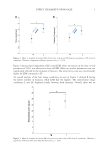
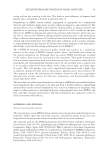
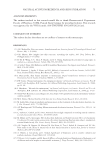
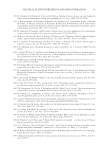
57 MULTIDISCIPLINARY PROCESS OF HAND SANITIZER in vitro is determined by the standard procedure OECD TG 439, which describes topical exposure of the neat test chemical to an RhE model, followed by a cell viability test (16). Before assessing the RhE viability, the authors evaluated whether ABHS F#8 interfered with the MTT detection method through direct reduction. The formulation does not convert MTT to formazan salts. Therefore, no specific correction procedures were needed for this study. Results for the in vitro skin irritation test using the RhE EpiDerm™ (EPI- 200-SIT, MatTek Corporation, Ashland, United States) model are shown in Figure 3. The results obtained were in accordance with the OECD TG 439 test acceptance criteria: the negative control OD was between 1.0 and 2.8 (2.043), the positive control tissue viability was below 20% (13.93%), and the study substance SD was not higher than 18% (8.37%) (16), validating this experiment. ABHS F#8 showed a higher viability than the positive control and exceeded the threshold of 50% to be considered a nonirritant substance (Figure 3). This result is consistent with other studies, where ABHS formulations caused little or no skin irritation (39,40,51). Ex vivo topical applications. To complement the in vitro results, the authors performed an ex vivo experiment to assess possible toxicological effects of the formulation. Although in vitro skin models have proven useful in toxicity studies and were adopted in several OECD guidelines, they are not exact copies of the 3D organization of human skin in vivo (52). Human ex vivo skin is the current experimental model that most closely matches in vivo conditions for safely and effectively testing substances, without using animal testing (53). Figure 4 shows the histological analysis of human skin before (A) and after (B) ABHS F#8 was topically applied twice a day for 3 days, using conventional hematoxylin &eosin staining. In both images, normal dermis characteristics are observed. It can therefore be concluded that the epidermis and dermis are unaffected by several applications of ABHS F#8. These results are consistent with the in vitro irritation test and other studies verifying that ABHS do not have toxic effects on the skin and are safe to use (54,55). Figure 3. Mean (+SD) values obtained for tissue viability of the reference substance negative control, ABHS F#8, and reference substance positive control.

58 JOURNAL OF COSMETIC SCIENCE CONSUMER EVALUATION Traditionally, products’ sensorial characteristics have been evaluated by a group of trained assessors who objectively give a quantitative description (29). This approach provides reliable and consistent results, but it also has the drawback of being very time-consuming (56). Additionally, according to Worch et al. (57), the use of untrained consumers is a good alternative to the classical sensory profile provided by a trained panel. Furthermore, understanding how consumers interact with products in real-life situations is beneficial. because it allows the identification of innovation opportunities and the assessment as to whether the product under evaluation delivers its promises and outperforms benchmarks (58). For this reason, the consumer evaluation of the final ABHS formulation was performed in a local hospital. ABHS F#8 was available for 3 days instead of the benchmark, and the hospital workers were free to use and evaluate the formulation by answering an online questionnaire. In total, 59 nurses participated in this evaluation. A total of 83% were female and 17% were male, with a large range of ages: 8% were 18 to 25, 34% were 26 to 35, 34% were 36 to 45, 19% were 46 to 55, and 5% were 56 to 65. The four sensorial attributes evaluated (texture, spreadability, drying time, and afterfeel) and the overall product opinion had the same rounded average value: a 7. (On a scale of 1–9, this corresponds to “moderately like.”) When comparing ABHS F#8 to the benchmark, the sensorial attributes had a rounded average value of 4, on a scale of 1 to 5 this indicates it is better than the benchmark. Considering this extremely positive evaluation of ABHS F#8 by consumers, and the fact that it possesses all of the attributes listed in Table I, no further alterations were deemed necessary. Figure 4. Histological sections of ex vivo human skin control (A) and after topical application of ABHS F#8 (B).
Purchased for the exclusive use of nofirst nolast (unknown)
From: SCC Media Library & Resource Center (library.scconline.org)