COSMETIC FUNCTIONS OF SYNTHETIC DETERGENTS 331 . surface-active micelies or other colloids in the bath. Solubilization of the soil. Emulsification of liquid soils. Defiocculation and suspension of solid soils. Detailed consideration of these mechanisms is, however, of far less practical importance than the di- rectly observable factors listed above. The skin, considered as the sub- strate in a detersire system, is unu- sually complex. Neglecting the pores (for the time being) the outer- most surface of the skin consists of a reasonably smooth layer of flat, dead keratinized cells. Except in specialized areas this layer, the stratum corneum, is so thin that the sensory nerves in the living lay- ers below can easily perceive minor disturbances on the surface. The dead superficial cells are continu- ously being removed by external attrition and by the progressive maturing and outward migration of new cells from the lower layers. In the last stages of their attach- ment to the body it might be dif- ficult to decide whether they are part of the substrate or part of the soil. With regard to their permea- bility, soil-binding power and reac- tions toward the bath they are probably quite similar to a.hair or a wool fiber. This relatively simple picture is complicated, however, by the presence of the several million skin glands and their open pores. The lining of these pores consists of living unkeratinized epithelial cells and certainly has markedly different properties from the stratum cor- neum. The sudoriparous glands secrete a clear fluid and thus tend to keep themselves clean and free of foreign soil. The sebaceous glands secrete the products of their own necrosis including solid, oily, and aqueous cell debris. The solid debris tends to clog the pore of the gland and in this light it can be re- garded as undesirable soil. When successfully excreted, however, the sebum spreads over the stratum cot- ß neum and forms an oily protective layer, which is said to "lubricate" the skin. This lubrication is desir- able since it renders the surface less liable to abrasive injury. The sebum probably has no direct ef- fect in making the epidermal lay- ers more pliable, after the manner of oil in tanned leather. It doubt- less has an indirect effect, however, since the thin oily layer inhibits the evaporation of moisture and consequent desiccation of the skin. It is apparent that a precise defi- nition of desirable cleanliness with regard to the skin is highly elusive, and is essentially a problem for the dermatologist. Certainly all solid and most liquid soil of foreign origin should be removed. It might also be desirable to remove excesses of oily or solid sebum from the stra- tum corneum. It is questionable whether the sebum should be re- moved completely, although it would probably be desirable to re- move excess solid cell debris from the canals of overactive sebaceous glands before they become clogged and give rise to an ache condition.

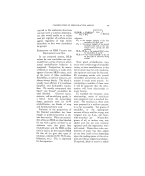
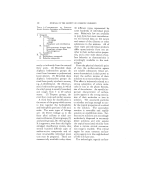
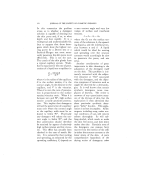
332 JOURNAL OF THE SOCIETY OF COSMETIC CHEMISTS In this connection the problem arises as to whether a detergent solution is capable of cleaning out the skin pores and, if so, to what depth and how rapidly. It is a widespread and understandable fal- lacy to suppose that those deter- gents which show the highest wet- ting power by a Drayes test or a Seyferth-Morgan test must neces- sarily penetrate the skin pores most •ffectively. This is not the case. The canals of the skin glands form a typical capillary system. Wash- burn's equation for the rate of pene- tration of a liquid into a capillary is: dl (rG cos 8) dt 4l v where r is the radius of the capillary, G is the surface tension, 0 is the contact angle, 1 is the distance in the capillary, and P' is the viscosity. When 0 is zero the rate of penetra- tion is proportional to the surface tension/viscosity ratio. When 0 is between zero and 90 ø , high surface tension actually promotes penetra- tion. This implies that detergents will aid the penetration of a capillary mass only where the contact angle at the capillary walls must be re- duced to below 90 ø . Practically any detergent will reduce the con- tact angle to below 90 ø , and the best penetration should therefore be attained by agents of r•elatively high surface tension and low viscos- ity. This effect has actually been checked in the case of textile fab- rics. It is noteworthy that wetting and spreading, as measured by the spreading coefficient, S, depends on a zero contact angle and very low values of surface and interfacial tensions. S = Gb-- G•-- Gab where the Gs are the surface ten- sions of the substrate b, the spread- ing liquid a, and the interfacial ten- sion between a and b. A liquid which would be ideal for wetting and spreading over the stratum comeurn would accordingly be slow to penetrate the pores, and vice Another consideration of great importance in skin cleansing is the adsorption of the detergent itself on the skin. This problem is inti- mately connected with the subjec- tive sensation or "feel" associated with the detergent, and the objec- tive symptoms of irritation such as might be observed by a dermatolo- gist. It is well known that certain synthetic detergents cause com- plaints of dryness. The writer is unaware of any quantitative meas- ure of the dryness of skin, but the explanation is often advanced that these particular synthetic deter- gents "defat" the skin. This expla- nation is at best incomplete. All de- tergents including soap, under nor- real conditions of use, will remove sebum thoroughly. So will rub- bing alcohol, which tends to make the skin feel moist, and look shiny rather than dry. Certainly none of the detergents can remove fatty matter from the interior of the cells in either the stratum comeurn or the lower strata of the skin. A more comprehensive hypothesis of the drying action of detergents takes
Purchased for the exclusive use of nofirst nolast (unknown)
From: SCC Media Library & Resource Center (library.scconline.org)