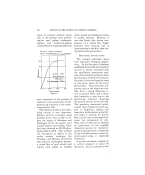
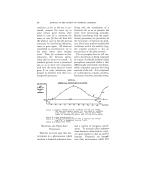
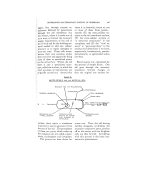
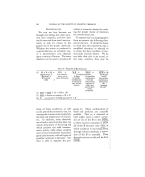
SURFACE-ACTIVE AGENTS IN COSMETIC INDUSTRY 337 skin, surface changes at the interface between cosmetic and skin and at the interface between cosmetic and air, penetration into skin crevices, and sorption by the skin. Many cosmetic products are .•emulsions of one type or another. Questions of emulsion formulation and stabilization are primarily ques- tions of surface chemistry. Other cosmetic products are mixtures of finely powdered materials or sus- pensions of finely powdered solids in aqueous or oily bases. In the latter class are toothpastes, lipsticks, mas- cara pencils, and liquid make-up. Securing properly formulated prod- ucts which will not tend to soften, harden, or separate, which will have and maintain proper color, covering power, texture, etc., depends on ap- plications of principles of surface chemistry the specific interfaces here are those between two liquids or between a liquid and a solid. Certain cosmetic ingredients de- pend for their effect on ability to form a foam or lather. Among these are lather shaving creams and bubble baths. Others are expected by the user to foam under conditions of use, and therefore adequate foaming must be secured. These include shampoos, soaps, and most dentifrices. In foam formation, the interface between water and air is the important one. Soaps, shampoos, and dentifrices are expected to clean skin, hair, and teeth, respectively. This introduces the broad field of surface chemistry known as detergency. That sub- ject is too extensive to be covered here, since so many phases of sur- face activity are involved in de- tergency. Accordingly we should like to limit this discussion to the particular phases of surface chem- istry dealing with emulsification and dispersion. DISPERSION AND EMULSIFICATION In making cosmetics, one may be dispersing a powdered solid in oils, as for lipsticks, or in water, as for toothpaste. One may be mixing and dispersing powders in each other, as in making face powders. One may disperse a liquid in a powdered solid, as when perfume oil is incorporated in face powder, or flavoring oil in tooth powder. Most commonly of all, one disperses' one liquid in another to form an emul- sion. Cold creams, vanishing creams, various special skin creams, cl.eansing creams, hand and face lotions, brushless shaving creams, permanent wave creams, and "milki- fled" shampoos are a few of the many types of cosmetic emulsions. Satisfactory appearance and sta- bility of the product depends upon the correct performance of the dis- persion step. That is why the theory is worth discussing in some detail. ROLE OF MECHANICAL FORCE Regardless of how stable a dis- perse system may be once it has been formed, mechanical work is usually necessary first, in order to obtain the dispersion. The importance ofproper dispersion in cosmetic manufac-

338 JOURNAL OF THE SOCIETY OF COSMETIC CHEMISTS ture is shown by the number of mix- ing and dispersing devices used. In addition to the various types of ordinary mixing devices, we have colloid mills, homogenizers, roller mills, microatomizers, etc. Each is best fitted for certain types of work. Rather than dwell upon the me- chanical features of these devices, let us consider the physico-chemical factors which control dispersion, so that we can see what can and what cannot be accomplished by me- chanical dispersing devices. Most of this discussion will be about disper- sion of liquids ia liquids, or emulsifi- cation: Interfacial tension between oil and water hinders the dispersion of oil into small droplets when an attempt is made to form an emulsion by agitation. A definite shearing force is required to break a droplet into smaller droplets, and the interfacial tension resists that force. Such shearing forces are set up during agitation by differential currents of flow within the liquid. Bearing in mind the fundamental principles of viscous flow, it follows that the force pulling apart two points in a dif- ferential flow field will be propor- tional to the distance between those points. If those two points are conceived to be on the surface of a droplet, the force tending to tea• that droplet apart will be seen to de- pend on the size of the droplet. Consequently with a given degree of agitation, droplets below a certain size will never experience forces strong enough to tear them, and hence a given force of agitation, no matter how long continued, will not produce an emulsion below a cer- tain droplet size, as long as inter- facial tension is constant. During the earlier stages, the average droplet size will be de- creasing and, for that reason, the rate of dispersion will be decreasing. Also 'the number of droplets and hence the rate of collisions between droplets, will be increasing. There- fore the rate of coalescence, which depends on the rate of collisions, will be increasing. Eventually a state of dynamic equilibrium is reached, where rate of dispersion equals rate of coalescence. • If a greater rate of agitation were used, a greater degree of dispersion would be achieved at the equilibrium state. Now let us suppose the agitatio.n stopped. Since the dispersing forces no longer exist, collisions caused by brownian motion, thermal currents, etc., will cause gradual coalescence until eventually we have two sep- arate layers. Ordinarily the oil will be lighter than the water. When agitation has ceased, the oil droplets will all tend to rise toward the top of the liquid mixture. There they will be forced into contact with each other by buoyant forces, and will hence coalesce much more rapidly than if they had remained suspended throughout the liquid. Another kinetic factor which can aff'ect emulsification is that of energy barriers. There is a close analogy with ordinary chemical re- actions. Probably no emulsion is entirely stable. That would occur only if interfacial tension were zero
Purchased for the exclusive use of nofirst nolast (unknown)
From: SCC Media Library & Resource Center (library.scconline.org)