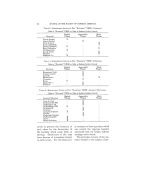
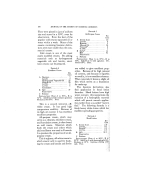
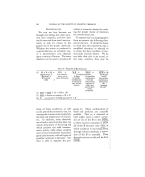
SURFACE-ACTIVE AGENTS IN COSMETICS 347 phobic portion. Molecules of this type orient themselves at the sur- face of a liquid, and also at the inter- face between two immiscible liquids. The water-seeking hydrophilic part stays in the water surface, while the oil-seeking hydrocarbon portion of the molecule stays out above the surface, as it were, or finds a non- aqueous medium, thus bringing un- like surfaces together closer, faster. The hydrophilic portion may be either ionic or non-ionic, as ex- emplified by carboxylate, sulfate, sulfonate, quaternary ammonium, polyhydroxylic and polyoxyethylene residues. The hydrophobic part consists of hydrocarbon chain or ring systems as are found in natural fats (26) and petroleum products (29). So many varied combinations are possible that products can be "tailor-made" to give whatever blend or balance of properties may be desired (1, 9, 27, 30). CLASSIFICATION The alphabetical listing of prod- ucts by brand name or trade name permits a start on more complicated methods of classification. Such lists (17, 25, 28) are continually being revised, as are alphabetical listings of manufacturers and their specialties (25). The next logical step is the alphabetical listing of those agents used, or advocated for use, in specific fields. Beeler's re- port to the American Pharmaceu- tical Association (2) and the bul- letins prepared by Cuppies of the U.S. Dept. of Agriculture's Bureau of Entomology and Plant Quaran- tine (4) are examples of this. An- other method of classifying is by chemical structure. Separation of anionic, cationic, and non-ionic types can be made in such a group- ing (23) as is given in Table 1, where R = long chain paraffinic or olefinic group--usually C8 to C== R' = primary or secondary, straight or branch- chain lower alkyl group --usually C4 to C•0 A = anion--C1, Br, I, HSO4 Ar = aryl group--phenyl, naph- thyl, diphenyl, etc. M = alkalimetal, ammonium or substituted ammonium, e.g.., Na, K, trierhanoi- amine. This example of chemical classi- fication is obviously only a starting point. It is certainly possible to subdivide cationics and non-ionics also on the basis of whether the hydrophilic group is in the center or at the end. Phosphonates and borates could go up in the anionic grouping instead of being put in miscellaneous. The sulfonium com- pounds could be added to the cat- ionic group. The fatty amide con- densates offer an unusual example of products difFtcult to classify they are compatible with soap and some anionic agents, as well as with a number of cationics they seem to be mildly anionic on the alkaline side and mildly cationic under acid con- ditions their chemical structure is a matter of debate. It is also possible to manufacture surface-active agents which contain cationic groupings as well as anionic groupings, e.g., the betaines (alkyl glycines). Never- theless, the grouping of surface-ac- tive agents by differences in chemi- cal structure is of value.

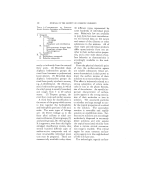
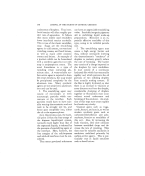
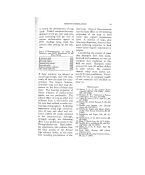
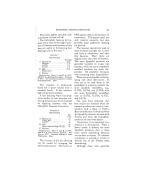
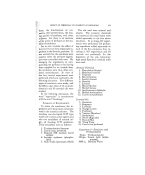
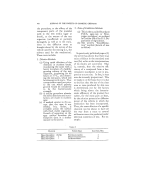
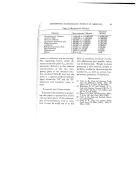
348 JOURNAL OF THE SOCIETY OF COSMETIC CHEMISTS TABLE 1--CHEMICAL CLASSIFICATION' OF SURFACE-ACTIVE AGENTS Group Formula of Typical Representative Type Type Description A Anionic--Terminal Hydrophile Group RCOOM 1 Soap ROSOgOM 2 Fatty Alcohol Sulfate RCONHC•H4OSO2OM 3 Sulfated Hydroxye thyl Amide RCOOC•H4OSO•OM 4 Sulfated Fatty Acid Partial Ester RCH•OOCCH2SO2OM 5 Fatty Alcohol Sulfoacetate RArO(C•H,O),•C•H.•OSOgOM 6 Sulfated Polyglycol Ethers B Anionic--Central Hydrophile Group (R%CHOSOgOM 1 Sulfated Secondary Alcohol R'CHR' 2 Sulfonated Hydrocarbon I SODOM R:ArSO:OM 3 Alkyl Aryl Suloeonate R'OOCCH2CHCOOR • { Sulfonated Ester of Alcohols and I Dibasic Acids SO2OM C Cationic--Usually Terminal Hydrophile Group [RN(CHa)3]+A - 1 Long-Chain Quaternary Ammo- nium Salt [R-?yridine]+A- 2 Alkyl Tertiary Aryl Ammonit•m Salt [RNHa ] +A- 3 Long-Chain Amine Salts D Non-ionic RCOOCaH•(OH)2 1 Polyhydric Alcohol Partial Fatty Acid Ester RCOOCoH,O(OH)a 2 Anhydro Polyhydric Alcohol Par- tial Ester RCH•O(C•H40)nC•H•OH 3 Fatty Alcohol Polyoxyethylene Ether RCOOCoHaO [O(C•H40),,C2H4OH ]a { ?olyoxyalkylated Anhydro Poly- hydric Alcohol Fatty Acid Ester RArO(C2H•O),,C•H4OH 5 Alkyl Phenol Polyoxyethylene Ether Hydropho be-hydrophile Phos- phates, Phosphonates, Bo- rates, Fatty Amides, etc. E Miscellaneous A few generalities based on gen- eral experience are hard to avoid. For example, compounds derived from the lauryl hydrophobic radical are usually superior as wetting and penetrating.agents. The myristyl, cetyl, and stearyl hydrophobes con- stitute the best potential radicals for detergency and emulsification. Most commercially important, syn- thetic wetting agents and detergents are to be found in groups A and B of Table 1. But where heavy metal salts or complex cations are apt to be encountered, the tendency of an- ionics to form insoluble salts often makes them unsuitable, or less suit- able than the non-ionics of group D, for detergency or other operations. The agents of group C are attracted by negatively charged substances but repelled by positively charged substances, and are apt to be more stable than anionics in the presence
Purchased for the exclusive use of nofirst nolast (unknown)
From: SCC Media Library & Resource Center (library.scconline.org)