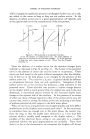
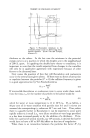
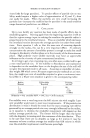
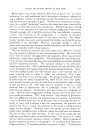
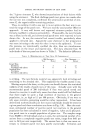
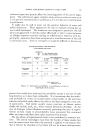
THEORY OF EMULSION STABILITY 175 (very little for large particles). To predict effects of particle size on sta- bility would require a higher order of approximation of Fn and FA than can easily be made. When the particles are very small increasing the particle size r increases the stability but for particles in the usual emulsion range theoretical predictions are difficult. V. Co•ci•us•o• Up to now hardly any mention has been made of specific effects due to emulsifying agents. Starting again from the beginning, equation 2 tells us that for a given energy input in making the emulsion the particle radius is proportional to the interfacial tension. Thus an emulsifier which decreases the interfacial tension decreases the average particle size under these condi- tions. Since equation 5 tells us that the mass rate of creaming depends strongly on the radius, this can be a very important effect. At ordinary concentration the amount of emulsifier present is enough to make but small changes in the density of either phase or in the viscosity of the discontinuous phase. High polymer water soluble materials may have an appreciable influence on the viscosity of quite concentrated emulsions. In striving to get a low creaming rate, one often uses a colloid mill to get a very small particle size. If the stability to flocculation and coalescence is dependent on the emulsifier layer on the droplets the use of the mill will not give the expected result in all cases. Assuming an emulsifier of molec- ular weight 300 which covers 30 square angstroms per molecule at an inter- face, the weight per cent of emulsifier required to give a continuous inter- facial film in a 10 per cent emulsion is given in the accompanying table: Radius, % Emulsifier Creaming, Microns Required cm./mo. 1 0.05 150 0.1 0.5 1.5 0.01 5 0.015 0.001 50 0.00015 Oil density = 0.8 emulsifier M.W. = 300 area = 30 •.2/molecule. For stability over a very long term the 0.01 micron size with roughly 5 per cent emulsifier would seem to meet most requirements. If the particle size distribution is wide it should be noted that the mass creaming rate will be governed by an average particle size very strongly influenced by the radius, as in equation 5, whereas the emulsifier requirement will depend on the surface average particle size. The former will be larger than the latter with the disparity increasing with the coarseness of the distribution. Thus to be sure that there are no droplets as !arge as 0.1 micron it may be necessary to have a surface average size smaller than 0.01 micron in which case the emulsifier requirement could become quite high.

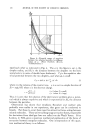
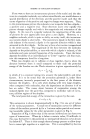
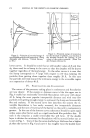
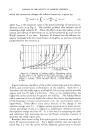
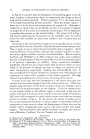
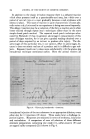
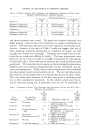
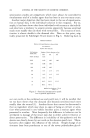
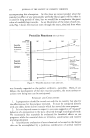
176 JOURNAL OF THE SOCIETY OF COSMETIC CHEMISTS In Fig. 3b it was seen that the absorption of emulsifying agent at the oil- water interface is the primary factor in determining the charge on the oil drop and its surface potential. Thus by equation 7 it is the major source of the repulsive potential between particles. Here the droplet radius is a factor as it is in the force of attraction given by equation 8. Although its evaluation is obscure the van der Waals constant .4 in equation 8 depends on properties of the atoms and molecules interacting so will be dependent in considerable measure on the interfacial film. The value of A//in Fig. 3 will also be influenced by the presence of the emulsifier since the surface active ion will normally be much more soluble in the oil phase than are other ions. The bump in the total potential energy curve was predicated on a surface potential which was not a function of H0, the distance between the particles. This, it seems to me, is where the picture breaks down somewhat. Early work by Harkins (4) and others indicated that emulsion stability is a func- tion of the rigidity and film viscosity of interfacial films. Recent work by Cockbain and McRoberts (5) offers evidence that under some conditions the ease of displacement of the interfacial film into the discontinuous phase is of primary importance in stability. Some commercial emulsifiers specifically tailored for use in hard water yield emulsions which are more stable in the presence of calcium ion than in sodium ion solutions of the same concentration--apparently violating the Schulze-Hardy rule. It also was difficult for Van den Tempel (3) to explain rates of flocculation and coalescence in terms of his estimates of the surface potential. His high values for •k0 would lead to very low rates of crossing of the barrier. It seems to me that the next development in the theory must take into account that the surface charge is borne by surface active ions. When two droplets approach there will be forces acting on these ions tending to drive them from the proximate region on the droplets. If the ion concentration on the droplet surface in the collision region is decreased in this way the surface potential will also go down and the potential energy (//)-distance (H0) curve will correspond to a path which crosses over from one constant •k0 line to another in Fig. 6. In this picture the ability of surface active ions to move along the interface to a distant region on the droplet will be of importance in some cases, in others the displacement of these ions into the droplet will be energetically easier and in still others neither will readily happen. These possibilities then enable the theory to explain the observa- tions of Harkins, Cockbain, Van den Tempel, and others. REFERENCES (1) Simha, R., )t. Arpplied Phys., 23, 1020 (1952). (2) Mooney, M., •. Colloid Sci., 6, 162 (1951). Maron, S. H., and Fok, S., Ibid., 8, 540 (1953). (3) Verwey, E. S. W., and Overbeek, J. Th. G., "Theory of the Stability of Lyophobic Col- loids," Amsterdam, Holland, Elsevier Publishing Co. (1948). Van den Tempel, M., "Stability of Oil-in-Water Emulsions," Delft, Holland, Communication of Ruber- Stichting (1953).
Purchased for the exclusive use of nofirst nolast (unknown)
From: SCC Media Library & Resource Center (library.scconline.org)