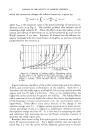
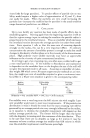
186 JOURNAL OF THE SOCIETY OF COSMETIC CHEMISTS tells us that there is a positive increase in Gibbs' free energy when new sur- face is created, and a decrease in free energy when surfaces diminish in area. Since an increase in this function denotes a nonspontaneous proc- ess, and a decrease a spontaneous process, we are led to conclude that emulsions must be created by expenditure of energy, and that once formed they will spontaneously coalesce. Both conclusions are not necessarily always true. Spontaneous emulsification is now well known (2), and some emulsions, such as those of crude oil containing emulsified brine, have lasted indefinitely (3). Before losing faith in thermodynamics, we should consider that the equation we are using may not include every pertinent factor. When two emulsion droplets coalesce it is necessary to have motion in the plastic interfacial film that coats both droplets. This requires ex- penditure of work which may offset the loss in surface free energy caused by reduction of total surface area. The work required depends on the yield point and on the plastic viscosity of the interfacial film. That these are pertinent factors in emulsion stability is well known. The question of emulsion formation also merits a little closer attention. When two liquids are mixed, one of them is usually spread out as a thin layer or drawn out into a thin oblate spheroid within the other. It can be demonstrated by the use of simple geometry that if the degree of attenua- tion becomes sufficiently pronounced, the thin geometrical figures can re- duce their total surface area by drawing up spontaneously into a series of small spheres (4). The formation of a plastic film during the aging of the interface would then prevent the coalescence of small droplets to the form of a single large drop of minimum surface area. The emulsion is stabilized. There are other common situations where the principle of minimum sur- face energy leads to emulsion formation. In detergency, an oil coated fiber is placed in an aqueous solution of surfactant. The preferential wet- ting of the fiber by surfactant causes the displacement of the oil, which then rolls up into isolated droplets. A series of remarkable photomicro- graphs showing the step-by-step development of these events has been published (5). They are culminated by shaking the fiber, thus displacing the oil droplets and leaving it "clean" the oil becomes emulsified in the aqueous solution. Other series of photographs from the same laboratory show the effect of foam in furthering detergent action. Small portions of oil are suspended in the foam, particularly at the "Gibbs' angles" where foam laminae intersect. In this way the foam is instrumental in dispersing oily liquid, which is later removed as emulsified droplets. Although studied in the first place as factors in detergent action, these phenomena also illustrate the ready formation of emulsions after one liquid phase has been attenuated in the presence of another. The seat of our studies of surface energies should be at the oil-water interface. In a recent review, Hutchinson (6) admits that data on the

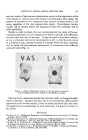
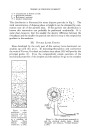
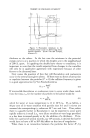
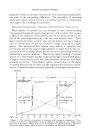
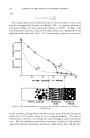
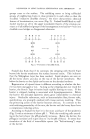
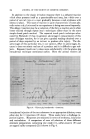
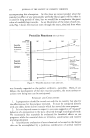
TOWARD EMULSION CONTROL 187 properties of films at oil-water interfaces are very limited and clearly points out some of the outstanding difficulties. The desirability of obtaining information about surface viscosity and surface potential is emphasized. This ought to be a challenge to somebody! EMULSION COMPOSITION: VISCOSITY AND ELECTRICAL CONDUCTIVITY When spheres of uniform size are arranged in their closest packing (close-packed hexagonal) seventy-four per cent of the volume they occupy is filled by the substance of the spheres, and the remaining twenty-six per cent of the volume represents the voids that exist between them. These figures remain the same no matter what size the spheres may be, as long as they are all the same size and the container is large compared to a single sphere. This geometrical fact induced some authors to speculate that seventy-four per cent by volume might represent an upper limit for the con- centration of the emulsified phase, and an increase in percentage would be followed by a reversal of phases. However by special packing of unequal spheres it is theoretically possible to get percentages of emulsified phase, as high as ninety-five per cent, and some emulsions of this sort have been produced in practice. Nevertheless, volume concentrations in the region of seventy-four per cent do often actually represent the maximum concen- tration of emulsion before inversion, especially of homogenized emulsions. PROPERTIES ,•__ o///• •.•L W/O EMULSION or POLYHEORAL-- FOAM I •TYPE OROPLETS I % EMULSION -.• W///0 : I • IPO LYHEORAL- FOA• / • m rrYpE OROPLET:•/• • I ø P.ASE I..ASE or u. "--- .• or POLYHEORAL--FOAM • '• • • •v POLYH EORAL-- FOAM W '-• •'• "• 0 TYPE •//0 I n ' • •' - .-•' - '/W ...... o io •o •o 40 •o so 7o .o 90 ,oo •/o---w ,oo so eo 7o •o •o •o so ao ,o o Figure 1.--The variation of properties of emulsions with changes in composition. If in- version occurs there is a discontinuity in the description of the property, as it changes from one curve to the other. Below 74 per cent the emulsion has spherical droplets, and above 74 per cent there is either a phase inversion or the droplets are deformed to polyhedra.
Purchased for the exclusive use of nofirst nolast (unknown)
From: SCC Media Library & Resource Center (library.scconline.org)