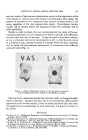
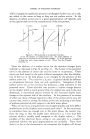
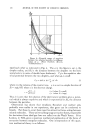
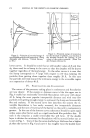
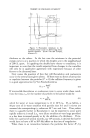
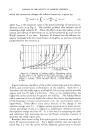
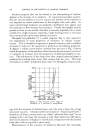
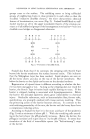
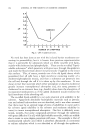
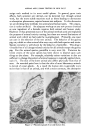
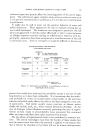
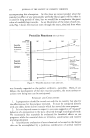
198 JOURNAL OF THE SOCIE•IY OF COSMETIC CHEMISTS less resistant to penetration than is the surface epidermis, and material may break through these sidewalls into the corium (Fig. 1). Such routes of absorption through the pilosebaceous apparatus have been shown to exist for an extremely large number of materials. Just to mention two impor- tant examples, metallic mercury and sulfonamides are absorbed by the follicular route but cannot pass the epidermal barrier.* Because a great number of substances can be absorbed only through the follicles, it has been assumed that if small amounts of water and electrolytes are absorbed this goes via follicles. But direct evidence for this assumption is still lacking. I am confident that all these problems of percutaneous absorption will be solved soon by the use ofradioisotopes and ofradioautograph techniques. Studies on permeability of the isolated epidermal barrier of Szakall also will help to differentiate more clearly the pathways of percutaneous absorption. P}t^cTm^I, APP•,IC^T•oss oF PE}mux^sEous ABso}tPX•OS The easy absorption of lipid-soluble hormones, vitamins and other pharmacologically active agents through the skin has often brought up the old problem as to whether percutaneous application of drugs has any ad- vantage over the peroral or parenteral administration. Percutaneous application as contrasted with systemic administration, certainly enables us to create, at least temporarily, a higher concentration of the drug at the site of the local application in the skin tissue than is possible with any other method. Such locally high concentrations at the site of application has been unequivocally proved in many instances, particularly for hormones. We have shown, for instance, that in the guinea pig unilateral percuta- neous application of estrogens to a nipple will cause unilateral swelling and unilateral hyperpigmentation as long as the dosage remains small. How- ever, larger doses applied unilaterally result in bilateral swelling and hyper- pigmentation due, of course, to absorption into the blood stream. It is quite obvious that the dosage of a hormone via the skin never can be as accurate as by mouth or by injection. The danger that the impatient patient who wants to get rid of her facial wrinkles in a great rush and who will put on an excess amount of hormone cream is much greater and much more difficult to prevent than if the hormone is given systemically. This is probably the reason that many physicians are rather opposed to the use of hormone creams. While a fraction of the hormone will be bound and metabolized by the skin, an undetermined ratio will be absorbed into the blood and will have systemic effects. The inherent danger of overdosage of hormones if given through the skin in a rather uncontrolled fashion is indeed quite serious. * Even lipid-soluble substances may prefer or use exclusively the transfollicular route, e.g., vitamin A (6).

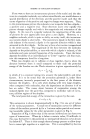
MECHANISM OF PERCUTANEOUS PENETRATION AND ABSORPTION 199 Of course, the principle of topical dermatotherapy as a whole rests on the creation of a locally high concentration of drugs in the skin without appreciable systemic effects. However, in dealing with lipid-soluble mate- rials which penetrate with ease through the epidermis, one should always be aware of the possibility of massive absorption and consequent undesir- able systemic effects. A particularly dangerous feature of topical applica- tions is that in most cases the absolute amount of the drug placed on the skin is not being measured. ABSORPTION FROM DERMATOLOGICAL AND COSMETIC PREPARATIONS An important feature of transepidermal absorption is that it apparently makes very little difference in what kind of vehicle, base or carrier the sub- stance to be absorbed is incorporated in when it is applied to the skin. It depends exclusively on the nature of the substance, whether it will become absorbed or not. Salicylic acid, for instance, will be easily absorbed from water, from alcohol, from greasy ointments, from oil-in-water emulsions and from water-in-oil emulsions. Sodium salicylate will not be absorbed from any of these bases. In this respect transepidermal absorption differs greatly frcm trans- follicular absorption. In the latter much depends on how the material is brought to the follicular pore. First, an increase in wetting will bring the material closer to the pore funnel. Using wetting agents the surface tension between liquid and air and between liquid and pore is diminished, droplet formation is prevented and a continuous surface layer can be main- tained at the liquid/solid boundary. Second, simply mechanically, i.e., by rubbing, the material can be pressed into the follicular canal. There- fore, ointments which are supple and can be easily spread and smoothly rubbed have a mechanical advantage over tough, tenacious, stiff or sticky ointments or aqueous and alcoholic solutions. Only in this mechanical sense is a "vehicle" a true carrier but never in the sense that it carries mate- rial into living cells. Data are available showing that vehicle and incor- porated drugs separate in the follicular canal. It is by no means clear what happens to the vehicle once the substance gets through transepidermally or transfollicularly. I mentioned that higher hydrocarbons are absorbed poorly if at all. Some data in the litera- ture indicate that follicular penetration is slower, the more hydrophobic the fat is, or at least that penetration of petrolatum is always poor as com- pared with that of triglycerides. The only instance I know of in which radioisotopes were used to clarify absorption of fatty substances used in ointment bases was the work of Barail and Pescatore who reported that if the U.S.P. cold cream is made up with spermaced which is labeled with C TM no permeation of this spermaceti can be demonstrated through human skin.
Purchased for the exclusive use of nofirst nolast (unknown)
From: SCC Media Library & Resource Center (library.scconline.org)