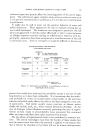
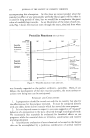
200 JOURNAL OF THE SOCIETY OF COSMETIC CHEMISTS PROSPECTS FOR THE FUTURE In the field of percutaneous absorption through human skin, some frag- ments of knowledge have been put together in painstaking experiment during the last fifty years. But no matter how carefully the work was done it was always fraught with pitfalls, and the interpretation was difficu]t. I believe that with the advent of radioisotopes and radioautograph tech- niques a much more rapid progress can be expected. These new methods secure safer grounds than hitherto available. Possibly in the next few years all major problems in this field will be resolved. REYERENCES (1) Rothman, S., "Physiology and Biochemistry ooe the Skin," Chicago, University ooe Chicago Press (1954). (2) Szakall, A., Fette u. Seifen, 53, 399 (1951). (3) Szakall, A., •lrch. Dermatol. u. Syphilis, 194, 376 (1952), (4) Wolf, J., Z.f. mikroskop.-anat. Forsch., 47, 351 (1940). (5) Pinkus, H., 7. Investig. Dermatol., 16, 383 (1951). (6) Montagna, W., ?roc. Soc. Exp. Biol. Med., 86, 668 (1954). CORRELATION BETWEEN ANIMAL AND HUMAN TESTING OF MATERIALS USED IN SKIN CARE* By EUGENE F. TRAUB, M.D., HERBERT J. SPOOR, PH.D., M.D. New York Medical College, New York City IN RECENT years there has been an increasing demand for more effec- tive methods of pretesting cosmetic and pharmaceutical products. This demand has been brought about not only because of the increased use of newer untried ingredients but also because there have been some instances of definite damage occasioned through use of presumably adequately tested products (1). It is becoming very clear that the methods which have been used in the past on either animal or human skins are in themselves not suf- ficient to give an absolutely clean bill of health to a cosmetic preparation. Our discussion will be an attempt to re-evaluate the testing methods that have been used in the past and, in the light of more current developments, we will propose certain modifications in procedure which may make pre- testing methods more ideal. There is one basic chemical point which should be made at this time, and that is that all materials applied to the skin in either cosmetics or pharmaceuticals are foreign to the skin and as such they are a definite hazard whenever they are applied (2). Obviously then, everything used on the skin must be pretested for this toxicity on either animal or man. It is apparent that nothing can be given * Presented at the September 23, 1954, Seminar, New York City.

200 JOURNAL OF THE SOCIETY OF COSMETIC CHEMISTS PROSPECTS FOR THE FUTURE In the field of percutaneous absorption through human skin, some frag- ments of knowledge have been put together in painstaking experiment during the last fifty years. But no matter how carefully the work was done it was always fraught with pitfalls, and the interpretation was difficu]t. I believe that with the advent of radioisotopes and radioautograph tech- niques a much more rapid progress can be expected. These new methods secure safer grounds than hitherto available. Possibly in the next few years all major problems in this field will be resolved. REYERENCES (1) Rothman, S., "Physiology and Biochemistry ooe the Skin," Chicago, University ooe Chicago Press (1954). (2) Szakall, A., Fette u. Seifen, 53, 399 (1951). (3) Szakall, A., •lrch. Dermatol. u. Syphilis, 194, 376 (1952), (4) Wolf, J., Z.f. mikroskop.-anat. Forsch., 47, 351 (1940). (5) Pinkus, H., 7. Investig. Dermatol., 16, 383 (1951). (6) Montagna, W., ?roc. Soc. Exp. Biol. Med., 86, 668 (1954). CORRELATION BETWEEN ANIMAL AND HUMAN TESTING OF MATERIALS USED IN SKIN CARE* By EUGENE F. TRAUB, M.D., HERBERT J. SPOOR, PH.D., M.D. New York Medical College, New York City IN RECENT years there has been an increasing demand for more effec- tive methods of pretesting cosmetic and pharmaceutical products. This demand has been brought about not only because of the increased use of newer untried ingredients but also because there have been some instances of definite damage occasioned through use of presumably adequately tested products (1). It is becoming very clear that the methods which have been used in the past on either animal or human skins are in themselves not suf- ficient to give an absolutely clean bill of health to a cosmetic preparation. Our discussion will be an attempt to re-evaluate the testing methods that have been used in the past and, in the light of more current developments, we will propose certain modifications in procedure which may make pre- testing methods more ideal. There is one basic chemical point which should be made at this time, and that is that all materials applied to the skin in either cosmetics or pharmaceuticals are foreign to the skin and as such they are a definite hazard whenever they are applied (2). Obviously then, everything used on the skin must be pretested for this toxicity on either animal or man. It is apparent that nothing can be given * Presented at the September 23, 1954, Seminar, New York City.
Purchased for the exclusive use of nofirst nolast (unknown)
From: SCC Media Library & Resource Center (library.scconline.org)