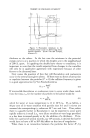
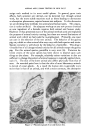
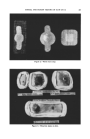
194 JOURNAL OF THE SOCIETY OF COSMETIC CHEMISTS TRANSEPIDERMAL ABSORPTION In the early 1920's the German physiologist, Herrmann Rein, demon- strated in the epidermis of human skin the presence of a rather superficially situated barrier for water, electrolytes and possibly for water-soluble non- electrolytes such as glucose. On the basis of electrophysiological experi- ments and experiments with dyes he came to the following conclusions: (1) this membrane lies at the boundary of cornified and noncornified epi- dermis, somewhere in the region of the stratum lucidum (2) it is a single cell layer with negative electric charge and is impermeable for anions and (3) cations tend to move inward across the membrane but will be held by electrostatic forces whereby easily demonstrable diffusion potentials develop. Long ago I suggested that this barrier has the characteristics of an electric double layer, the outer horny layer having a strongly acid, and the inner epidermal layer, a slightly alkaline reaction while the proteins of the inter- posed membrane layer are at their isoelectric point. The lipid film of the skin surface may delay percutaneous absorption only to a minimal degree because its constituents are miscible with water and permit the penetration of both water- and fat-soluble materials. Similarly, the loose part of the horny layer (stratum disjunctium) cannot be regarded as a true barrier for anything because it has large pores and is permeated even by gross molecule aggregates. However, a great number of substances are held below the stratum disjunctium just at the site of Rein's membrane. The best evidence that this "superficial barrier" exists and is somewhere at the lower end of the horny layer has been recently brought forward by Szakall (2, 3) when he successfully isolated at that level a fine membrane in human skin which showed quite specific properties. lie took advantage of Wolf's (4) Scotch Tape method which makes it possible to strip off the horny layer in extremely thin subsequent sheets in living subjects (5). In the description of Szakall these sheets consist of fairly coherent horny cells but if the groups of cells are treated with fat solvents they fall apart into tiny grains, "like sand." After an average of eight Scotch Tape appli- cations, the lower end of the horny layer is reached. Below it a fine, thin membrane can be separated which has a tough, apparently fibrous struc- ture. It is snow-white and rather transparent. The fibrils which form a fine network correspond with the fine folding lines of the surface. The membrane has a high tensile strength and is elastic. It remains cohere•t after treatment with fat solvents. The membrahe is rich in histochemically demonstrable sulfhydryl groups indicating that it is identical with Giroud's keratogenous zone. In this zone, just above the living cells of the Malpighian layer, apparently there is an unfolding of coiled polypeptide chains whereby hidden sulfhydryl

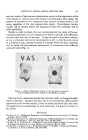
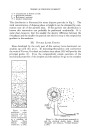
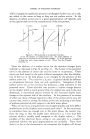
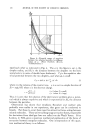
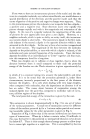
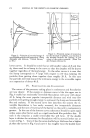
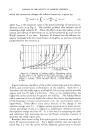
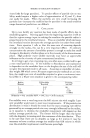
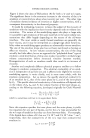
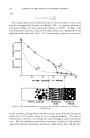
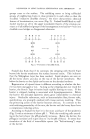
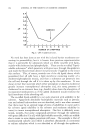
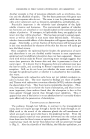
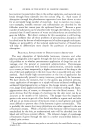
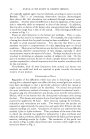
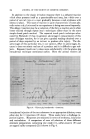
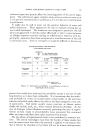
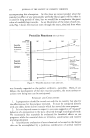
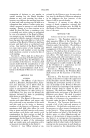
MECHANISM OF PERCUTANEOUS PENETRATION AND ABSORPTION 195 groups come to the surface. The unfolding seems to bring sulfhydryl groups of neighboring chains in close proximity to each other so that the so-called "oxidative disulfide closure," the most characteristic chemical feature of keratinization, can occur (Fig. 2). Indeed Szakhll finds no sulf- hydryl reaction at all in the upper noncoherent layers of the stratum cor- neum as if all sulfhydryl groups of the keratogenous zone had been built into disulfide cross bridges or disappeared otherwise. 0 H H OH --C--N--C--C--N--- HCH SH StI I HCH o Htt 0 H 0 H II 0 H II I II I --C--N--C--C--N-- tICI{ S S ItCH o I[ H o H Fig. 2.--Formation of disulfide bond. Szakall also finds that if he continues the stripping with Scotch Tape beyond the barrier membrane the surface becomes moist. This indicates that the Malpighian layer has been reached. Lipid droplets are seen on all the horny sheets and also on the top of the barrier membrane. But below the barrier no free lipids can be seen on the denuded surfaces. Regeneration of injured tissue is different according to whether the bar- rier has been damaged or not. As long as the stripping does not reach the barrier, the Scotch Tape irritation heals rapidly leaving no trace. If the barrier is stripped, healing is associated with hyperpigmentadon. Below the barrier the denuded epidermis shows great vulnerability to chemical injury. Oxidizable substances, such as leucomethylen blue, ferrous salts, quinhydrone, are promptly oxidized with tissue necrosis resulting. Thus the protecting action of the barrier becomes obvious. In contrast to the avid oxidizing potentiality of the fete, the barrier and the horny layer have a conspicuous reducing action. According to Szakall the barrier is the most acid layer of the epidermis (Fig. 3) with a minimum of about pH 5. With the cornifying cells ascend- ing in the horny layer the pH gradually increases. Below the barrier, the pH again increases until it gets close to 7.4, the pH of blood. It seems that circulation of the fiu!d of intercellular spaces (the "Saftstr6mung") stops at the barrier.
Purchased for the exclusive use of nofirst nolast (unknown)
From: SCC Media Library & Resource Center (library.scconline.org)