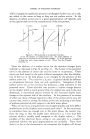
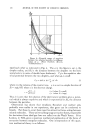
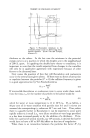
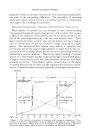
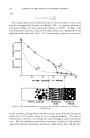
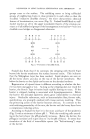
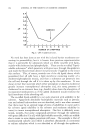
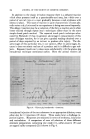
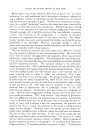
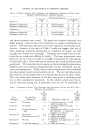
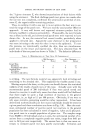
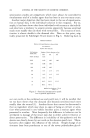
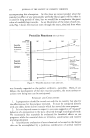
196 JOURNAL OF THE SOCIETY OF COSMETIC CHEMISTS pH 6,4 6.2 5.8 5.6 5.4 5.0 4.$ 0 1 2 3 4 5 6 7 8 9 10 NUMBER OF STRIPPINGS Fig. 3.--pH of epidermal layers. No work has been done as yet with the isolated barrier membrane con- cerning its permeability, but it is known from previous experimentation that it is permeable for substances which are freely miscible with lipids, mainly with cholesterol and phospholipids. These are the so-called "lipold- soluble substances" which penetrate with great ease through the epidermis and reach the blood stream almost instantaneously if applied to the intact skin surface. This, of course, reminds one of the old lipold theory which postulated that all cells have a lipid membrane consisting mainly of a cholesterol-phosphatide mosaic, and that a substance can penetrate into the cell and through the cell if it is taken up by this membrane. It was shown in fact that materials which either precipitate or dissolve cholesterol greatly increase transepidermal absorption and, vice versa, presence of cholesterol in an ointment base (e.g., lanolin) slows down the absorption of incorporated medicaments as if the added cholesterol would reinforce the lipid membrane of the absorbing cell. The so-called lipold-solubility is not quite identical with solubility in fat solvents. Apparently absolutely hydrophobic materials such as petrola- rum and related hydrocarbons are not absorbed, and it was often assumed that there must be an optimal range of ratio of solubilities in water and in fat solvents (good solubility in fat solvents and moderate solubility in water) to insure transepidermal absorption. One fact is definitely ascer- tained, namely, that polar compounds penetrate through the epidermis with great difficulty if at all, while lipid-soluble materials, which are soluble also in water to some degree, penetrate with ease. One example is that of nondissociated salicylic acid which is absorbed abundantly as contrasted to sodium salicylate which is not absorbed at all through the epidermis.

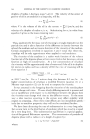
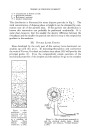
MECHANISM OF PER CUTANEOUS PENETRATION AND ABSORPTION 197 Another example is that of poisonous alkaloids such as strychnine, nico- tine and the alkaloids of opium. The free bases penetrate with great ease while their aqueous salts do not. The same is true for pharmacodynami- cally active substances such as histamine, epinephrine, acetylcholine, etc. Practically important is the relatively easy absorption of the lipid- soluble vitamins and hormones. The controversial question of whether sex hormones are absorbed or not should indeed not be controversial and subject of polemics. If estrogens, in lipid-soluble form, are applied to the intact skin they will be absorbed. This has been proved in animal experi- ments as well as clinically in man many times beyond doubt. Of course, whether demonstrable effects of this absorption will appear depends on the dosage. Admittedly, a certain fraction of the hormone will be bound and in due time metabolized by elements of the skin but the rest will easily get into the blood stream. How completely the epidermal barrier hinders the penetration of water and electrolytes is not yet clarified mainly because in most experiments epidermal and transfollicular absorption have not been separated. Recent work with tritium oxide by Pinson concerning water strongly suggests that water does penetrate the human skin and that it penetrates in form of water vapor. It is known that in the gaseous form any substance may pass the barrier easily, and according to Pinson's experiments water is not an exception. Still, we do not know yet whether the water actually passes through the epidermal barrier or whether it is absorbed by the transfollic- ular route. Experiments with radioactive salts have not yet yielded conclusive re- suits in human skin. The most impressive findings are those of Loefiqer and Thomas with radioactive strontium chloride (Sr89C12) solution through the shaved skin of rats. They found quite considerable absorption. How- ever, here again we do not know the route of absorption, and what is even more important, these authors found that the absorption is four to five times greater through injured than through intact epidermis. Thus it appears that even if the barrier is not an absolute barrier it certainly hinders quite effectively the penetration of electrolytes. TRANSFOLLtCULAR ABSORPTION The pathway through hair follicles, in contrast to the transepidermal route, does not require passage through a barrier but leads through an air- filled canal to the mouth of the sebaceous glands the cell membranes of which are much more penetrable than is the epidermal barrier. From the sebaceous glands materials may penetrate downward into the corium and from there into the blood stream or upward into the epidermis. There the material may reach the barrier from below but will not penetrate through it (Fig. 1). Also the sidewalls of the follicles, the follicular epithelium, are
Purchased for the exclusive use of nofirst nolast (unknown)
From: SCC Media Library & Resource Center (library.scconline.org)