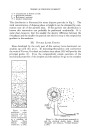
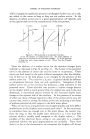
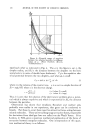
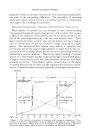
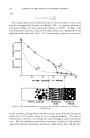
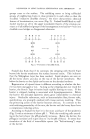
THEORY OF EMULSION STABILITY 177 (4) Harkins, W. D., "The Physical Chemistry of Surface Films," New York, Reinhold Pub- lishing Co. (1952). (5) Cockbain, E.G., and McRoberts, T. S., 5 t. Colloid Sci., 8, 440 (1953). CREDITS Figure 1 Weiser, "Colloid Chemistry," 1ohn Wiley & Sons, Inc., New York, N.Y., 1953. Figures 5 and 5. Alexander, A. E., anal Johnson, P., "Colloid Science," The Clarendon Press, Oxford, England, 1949. Figures 3, 6 and 7. Van den Tempel, M., "Stability of Oil-in-Water Emulsions," Rubber Stichting, Delft, Holland, 1953. Figures 4 and 8. Kruyt, H. R., Ed., "Colloid Science," Vol. I, Elsevier Publishing Co., Amsterdam, Holland, 1952. COSMETIC SEMINAR SEPTEMBER 15 AND 16, 1955 THE BARBIZON PLAZA HOTEL Three half-day symposia will be presented with three or four papers each, on topics of current interest to the cosmetic in- dustry. On Thursday, September 15th, the program will consist of four papers on The Use of Radioactive Isotopes in Cosmetic Re- search. During the afternoon of the same day, three papers will be given on Mechanism of Antiperspirant and Deodorant Ac- tivity. The third symposium will take place on Friday, September 16th with papers on Aerosols in the Cosmetic Industry. Trips to the following plants may be made during the afternoon. Mennen Bristol- Myers Shulton Avon Helena Rubinstein Reservations may be made by contacting Mr. William R. Giese, Society of Cosmetic Chemists, 2 East 63rd Street, New York City.

THE EVALUATION OF CHEMICALS BY APPLICATION TO ANIMAL SKIN* By L. W. HAZLETON, PH.D. Hazleton Laboratories, Falls Church, Va. SINCE OUR SOCIETY has had the benefit of many authorities on the subject of skin in previous programs, it would be unrealistic to take time at this point to discuss the anatomical and functional aspects of skin. Con- tinuing this process of delineating our subject matter, it does not seem appropriate to spend a great deal of time citing previous literature and abstracting or reviewing the significance of this vast volume of information as it pertains to our topic today. Rather, it would seem best to assume at least a working knowledge of this background and to refer to it only in general terms at appropriate times. This narrowing of scope brings us to the real heart of our topic namely, what is the objective to be achieved by evaluating chemical reactions on animal skin ? In the day-by-day operation of the laboratory our technical staff is faced with the problem of designing experiments to provide the answer to many questions based on skin reactions. I regret the necessity of calling so widely on their experience and presenting their opinions, as well as mine, without having them here to discuss this subject in detail. Our only real objective in evaluating skin reactions following application of chemicals is to achieve answers to specific questions. The vast volume of work conducted along these lines is that of evaluating hazards which might result from dermal exposure to chemicals. In our rapidly expanding chemical economy new chemicals are the rule rather than the exception. We have learned long ago that each chemical poses a hazard until evidence indicates otherwise. I am sure that this group would find any of these hazard studies extremely interesting if they were afforded an opportunity to see them and to interpret them into actual safety precautions, as we are required to do in order to safeguard research chemists and chemical users throughout the industry. This hazard, which may be defined as the probability of injury following exposure under conditions of use, may take the form of irritation, contact * Presented at the September 23, 1954, Seminar, New York City. 178
Purchased for the exclusive use of nofirst nolast (unknown)
From: SCC Media Library & Resource Center (library.scconline.org)