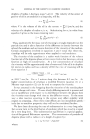
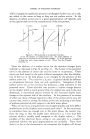
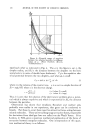
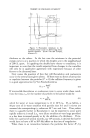
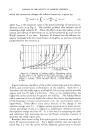
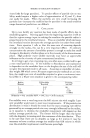
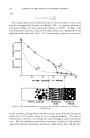
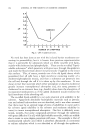
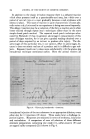
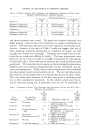
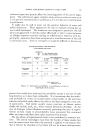
192 JOURNAL OF THE SOCIETY OF COSMETIC CHEMISTS (5) (6) (7) (8) (9) (10) (11) (12) (13) (14) 300 •k.U. The interface contained all the emulsifying agent, and simply increased in area as more agent was present in the system. Emulsions of this type can be centrifuged for half an hour at an acceleration of 25,000 times gravity without any migration of emulsified oil. Some results obtained in the colloid laboratory at Rensselaer Polytechnic Institute showed that the measured dielectric constant of emulsions of ethyl- ene glycol in mineral oil decreased regularly as the coalescence of the drop- lets took place. We were not aware at the time of the prior research of Piekara (Gdansk) on this very subject. A recently published book on emulsions contains an excellent survey of this work revised by Piekara (14). On the basis of our own results there certainly appeared to be here, in the measurement of dielectric constant, a direct and simple de- termination of the area of the interface, and hence a possible way of know- ing both the initial state and the changes due to aging of an emulsion. This conclusion is not contradicted by Piekara's findings, as he reported also a marked increase of dielectric constant with degree of dispersion in emulsions of water in transformer oil, ethyl alcohol and water in paraffin oil, and mercury in paraffin oil. But an extension of his investigations to o/w emulsions showed that the effect, while still present, was almost com- pletely counteracted by another effect, an orientation of adjacent dipoles of the internal phase, which unfortunately affects the measured dielectric constant in the opposite direction. At present the use of dielectric constant measurements for emulsion interface determination appears therefore to be practicable only for wfo emulsions. Nevertheless the same effect, though much less marked, is still present in o/w emulsions, and it remains to be seen if, with modern electronic apparatus, the small differences that make up the effect can be magnified for the important, practical use here suggested. BIBLIOGRAPHY (1 t Griffin, W. C., y. Soc. Cosmetic Chem., 1, 311 (1949). (2 McBain, J. W., "Colloid Science," Boston, D.C. Heath and Company (1950), pp. 19-21. (3) McBain, J. W.,Ibid.,p. 15. (4) Kremnev, L. Ya., and Ravdel, A. A., Kolloid. Zhur., 16, 17-28 (1954). Abstracted in Chem. •lbs., 48, 6780 (1954). Adam, N. K., and Stevenson, D. G., Endearour, 12, 25 (1953). Hutchinson, E., in H. Sobotka (Ed.), "Monomolecular I.ayers," A.A.A.S., Washington, D.C. (1954), pp. 161-174. Manegold, E., "Emulsionen," Heidelberg, Chemie und Technik Verlags (1952), p. 23. Richardson, E.G., Emulsions in Herroans, J. J. (Ed.), "Flow Properties of Disperse Systems," New York, Interscience Publishers (1953), pp. 39-60. Maxwell, J. C., "A Treatise on Electricity and Magnetism," 3rd Ed., Vol. I, Oxford, Clarendon Press (1892), p. 440. Eucken, Arnold, Forsch. Gebiete Ingenieurw., B. Forschungsheft, 353 (1932), also re- ported by Manegold, E., loc. cit., pp. 27-31. Dixon, H. H., and Bennet-Clark, T. A., Proc. Roy. Dublin Soc., 19, 421 (1930) 20, 211 (1932). See Chem. Abs., 24, 3691 and 26, 3713. Levius, H. P., and Drommond, F. G., •. Pharm. andPharmacol., 5, 743 (1953). Van der Waarden, M., •. Colloid Sci., 7, 140 (1952) 9, 215 (1954). Clayton, W., "The Theory of Emulsions and Their Technical Treatment," 5th Ed., by Sumner, C. G., New York, The Blakiston Company (1954), pp. 241-244.

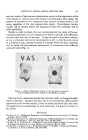
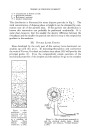
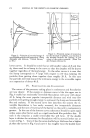
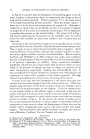
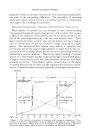
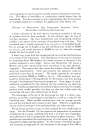
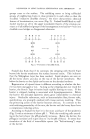
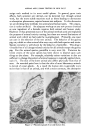
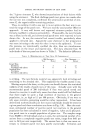
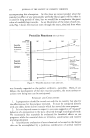
THE MECHANISM OF PERCUTANEOUS PENETRATION AND ABSORPTION* By STEPHEN ROTHMAN, M.D. Section of Dermatology, Department of Medicine, University of Chicago, Chicago 37, Ill. IN THIS DISCUSSION the term "percutaneous absorption" will be used as meaning the penetration of material through the skin into the blood stream. To indicate penetration from the outside into the skin but not beyond it, I shall use the term penetration. There are two main pathways for penetration into and absorption through the mammalian skin: the transepidermal and the transfollicular routes (1) (Fig. 1). * Presented at the December 9, 1954, Meeting, New York City. TRANSFOLLICULAR ROUTE TRANSEPIDERMAL ROUTE ,-.HORNY LAYER -EPIDERMAL BARRIER -MALPIGH'IAN LAYER GORIUM Fig. 1.--Routes of percutaneous absorption. 193
Purchased for the exclusive use of nofirst nolast (unknown)
From: SCC Media Library & Resource Center (library.scconline.org)