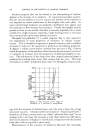
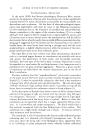
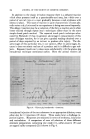
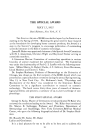
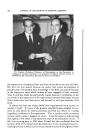
220 JOURNAL OF THE SOCIETY OF COSMETIC CHEMISTS . ....... - ..... :: "*:" ::::::• . .. -•..7. ....... ...:.:. ..... • • :•.. • .:: • :(:• .:I' .... [2' .•'•- 5" '• .... (.•'-•:': ... .. . .:..... ? .. Dr. Stephen Rothman, Professor of Dermatology at the University of Chicago (L.) accepts the Soc•.x¾ ov Cos•.xxc C•.msxs' Special Award of $1000 from Dr. Kenneth K. Russell, the Socx•.x¾'s president. the registration of empirical facts and both worry about the how and why. We don't do that merely because we realize that sound development is possible only if we possess basic knowledge in the field, but mainly because of the inquisitive spirit which imbues all men engaged in basic research. Your Award has made me particularly happy because it symbolizes to me your faith in the superiority of the experimental method which goes beyond direct observation and description and beyond hit and miss methods of all kinds. It always has been my sincere belief that experimental work carries its reward in itself. It is one of the greatest possible human delights to con- ceive an idea purely by mental processes and find our theory or working hypothesis confirmed in the experiment. This is creative work, no matter on how small a scale it happens to occur. I was fortunate in experiencing this rapture a few times in the thirty-six years of my laboratory career. I felt it as a young man in 1921 when I found the idea confirmed that the tyrosine level of the blood must decrease prior to sun tanning because cir- culating tyrosine is held back by the activated enzyme of the pigment form-

THE SPECIAL AWARD 221 ing cells when they manufacture melanin. And I felt it at a more mature age when I was able to prove the theory that ringworm of the scalp in children subsides spontaneously in puberty because, in the adolescent, increased amounts of free fatty acids are excreted to the skin surface and because these fatty acids are sufficiently fungistatic to hinder further thriving of the ringworm fungus. All laboratory workers know such happy episodes of research work which richly compensate for all the adversities, disappointments, failures, and frustrations which are the price we have to pay in the laboratory most of the time. On the other hand, with all due respect to the great inner satisfaction inherent in the work itself, I should confess that recognition from the out- side also feels very good. I experienced this, first at a school picnic in the sixth or seventh grade when I won third prize in broad jump in a track contest. In itself it was kind of a rapture to take off with terrific speed and, with the legs pulled up, to have the feeling of flying through space defying the gravitation of the earth. But afterwards I was even more enraptured when a tin medal was pinned on my sport shirt while I received applause. Since then, I have been honored in various ways, and it always felt good, even if the good feeling was mixed with some embarrassment and doubt whether I actually deserved the honor. I feel the same way now. But the honor you are conferring on me today surpasses all previous ex- periences in that good warm feeling. Needless to say, my feeling of grat- itude is reinforced by the handsome monetary reward accompanying the honor, a quite magnificent reward for a man in academic life. I thank you. CHICAGO SECTION NEWS Miss J^sE GREGORY, Director of Consumer Service of the Toni Company, was Mistress of Ceremonies at the annual "Ladies Night" on April 12, 1955. "Heads Up for Beauty,"a movie concerning hair care and styling was shown. Miss Gregory gave "behind the scenes" information regarding the production of the movie and answered questions from the audience in regard to hair fashion.' No meeting was held in May due to the meeting in New York City. Dr. A. R. Goldfarb, professor of biophysics at the Chicago Medical School, spoke on "Biophysical Methods of Research Applied to Cosmetic Problems," at the June 14, 1955, meeting. All meetings are held at Henrici's Restaurant in the Merchandise Mart on the second Tuesday of every month.
Purchased for the exclusive use of nofirst nolast (unknown)
From: SCC Media Library & Resource Center (library.scconline.org)