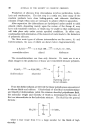
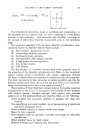
SILICONES IN THE COSMETIC INDUSTRY 25 SILICONES IN THE COSMETIC INDUSTRY T. W. WATSON, B.Sc.* A lecture delivered to the Society on Friday, 2rid November, 1956 IT WAS near the end of the nineteenth century that Professor Kipping began his classical research on organo-silicon compounds at Nottingham. Seeking to establish that organo-silicon compounds were capable of optical asymmetry in the same manner as their carbon analognos, Kipping, in fact, laid the foundation stone of what was to become a new branch of polymer chemistry and a thriving chemical industry. Kipping, who did succeed in preparing, purifying and identifying organo-silicon stcreoisomcrs, made a further vital contribution to the manufacturing processes involved in silicone preparation by modifying the Grignard reaction so that silicone intermediates could be prepared by this method. Present-day manufacture of silicone intermediates follows closely Kipping's method. Silicones are organo-silicon compounds having a structure of alternate silicon and oxygen atoms, organic radicals such as phenyl and methyl being attached to the silicon atoms. There are two main manufacturing methods used in the production of the intermediates from which silicones are obtained. Those are the Grignard reaction and the later "Direct method." Diagrammatically those reactions are shown below. heat Chlorosilanes Direct process :--Si + R C1 R SiCI• catalyst R aSiC1, mainly R •SiC1 Grignard :-- SIC14 + Mg + RC1/• The Grignard is the more elegant method since, by its use, the degree of substitution of the silicon atom can be more carefully controlled. For many purposes, however, the direct method is more economic, since it yields mainly the dichlorosilane without the necessity to convert elementary silicon into silicon tetrachloride. Whichever method is used, however, a certain amount of disproportionation takes place so that a variety of by-products are encountered. * Technical Service Department, Midland Silicones Limited, Barry, Glamorgan.

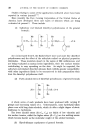
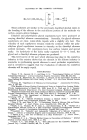
26 JOURNAL OF THE SOCIETY OF COSMETIC CHEMISTS Production of silicones from chlorosilanes involves purification, hydro- lysis and, condensation. The first step is a costly one, since many of the reaction products have close boiling-points, and elaborate distillation columns of high reflux ratio are necessary to achieve effective separation. After separation the chlorosilanes are hydrolysed under control to yield silanols which, depending mainly upon the nature of the Group R, may have only transient existence, or which may be stable so that condensation will take place only under certain specified conditions. In either case, condensation with elimination of the elements of water leads to the formation of polymeric silicones. The three main types of silicone intermediates are the mono-, di- and trichlorosilanes, the uses of which are shown below diagrammatically. H20 -- H20 2 R•SiC1 • 2 R oSi OH monochlorosilane silanol . RoSi--O--SiR• disiloxane The monochlorosilane can thus only dimerise. Its main use is as a chain stopper in the production of linear and cross-linked siloxane polymers. ß H•O R2S1C12 .... -+ R2Si(OH) 2' dichlorosilane silanediol 0 --•--0 --Si-- repeating unit of linear siloxane. From the dichlorosilanes are derived the linear polysiloxanes encountered in silicone fluids and rubbers. Cohydrolysis of trimethyl monochlorosilane and dimethyl dichlorosilane yields the common dimethyl polysiloxane fluid, the molecular weight and viscosity of which is determined by the ratio of the two intermediates in the hydrolysis mixture. The fluid has the general formula: Me•SiO-- i--O --O SiMe• • Me _In where n may range from 0 to a large number for the fluids of high viscosity.
Purchased for the exclusive use of nofirst nolast (unknown)
From: SCC Media Library & Resource Center (library.scconline.org)