NIPA-ESTER COMBINATIONS AS PRESERVATIVES AND ANTISEPTICS 31 Thus the speed and intensity of the interaction between esters and bacterial cell contents are influenced by the surface activity, adsorption capacity, lipoid/water distribution, and rapidity of saponification of the ester concerned. These facts have already been referred to by Th. Sabalitschka and one of us •. Accordingly, as already mentioned, the antibacterial effect of the esters increases with the size of the alkyl group. The hypothesis of a simple addition of the action of the two ester concentrations under consideration may sometimes be sufficient to explain the strengthening of the antibacterial action when two esters are used at the same time. But this simultaneous use of two esters can frequently give the impression of an increase in action. It is possible that one ester promotes the concen- tration of the other on the water surface, or bacterial cell surface, or that it increases its penetration through the cell wall or adsorption in definite regions of the cell. This gives a total action with a combination greater than simple addition of that of each separate ester. The failure of one single ester to kill or inhibit bacteria in an aqueous medium is usually because the necessary concentration is not soluble. If a second ester is added to the .highest obtainable concentration of the first one this failure can be obviated because the total ester concentration has been increased. If this second ester is at all effective on its own against bacteria in its highest concentration, the amount needed to be added to the original ester to get good results may be much below this maximum concentration. This use of a combination of two esters, therefore, affords the possibility of getting satisfactory antibacterial results with smaller total amounts of preservative than if one is employed alone, which has, of course, great practical advantages. In fact, two ester concentrations which when used separately are ineffective against a specific type of bacterium, when combined may show, all other conditions being constant, a strong action. This increase of bacteriostatic effect by the use of a suitable ester combination is very useful when the material to be preserved is of a difficult composition or the organisms likely to be encountered are particularly resistant, and it is also useful when attempts are being made at obtaining a bactericidal action. PRACTICAL CONSIDERATIONS It is obvious that ester combinations are as important for the various cosmetic preparations as they are for pharmaceutical and medicinal products. More than 20 years ago one of us •'*'4'• had already stated that pre- servatives for use in cosmetics should have the following properties: 1. The inhibiting effect should be lasting and should not depend upon volatile materials whose effects decrease because of continual evaporation.

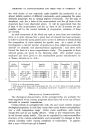
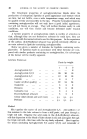
32 JOURNAL OF THE SOCIETY OF COSMETIC CHEMISTS 2. The antiseptic should be chemically unreactive so that it will not be inactivated by combination with another ingredient. 3. It should be unaffected even by long contact with the acids and alkalis which are sometimes present in cosmetic preparations. 4. It should in no way affect the reaction, odour, taste, colour and consistency of the product and it should cause no turbidity, bleaching, hardening, precipitation or flocculation. 5. It should not irritate the skin or the mucous membranes. . It should be unaffected by metallic salts, e.g., salts of aluminium, zinc, iron, and alloys, e.g., tinfoil, etc., from which collapsible tubes are made. 7. It should in no way affect the characteristic odour and flavour of essential oils and aromatic perfume compositions. In these publications the following additions of ester combinations were recommended: Sodium salt Sodium salt methyl propyl of methyl of propyl :p-hydroxy- p-hydroxy- p-hydroxy- p-hy droxy- Preparation benzoate benzoate benzoate benzoate % % % % Casein emulsion .... 0.25 q- 0' 1 q- 0.3 q- 0' 15 Cream containing 5-10 per cent fat 0.1 q- 0.1 or 0.12 q- 0.12 Creams with lecithin, cholesterol or hormones .... 0.25 q- 0.05 Emulsions ...... 0.1 q- 0' 05 Almond milk ...... 0•-15 q- 0-05 Nipa-ester combinations in the cosmetic field are of special importance if the preparation itself should also display an antimicrobial activity. The various esters are different from most other antiseptics or disinfectants in that they are harmless, non-irritating, practically neutral in reaction and are odourless and tasteless. They are widely and successfully used as antiseptic additions in tooth-paste, mouth washes, lotions of all kinds, powders and creams. Ester combinations are also recommended for such powders, ointments and lotions as are prescribed for direct application to skin infections, in which case the special ester combination used depends on the type of infection present and against which organisms the ester combination is particularly effective. In our experience with the use of two and more esters for the preservation of various types of products we have observed that the antimicrobial activity can be considerably increased by: 1. Use of more powerful Nipa-esters in the ester combination. 2. Increase in the number of esters in such combination. 3. Both 1 and 2 simultaneously.
Purchased for the exclusive use of nofirst nolast (unknown)
From: SCC Media Library & Resource Center (library.scconline.org)