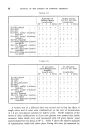
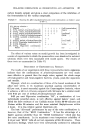
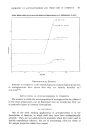
NIPA-ESTER COMBINATIONS AS PRESERVATIVES AND ANTISEPTICS 33 Experiments also indicated that the esters were not only suitable as preservatives as was originally intended but also for the maintenance of sterility under special conditions and even for direct sterilisation. In fact, we were able, through the above methods 1-3, to prepare new ester com- binations with more powerful microbiostatic and microbiocidal effects than any of the known esters or their known combinations. This had the advantage of reducing the necessary percentage of such ester combinations compared with mixtures recommended before. The first step, according to method 1, led us to a well-known ester combination 'Nipa 64' which is used for antiseptic treatmen• of paraffin- waxed papers, corks and similar equipment. Following method 2 and increasing the number of esters in the combina- tion caused the creation in 1942 of the preparation Nipasept. This consists of three esters and is recommended for eye drops, eye lotions and parenteral injection solutions in concentrations of 0-05-0.1 per cent. Method 3 resulted in the creation of even more powerful ester com- binations consisting of five different esters which are introduced as 'Nipa 82121' and 'Nipa 82123'. EXPERIMENTAL Recently, O. M. Littlejohn and W. J. Husa 6 have published a method of preservation for simple syrup USP which also corresponds with the above method 1. They found that the best inhibition of moulds in syrup is obtained through the addition of a mixture of 50 per cent Nipagin and 50 per cent Nipabutyl in a 1:4,500 dilution. The American Food and Drug Administration7 has accepted a com- bination of 0.18 per cent of the methyl ester and 0-02 per cent of the propyl ester for the preservation of aqueous suspensions of procaine penicillin. In this case, the problem was one of protecting the preparation against mould contamination, for which the p-hydroxybenzoates have been established as particularly effective. Effectiveness against bacteria was secondary because of the inherent antibacterial properties of penicillin. A more realistic evaluation of methyl and propyl p-hydroxybenzoate combinations under exaggerated conditions was reported by C. A. Lawrence 8, using ophthalmic preparations. The investigator reported a combination of 0'16 per cent methyl p-hydroxybenzoate and 0'02 per cent propyl p-hydroxybenzoate as effective against strains of Pseudomonas and Proteus. These results were obtained despite a high level of contamination. Lawrence's work indicates that for ophthalmic solutions, ester combinations are useful for the inhibition of at least two bacterial genera, Pseudomonas and Proteus. Similar observations were made by M. Klein and co~workers', who have

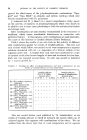
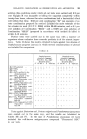
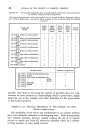
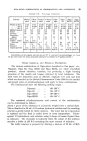
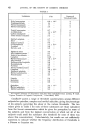
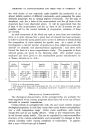
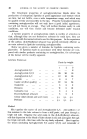
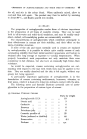
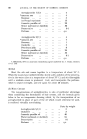
34 JOURNAL OF THE SOCIETY OF COSMETIC CHEMISTS proved the effectiveness of the p-hydroxybenzoate combinations "Nipa- sept" and "Nipa 82121" in atropine- and eserine- eyedrops which were heavily contaminated with Ps. pyocyanea. J. Schimmel and W. j. Husa TM, in a recent comprehensive study, report on the activity of mixtures of p-hydroxybenzoates which were shown to be additive and in some cases potentising in both the antimicrobial studies and storage tests. Ester combinations are also recently recommended in the treatment of moniliasis, which causes considerable disturbances in connection with antibiotic therapy. In this instance, ester combinations are used internally. The cause of this infection is Candida albicans (Robin Berkhout). Table I shows the results of our own tests on the activity of different ester combinations against two strains of Candida albicans. This test, and each of those which follow, was carried out at room temperature in aqueous solutions inoculated with 0.1 c.c. suspension of a 24-hour culture of the organism under test. A loopful from each tube was transferred to a tube of nutrient broth after known lengths of time and incubated for five days. Each test was repeated several times. In each case growth is indicated by + and no growth by --. TABLE I. Showing the effect of p-hydroxybenzoates and their combinations on two strains of Candida albicans at room tern Oerature Candida albicans Candida albicans (N.C.T.C. Z248) (Stamm 2 Sabalitschka) Growth after: Growth after: 5 •15 • 30 1 2 424hrs. 5 • 15 •30 1 2 424hrs. (1) 0.2% methylp-hydroxy- benzoate .. d- + + + + + + + + + + + + + (2) 0.24 % methyl f-hy- droxybenzoate .. + + + + + + -- + + + + + + -- (3) 0'04% propyl p-hy- droxybenzoate .. (4) 0.03% Nipa-ester com- bination 64 .... q- (5) 0.05% Nipa-ester com- bination 82121 .. + + + + + + -- + + -- (6) 0'1% Nipa-ester com- bination 82121 .. (7) 0.14% Nipa-ester c. om- bination 82121 .. -- -- (8) 0'075% Nipa-ester com- bination 82123 .. -- This test cmTied further work published by Th. Sabalitschka n on six strains of Candida albicans in which he indicates the success which can be achieved against this organism with combinations of the esters. We can confirm from the above tests that at room temperature and in aqueous
Purchased for the exclusive use of nofirst nolast (unknown)
From: SCC Media Library & Resource Center (library.scconline.org)