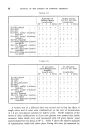
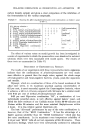
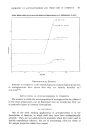
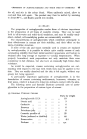
NIPA-ESTER COMBINATIONS AS PRESERVATIVES AND ANTISEPTICS 37 carbon dioxide output) and gives a clear comparison of the inhibition of the fermentation by the various compounds. TABLE V. Showing the effect of p-hydroxybenzoates and combinations on Bakers' yeast at 37 ø C. 2% glucose solution:- 1. Control 2. 0-2% metl•)l p-h3•lroxy•)'enzoa• 3. 13'075/o ethyl p-hydroxybenzoate 4. 0.04% propylp-hydroxybenzoate 5. 0.025 % n butyl p-hydroxybenzoate 6. 0.025% isobutyl p-hydroxyben- zoate 7. 0.015 % benzyl p-hydroxybenzoate 8. 0.03% Nipa-ester combination 64 0. 0.18% Nipasept ...... 10. 0.14% Nipa-ester combination 82121 ........ + q- q- q- q- q- (full fermentation) + + + + + (heavy ,, ) +++++ ( ) + + + + (mo&rat ' ,, ) + + (little ,, ) ++ ( .... ) + (very little ,, ) + ( ...... ) q- q- q- (some ,, ) The effect of various esters on mould growth has been investigated in a series of experiments in which the preservatives were dissolved in nutrient solutions which were then inoculated with mould spores. The results of these tests are summarised in Table VI. DISCUSSION OF EXPERIMENTAL RESULTS The results of our experiments with these representative micro-organisms indicate that the combinations of p-hydroxybenzoates are very much more effective in general than the single esters, against the whole range of Gram-positive and Gram-negative bacteria, yeasts, yeast-like organisms and moulds. Nipasept, which is a combination of three of the lowest members of the alkyl ester series, in its maximum practical aqueous concentration of 0.2 per cent, is most successful against the Gram-negative bacteria, where it achieves a kill in 1-2 hours compared with 24 hours for a similar result with 0.24 per cent of methyl p-hydroxybenzoate alone. 0.03 per cent Nipa-ester combination "64", a combination of two individually powerful esters, is very effective against bakers' yeast, and killed the more resistant of our Candida strains within 30-60 minutes and Proteus within 30 minutes and the more resistant Staphylococcus within 4 hours. It is less reliable against Bacterium colt. The best "all-round" performance by any of the ester combinations is, however, that of the "82121 Combination." It has the advantage of a higher aqueous solubility than the "82123 Combination" which also has five ester constituents. In its maximum room temperature solubility of 0.14 per cent "82121" kills all our test organisms within 30 minutes. These laboratory findings, which have been substantially confirmed in industriM

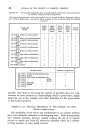
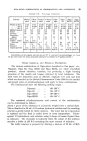
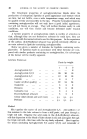
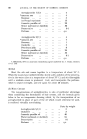
38 JOURNAL OF THE SOCIETY OF COSMETIC CHEMISTS TABLE VI. Showing the fungistatic effect of single p-hydroxybenxoates and combinations in nutrient solutions at room temperature (The stereum purpureum used was supplied by the Forest Products Research Labora- tory, Princes Risborough, and all the other moulds by the Commonwealth Mycological Institute) (1) (2) (3) (4) (6) (7) (8) (10) In glucose broth 0'02 % methyl p-hydroxyben- zoate 0.02% ethyl p'-•tydro c•benz'•atc 0-02 % propyl p-hydroxyben- zoate 0.02% n butyi 35-hyd•xybe•'- zoate 0.02% isobutil •-hydroxyben- zoate 0'01% benzyl' •-hydroxyben- v-oate ß . 0'02 % Nipa-ester combination ' '64" 0'02 % Nipa-e•t•r combination "82121" 0'02% Nipa-e•t•r combination "82123" .. 0'05% phenol gillus n ige •' q- q- .4•p gill: gmst, da• + + + -- _ -- __ -- __ + Pent- Pe• cillium cilli• brevi- roq, caule f•r + + + + _ _ + + __ _ -- _ __ _ -- __ __ __ + + i- •m Mucor [e- rnucedo , . + + __ + -- -- -- __ + In malt water Stereum purpureum (1) 0.01% methyl p-hydroxybenzoate (2) 0.01% propyl .... (3) 0.01% Nipa ester combination •1 (4) 0.01% ...... 82121 (5) 0.01% 82123 (6) 0.01% ... '.'. .. {7) 0-01% phenol ...... (s) 0.0s% ........ practice, show that by increasing the number of powerful esters in a com- bination we have produced an outstandingly effective preservative, highly suited for use in the cosmetic and other industries for the preservation of fine quality products. CHEMICAL AND PHYSICAL PROPERTIES OF NIPA ESTERS AND NIPA ESTER COMBINATIONS The solubilities of the esters and combinations in an aqueous medium have been indirectly indicated in the foregoing tests. Their incorporation into cosmetic products, however, usually requires the use of an organic solvent or vehicle and Table VII shows the solubility values for a number of Nipa products in some useful solvents.
Purchased for the exclusive use of nofirst nolast (unknown)
From: SCC Media Library & Resource Center (library.scconline.org)