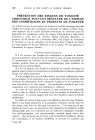
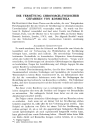
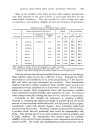
DIE VERHOTUNG CHRONISCH-TOXISCHER GEFAHREN VON KOSMETIKA 347 -stearat, Titandioxid, Zinkoxid,-carbonat und-stearat, Stglrke, Fettsgluren, hydrierte pflanzliche und tierische 01e, Walrat, Fettalkohole, Bienenwachs, Ozokerit, Carnaubawachs, Candelillawachs, Zuckerrohrwachs sowie Tragant, Gummiarabicum, Alginate, Carragenate, modifizierte Cellulosen und Polyvinylpyrrolidon (die t3 letztgenannten werden als L6sungen oder als Aufschwemmungen in Wasser oder Alkohol verwendet). Fl•ssigkeiten: Wasser, Aromawglsser, )[thyl- und Isopropyla!kohol, Glycerin, Propylenglykol, Hexylenglykol, Polyglykole, Polygthylenglykole, Sorbito170%, genussfghige 01e und Fette, Fettsgluren, die Butyl-, Isopropyl- und )[thylester yon Fettsgluren, Lanolin, Oleylalkohol, •thyl- und Butyl- lactat. Unter besonderen Reinheitsanforderungen zum AusschluB krebs- erzeugender Verunreinigungen werden die folgenden Stoffe als duldbar angesehen: Mineral61, fliissiges Paraffin, Petroleum, Vaseline, Fest-und Hart- paraffin. Gruppe C.-Ext. Fiir besondere Anwendungszwecke werden die folgenden Stoffe als duldbar angesehen, z.B. in Nagellack: Aceton, Dibutyl- und Dioctyl- phthalat sowie Nitroceilulose. Gruppe C.-W.R. In Aerosol-Prglparaten: Trichlormonofluormethan, Dichlordifluormethan, Trichlortrifluorgthan, Stickstoff, Kohlendioxid, Lachgas, Vinylchlorid, Methylchlorid und Propan-Butan-Gemische in geringen Konzentrationen. Die fo!genden Substanzen werden f/ir die Verwendung in Kosmetika als nicht duldbar angesehen: Tetrachlorkohlenstoff sowie Methylalkohol, letzterer mir Ausnahme seiner Verwendung zur Denaturierung yon fi•thyl- alkohol. Kalt-Dauerwell-Priiparate Thioglykolate, Thiolactate und verwandte Verbindungen werden in grossem Umfang gebraucht, sind aber chemisch sehr reaktiv und stark giftig. Diese Substanzen soilen auf die Gruppe C.-W.R beschrglnkt bleiben. Sie milssen strengen Anforderungen unterliegen, so dab Verunreinigungen ein- schlieBlish Dithio-Derivate und Schwermetalle ausgeschlossen sind. Die zulglssige H6chstkonzentration soil 8% sein (im Detail-Verkauf) und der maximale pH Wert 0,5 betragen. Die Hgnde der Friseure milssen bei der Anwendung geschiitzt sein.

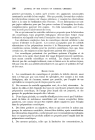
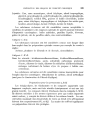
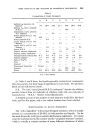
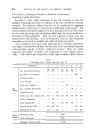
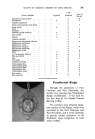
•48 JOURNAL OF THE SOCIETY OF COSMETIC CHEMISTS SOME ASPECTS OF THE ANALYSIS OF HOUSEHOLD DETERGENTS D.C. CULLUM, B.Sc., F.R.I.C.* A lecture delivered before a Joint Meeting of the Society of Chemical Industry and the Society on 2$rd March 1962, at Manchester. Comparison of analytical results shows that liquid detergents have simpler but more varied compositions than detergent powders. The "active ingredient" may be determined by titration in a two-phase system with a long-chain quaternary ammonium salt. The end-point is determined by migration of dyestuff ions from the aqueous to the organic phase, or vice versa. Both concentration and mean chain length of condensed phosphates may be determined by titration of the acid liberated when the diacid form is treated with silver ions, before and after acid hydrolysis. Flame photomerry provides a rapid method for the determination of sulphate. TI•E TERM "household detergent" is a vague one including, in its widest sense, laundry powders containing both soaps and synthetic detergents, liquid preparations, scouring powders and pastes, and "general household cleansers" in both powder and liquid form. In this paper the term refers to powders based only on synthetic detergents and intended mainly for laundry, and liquid detergents, also based on synthetics and intended mainly for washing-up. Nevertheless, some of the analytical procedures described are applicable to a wider range of compositions. Table 1 Detergent Powders Sodium C12 benzene sulphonate Cx2_14 monoethanolamide .. Total P•.O• as sodium triphosphate Sodium sulphate .. Sodium silicate .... Sodium perborate .. Sodium toluene sulphonate Carboxymethyl cellulose Unsulphonated hydrocarbon Sodium chloride •. Water ..... Fluorescent brightener A B C D 18.4 18.2 20-0 20.3 1.8 1.5 2.5 3.3 32.0 32.1 30.7 30-9 18.7 21.5 17.8 17-4 6.1 5.9 5.4 5.8 6-8 4.0 6-7 7-0 2.0 1.8 -- -- 0.9 0.8 0.8 0.9 1.0 0.9 1.1 1.0 0.2 0.2 1.2 0-7 11.8 12.6 15.6 12.6 Present Present Present Present *Colgate-Palmolive Ltd., Salford, Lancs.
Purchased for the exclusive use of nofirst nolast (unknown)
From: SCC Media Library & Resource Center (library.scconline.org)