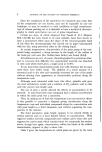
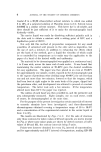
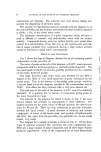
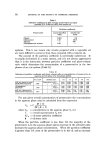
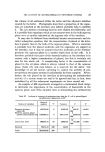
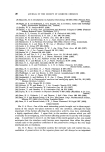
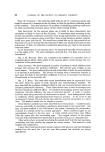
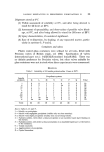
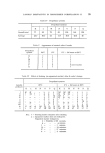
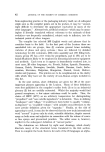
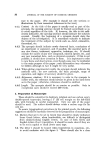
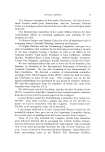
22 JOURNAL OF THE SOCIETY OF COSMETIC CHEMISTS activity of the systems again indicated the importance of the interface. An analysis of variance of the data is shown in Table HI. The two sources of variation shown are the only two assignable causes of variation in the extinction times, and both are highly significant (p = 0.001). The F-ratio indicates that the concentration of phenol in the aqueous phase has a greater effect in determining extinction time than does the oil:water ratio. This conclusion is in line with that reached by intuitive reasoning since for any given overall concentration of phenol, the oil:water ratio controls the phenol concentration in the aqueous phase, and it is the latter which largely determines activity. Of considerable interest is the interaction item which, when tested against the residual, is highly significant. It is sometimes difficult to understand the meaning of interactions in analyses of variance, but in this case the interaction between oil:water ratio and the concentration of phenol in the aqueous phase is in all probability the interfacial effect. Thus the statistical analysis of the data supports the conclusion derived from direct experi- mentation but additionally permits some estimate of importance to be assigned to the interface. Though highly significant it is statistically the least important of the three factors determining activity the magnitude of its effect is dependent on the other two factors. THE EFFECT OF TEMPERATURE The effect of temperature on the activity of bactericides in o/w systems may be complex. Any temperature in excess of about 50ø(2 will, per se, produce the death of vegetative cells either by protein coagulation or enzyme inactivation. There are, additionally, the indirect effects of tem- perature on the partition coefficient, and on the velocity of the bactericidal reaction. Our experiments studied the effects of temperature over the range 5-45 ø and revealed that the partition coefficient of some preservatives increases, and for others falls, as the temperature is raised (Table IV). Table IV Changes of partition coefficients as temperature of oil/water dispersions is increased from 5-45øC. Preservative Phenol Chlorocresol Chlorocresol Phenylmercuric acetate Oil phase Liquid paraffin Liquid paraffin Arachis oil Liquid paraffin Approximate ratio Køw at 45 ø Køw at 5 ø 260 per cent 170 .... 103 .... 50 ....

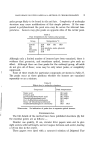
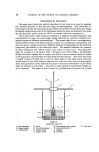
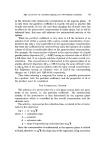
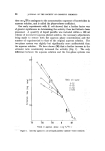
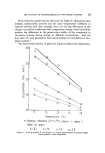
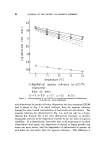
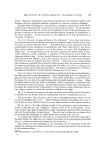
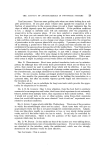
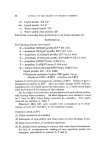
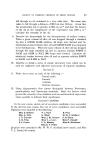
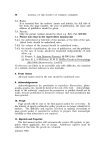
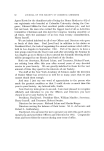
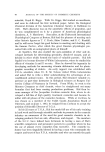
THE ACTIVITY OF ANTIBACTERIALS IN TWO-PHASE SYSTEMS 23 Even if the four preservatives referred to in Table IV all had the same intrinsic antimicrobial activity and the same temperature coefficient in aqueous solution-and they certainly have not-the big differences in the change of partition coefficients with temperature change would inevitably produce big differences in the preservative ability of the compounds in two-phase systems during storage at different temperatures. And yet how often are such parameters determined during the formulation of two- phase systems ? The bactericidal activity of phenol in liquid paraffin/water dispersions, 4-0 2.0 Figure 2. o o I I I I 5 15 75 35 Temperature o--Aqueous reference [0.5% W/v phenol in water) Ratio oiL'water A-0.2 rn-- 1.0 x :1'5 0:2'0 Activity against E. coli of 0.5% W/v overall concentration of phenol in light liquid paraffin--water dispersions
Purchased for the exclusive use of nofirst nolast (unknown)
From: SCC Media Library & Resource Center (library.scconline.org)