j. Soc. Cosmetic Chemists 16 31-38 (1965) ¸ 1965 Society of Cosmetic Chemists of Great Britain The Behaviour of Lanolin Derivatives in Pressurized Formulations II A. HERZKA* Presented at 3rd IFSCC Congress, New York, June 1964 Synopsis--The solubility of ten Golden Dawn lanolin derivatives in seven different pro- pellant/solvent systems, stored for six weeks at 0øC and 20øC, is described. The results indicate (1) that the solubility of four derivatives decreases on storage, (2) that the solubility of one derivative increases on storage, (3) that the solvent power of six of the propellant systems decreases on storage, and (4) that storage at 0øC does not materially affect the solubility of eight of the tested products. INTRODUCTION Having established the solubility and spray performance of ten lanolin derivatives in nine different propellant and propellant alcohol systems (1), further experiments were carried out with propellant/liquid paraffin systems, and with propellant/aqueous alcohol systems. The per- formance of these various compounds in a butane/aqueous alcohol system was also tested. The tests were carried out at 0øC and 20øC as previously (1). The following Golden Dawn products were tested' i. Anhydrous lanolin, B.P. ii. Wool alcohols, B.P. iii. Liquid lanolin "A.C.E." iv. Alcohol soluble lanolin. v. Liquid lanolin "50 Super." vi. Liquid lanolin "I.S.O." *Independent Consultant, London. 31

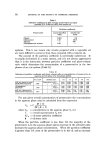
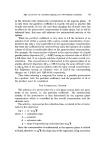
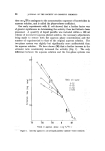
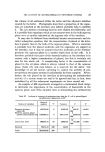
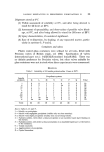
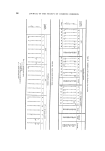
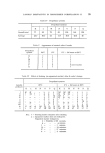
32 JOURNAL OF THE SOCIETY OF COSMETIC CHEMISTS vii. Liquid lanolin "R.I.C.2." viii. Liquid lanolin "L.I.N." ix. Water soluble lanolin "75." x. Water soluble wool alcohols "20." Full details concerning these products are to be found elsewhere (1). EXPERIMENTAL The following systems were tested: K- propellant 12/liquid paraffin B.P.* (2:1 w/w) L -- propellant 114/liquid paraffin, B.P.* (2:1 w/w) M wpropellants 11/12/liquid paraffin, B.P.* (1:1:1 w/w) N -- propellants 11 / 12/liquid paraffin, B.P.*/IlVIS** ( 1:1:1:1 w/w) 0 -- propellant 12/IMS**/water (1:5:3 w/w) P •propellant 114/IMS**/water (1:10:5 w/w) Q • butane mixture (40 psig)/IMS**/water (1:10:5 w/w) *liquid paraffin, B.P.--S.G. 0.885. ***industrial methylated spirits, DlV[7 grade, 74 o.p. Density at 15.6øC=0.7974. American proof 98.9. Systems 0 and Q give homogeneous solutions at 20øC. System P gave a homogeneous solution at 20øC. After six weeks' storage at 0øC, however, separation into two liquid layers had taken place, i.e. a small second liquid layer had formed at the bottom of the container. 5% by weight of each product was predissolved in each solvent system, with heating where necessary. All filled dispensers were allowed to stand for 1 hour at 20øC before being examined for solubility. The results observed are detailed in Table I. Dispensers filled with each variable were re-examined at 6 weeks' storage at both 0øC and 20øC, in the following manner: Dispensers stored at 20øC (1) Visible assessment of solubility. (2) Assessment of sprayability, and observation of valve blockage, if any. (3) Spray characteristics, if considered significant. (4) As shaking before spraying is common with water-based formulations, the ease of re-dispersion-by shaking-of any separated matter was examined, particularly in systems O, P and Q.
Purchased for the exclusive use of nofirst nolast (unknown)
From: SCC Media Library & Resource Center (library.scconline.org)