BOOK REVIEWS 41 anticipated but there is practically no sign of this. In the section dealing with antiperspirant and deodorant action, for example, it would have been easy just to give a brief resumg of the traditional half-truths, but the author's intellectual honesty is even here readily apparent. Cosmetic chemists seeking an introduction to the physiological background of their pursuits will find a great deal to interest them. Nowadays they need to be seriously concerned with potential side-effects and Jarrett demonstrates the correct perspective in relation to irritation, sensitization and carcino- genicity. We could find no reference to dandruff anywhere, which seemed a pity, but obviously Jarrett could not deal with every aspect of dermatology. Perhaps one day he will see fit to compile a larger and more embracing volume with the same type of enquiring approach in the meanwhile, the present one will certainly help to fill the gaps in many readers' understand- ing of the skin and its behaviour. N.J. VAN ABBE. ELSEVIER LEXICA 4: LEXICON OF PRESSURIZED PACKAGING (AEROSOLS). Compiled by A. Herzka. Pp. x + 159 + Ill. (19134). Elsevier Publishing Company, Amsterdam/London/New York. 70s. It is perhaps not too widely known that Elsevier publish a series of dictionaries each restricted to a distinct scientific field. These are intended to supply to technical interpreters and translators a reliable and comprehensive glossary of terms within a particular discipline or technology and to assist the worker seeking to abstract the essential features of a highly specialised publication in an alien tongue. Elsevier select for such Lexicons those languages in which a significant volume of relevant literature exists. The general editor, himself a former chief interpreter to the United Nations Organisation, usually entrusts the preparation to an acknowledged expert in the appropriate field, with assistance from similar authorities in those other countries in whose tongues equivalent terms are desired. The latest "pocket-book" in this series is devoted to the very new realm of aerosol technology. There are two obvious linguistic consequences of the remarkable development of the pressurized packaging industry. Semantic problems have arisen from the extended use of existing terms and the undisciplined coining of new ones, whilst the preponderance of specialist publications in the English language directly results from the pioneering roles of the U.S.A. and, subsequently, the United Kingdom. Many terms, borrowed

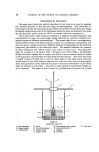
42 JOURNAL OF THE SOCIETY OF COSMETIC CHEMISTS from engineering practice or the packaging industry itself, are of colloquial origin and, as the compiler points out in his preface, it may be "exceed- ingly difficult to determine the appropriate equivalent in many of the other languages." Alternatively, artificial creations--which may be mean- ingless if literally translated without reference to the rationale of their evolution--are frequently assimilated, subject only to inflexion, into the technical patois of other tongues. The compiler has selected 263 English words and phrases that he considers basic to the field. In the first part of the Lexicon these are marshalled into six groups, thus (I) contains general terms including varieties of phase and spray systems these are followed by detailed terminology for (II) containers, (III) valve assembly and (IV) filling tech- niques group (V) has a few terms for propellants, and in (VI) are to be found 55 phrases likely to be employed in discussing laboratory equipment and methods. Each term as it appears is immediately rendered into, in most cases, 20 other languages, viz. French, Italian, Spanish, Rumanian, German, Dutch, Norwegian, Swedish, Danish, Russian, Czech, Serbo- croatian, Slovenian, Bulgarian, Hungarian, Finnish, Greek, Hebrew, Arabic and Japanese. The printers are to be complimented on the clarity with which they have set the variety of non-Roman scripts included in this list. In the next section, short definitions are given for 38 of the more important phrases appearing in the Lexicon. Many of these definitions were first published in the compiler's earlier book (1) or in an industrial glossary (2) but are usefully reiterated. Whilst the majority would find general acceptance, a few minor criticisms could be made. Thus, the choice of 105øF (40øC) as an arbitrary temperature for distinguishing "propellant" and "non-volatile ingredients" is debatable. Then, in defining "headspace" and "ullage," it would have been better to qualify "volume- in-dispenser" as "available volume," with suitable cross-references to the more precise definition given for "capacity." Finally, at the risk of appearing to cavil, it may also be observed that the now truly international word "aerosol" is given only its strict, scientific definition, despite current usage as both noun and adjective in connection with the release of coarse or fine sprays and pressurized powders. The wider sense is, however, implicit in the subsequent definition of "aerosol packs." The definitions are followed by eight neat drawings, which clearly illustrate many of the structural terms translated in the first section. Then to complete the book, there is for each of the 21 languages an alpha-
Purchased for the exclusive use of nofirst nolast (unknown)
From: SCC Media Library & Resource Center (library.scconline.org)