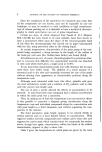
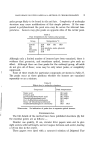
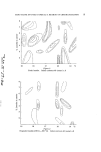
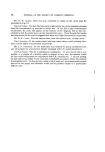
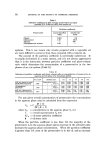
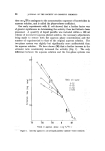
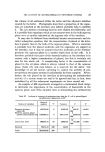
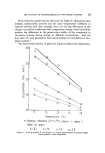
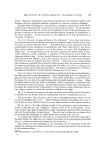
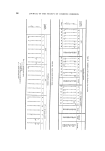
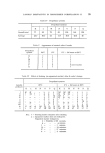
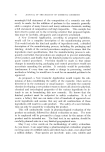
THE ACTIVITY OF ANTIBACTERIALS IN TWO-PHASE SYSTEMS 23 Even if the four preservatives referred to in Table IV all had the same intrinsic antimicrobial activity and the same temperature coefficient in aqueous solution-and they certainly have not-the big differences in the change of partition coefficients with temperature change would inevitably produce big differences in the preservative ability of the compounds in two-phase systems during storage at different temperatures. And yet how often are such parameters determined during the formulation of two- phase systems ? The bactericidal activity of phenol in liquid paraffin/water dispersions, 4-0 2.0 Figure 2. o o I I I I 5 15 75 35 Temperature o--Aqueous reference [0.5% W/v phenol in water) Ratio oiL'water A-0.2 rn-- 1.0 x :1'5 0:2'0 Activity against E. coli of 0.5% W/v overall concentration of phenol in light liquid paraffin--water dispersions

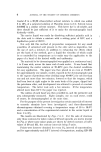
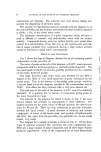
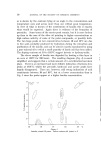
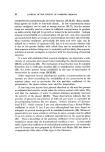
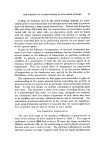
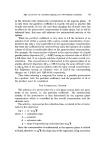
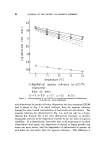
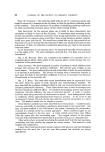
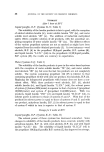
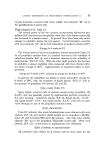
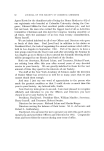
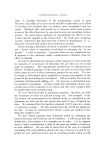
•24 JOURNAL OF THE SOCIETY OF' COSMETIC CHEMISTS ._• 2,0- .. • E [I- -. ... '.•__, ß • •0- "- ß •.o- T•.0- -o- .... -c- .... I I • I 5 15 25 35 •5 Temperature [øC] o--Hyp0thetica[ aqueous reference for/•.Oø/oW/v ch[or0creso[. Ratio oi[' water []=1.0 d-O'8 x-0'7 -0'6 ,-0.5 Fi#•re 8. Activity aõainst oe. coli o• 4.0% w/v overall conceDtmQon of ch]o•0c•eso] in •r•chis oiI--w•te• dispersions and chlorocresol in arachis oil/water dispersions has been examined (37,38) and is shown in Fig. 2 in which reference lines for aqueous solutions having the same overall concentration of bactericide are also shown. The aqueous reference for chlorocresol in Fig. 3 is, and can only be, a hypo- thetical line because the 4 per cent chlorocresol necessary to produce measurable activity in the dispersions exceeds by far the limit of aqueous solubility. It is immediately observable that at all temperatures at which observations were made, the dispersions of phenol in liquid paraffin and water are more active, and the dispersions of chlorocresol in arachis oil and water are less active than the aqueous reference. This difference is
Purchased for the exclusive use of nofirst nolast (unknown)
From: SCC Media Library & Resource Center (library.scconline.org)