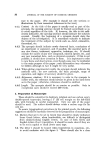
, JOURNAL OF THE SOCIETY OF COSMETIC CHEMISTS Explain what is meant by the "spreading coefficient." If the surface tension of water is 72.8 dynes/cm at 20øC, the surface tension of benzene is 28.9 and the interfacial tension between benzene and water is 35.0, what is the initial spreading coefficient ? Discuss the practical importance of wetting and spreading during the action of cosmetic preparations. SECTION B 3. Describe either the extraction and refining of fats and oils with refer- ence to those of cosmetic interest or a classification of the lipids indicating the uses of those of cosmetic interest. 4. Infra-red and ultra-violet absorption spectroscopy are of value for the identification of organic chemical substances, Write a short account of the physico-chemical principles upon which this statement is based. 5. What contribution would you expect chromatographic methods to make to the analysis of (1) an essential oil, (2) a fixed oil, and (3) a dyestuff ? Discuss the experimental procedure in one instance. SECTION C 6. Write short notes on what you know about six of the following perfumery raw materials Amyl cinnamic aldehyde Lavandin oil Citronellol The nitro musks Sandalwood oil East Indian Terpineol Lemongrass oil Linalyl acetate , (a) Suggest one simple formula of at least four constituents for each of the following types of floral perfume :- Lilac, violet, rose, and lavender Include if possible an approximate indication of the proportions of those constituents mentioned. (b) What factors need to be taken into account in formulating a perfume for a white toilet soap ? SECTION D 8. Discuss the limitations of the falling sphere method of measuring viscosity. A glass ball weight 0.157 g and 0.5 cm in diameter was allowed to

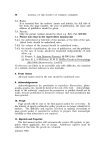
SOCIETY OF COSMETIC CHEMISTS OF GREAT BRITAIN 49 . fall through an oil contained in a very wide tube. The mean time taken to fall through a distance of 25.0 cm was 11.3 sec. Given that the acceleration due to gravity is 981 cm sec -•' and that the density of the oil at the temperature of the experiment was 0.85 g cc -•, calculate the viscosity of the oil. Describe the drop-weight for the determination of surface tension. When a given volume of olive oil was dropped through a standard tip into a 0.001M NaOH solution, 44 drops were formed and the interfacial tension between olive oil and 0.001M NaOH was computed to be 7.3 dynes/cm. When the same volume of olive oil was dropped through the same standard tip into an aqueous solution 0.001M in NaOH and 0.1$M in NaC1, 300 drops were formed. Calculate the interfacial tension between olive oil and an aqueous solution 0.001M in NaOH and 0.1$M in NaC1. 10. Describe in detail a series of simple laboratory tests which can be used for subjective and objective assessment of cosmetic emulsions. SECTION F• 11. Write short notes on each of the following :- Dental caries. Enamel. Calculus. Denture cleansers. 12. Using diagrammatic flow curves distinguish between Newtonian, pseudo-plastic and thixotropic materials. State the factors which govern the viscosity of an emulsion and use mathematical expressions where possible to indicate their significance. Successful Candidates In the new course, eleven out of seventeen candidates were successful. In the old two-year course, five out of seven candidates were successful. Diplomas were awarded to the following: Miss (3. Bellamy Miss A. Coils J. S. Crombie C. D. Foley E, J, Fowler P. J. Hunt (3. Ibbott Miss J. M. Johnson Miss V. J. Lavin P, A, Mawbey Miss S, V. Peters B. Price W. W. F. Scotland K. B. Shipp Miss P. Vassalli Miss M, Woodward •5 prizes were awarded to Mr. W. W. F. Scotland (new course), and Miss ¾. J. Lavin {old course).
Purchased for the exclusive use of nofirst nolast (unknown)
From: SCC Media Library & Resource Center (library.scconline.org)