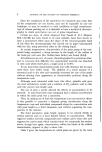
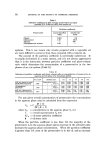
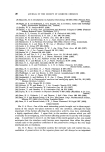
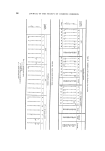
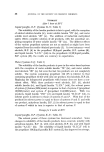
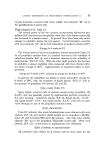
32 JOURNAL OF THE SOCIETY OF COSMETIC CHEMISTS vii. Liquid lanolin "R.I.C.2." viii. Liquid lanolin "L.I.N." ix. Water soluble lanolin "75." x. Water soluble wool alcohols "20." Full details concerning these products are to be found elsewhere (1). EXPERIMENTAL The following systems were tested: K- propellant 12/liquid paraffin B.P.* (2:1 w/w) L -- propellant 114/liquid paraffin, B.P.* (2:1 w/w) M wpropellants 11/12/liquid paraffin, B.P.* (1:1:1 w/w) N -- propellants 11 / 12/liquid paraffin, B.P.*/IlVIS** ( 1:1:1:1 w/w) 0 -- propellant 12/IMS**/water (1:5:3 w/w) P •propellant 114/IMS**/water (1:10:5 w/w) Q • butane mixture (40 psig)/IMS**/water (1:10:5 w/w) *liquid paraffin, B.P.--S.G. 0.885. ***industrial methylated spirits, DlV[7 grade, 74 o.p. Density at 15.6øC=0.7974. American proof 98.9. Systems 0 and Q give homogeneous solutions at 20øC. System P gave a homogeneous solution at 20øC. After six weeks' storage at 0øC, however, separation into two liquid layers had taken place, i.e. a small second liquid layer had formed at the bottom of the container. 5% by weight of each product was predissolved in each solvent system, with heating where necessary. All filled dispensers were allowed to stand for 1 hour at 20øC before being examined for solubility. The results observed are detailed in Table I. Dispensers filled with each variable were re-examined at 6 weeks' storage at both 0øC and 20øC, in the following manner: Dispensers stored at 20øC (1) Visible assessment of solubility. (2) Assessment of sprayability, and observation of valve blockage, if any. (3) Spray characteristics, if considered significant. (4) As shaking before spraying is common with water-based formulations, the ease of re-dispersion-by shaking-of any separated matter was examined, particularly in systems O, P and Q.

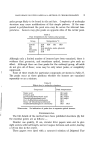
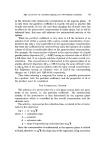
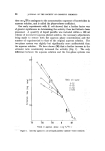
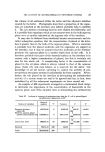
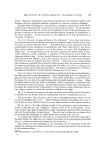
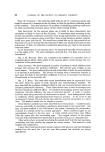
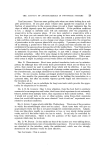
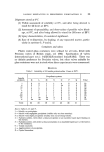
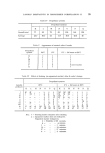
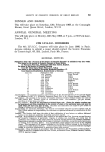
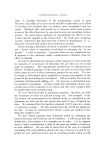
LANOLIN DERIVATIVES IN PRESSURIZED FORMULATIONS II 33 Dispensers stored at OøC (1) Visible assessment of solubility at 0øC, and after being allowed to stand for 24 hours at 20øC. (2) Assessment of sprayability, and observation of possible valve block- age, at 0øC, and after being allowed to stand for 24 hours at 20øC. (3) Spray characteristics, if considered significant. (4) Ease of re-dispersion, by shaking, of any separated matter, partic- ularly in systems O, P and Q. Containers and valves Plastic coated glass containers were utilised for all tests, fitted with Precision valves of British origin, ref. 1792. Specification of valves (international part nos.): 14/23/12/3/standard buna/6/19]2. There was no definite preference for Precision valves, but other valves suitable for glass containers were not in stock when these experiments were commenced. RESULTS Table I Solubility of 10 lanolin products after 1 hour at 20øC. Lanolin products i ii iii iv v vi vii viii ix x Propellant systems K L M • 0 P 9 2 2 1 1 4 5 4 3 2 1 1 5m 6 4 1 1 1 1 4 4 4 4 5 2 1 5 5 4 1 1 1 1 5 5 5 1 1 1 1 5 5 6 1 3 1 1 5 5 6 1 1 2 1 5 5 4 4 4• 4• 3 2 2 2 4m 4m 4m 1 2 2 2 Total 22 24 18 12 42 44 41 Total 19 22 16 26 19 20 22 19 21 19 Key 1---- 2= 3---- 4= 5---- 6---- •= to Tables I, II and V. Soluble, no prdcipitate. Soluble with negligible precipitate (visible only on close scrutiny). Soluble with slight precipitate (readily seen on inverting bottle). Partially soluble, with either a dense precipitate or an insoluble liquid layer floating on the surface. Partially soluble, with either a dense precipitate or an insoluble liquid layer at the bottom of the container. Totally insoluble. Agglomeration of precipitate. Crystal formation.
Purchased for the exclusive use of nofirst nolast (unknown)
From: SCC Media Library & Resource Center (library.scconline.org)