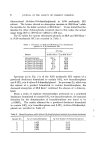
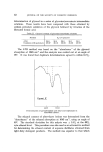
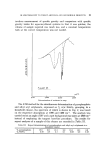
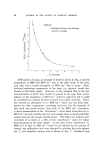
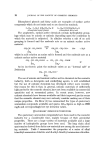
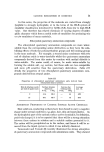
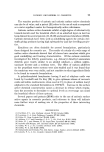
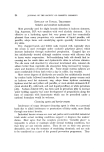
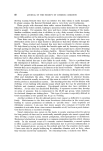
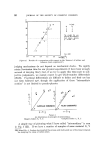
18 JOURNAL OF THE SOCIETY OF COSMETIC CHEMISTS Ethoxylated phenols and fatty acids are examples of surface active compounds which do not ionize and so are classed as nonionic. C, I-I•,. C• I-I4.0 (CH,.CH,.O)x I-I C•, Ha, CO0(CI-I,CH,O)x H ethoxylated nonyl phenol ethoxylated fatty acid The amphoteric, surface active chemicals contain hydrophobic group- ings which may be anionic or cationic depending upon the conditions to which the material is subjected. In alkaline solution a salt of an acid grouping is formed and the molecule acts as an anionic surface active material. NaOH CHa. TH . CH• COOH •--- CHa.•H . CH 2 COO- Na+ + H•O NH• NH2 whilst in acid solution an amine salt is formed and the molecule acts as a cationic surface active material CHs. CH.CH•COOH • CH 8.CH.CH•.COOH NH• NHa+ At its iso-electric point the molecule exists as an "internal salt" or Zwitterion CH a. CH. CH•COO- I NHa+ The use of anionic and nonionic surface active chemicals in the cosmetic industry, both as detergents and emulsifying agents, is well established but the use of cationic chemicals has developed rather more recently. One reason for this is that, in general, cationic materials of sufficiently high purity for the cosmetic chemist, have not been available in commercial quantities and at economical prices. In recent years, however, new cationic chemicals have become available and their improved purity means that the cosmetic chemist may now seriously consider making use of their unique properties. Du Brow (1) has summarized the types of quaternary ammonium compounds available and quotes LD50 figures as high as 2000 mg/k and correspondingly low eye irritation values. •)UATERNARY AMMONIUM COMPOUNDS The quaternary ammonium compounds have been used in the cosmetic industry for a considerable time, mainly because of their germicidal properties. There are a large variety of materials available and a large number of hydrophobic groups have been used. The long chain alkyl quaternaries derived from fatty raw materials are among the most interest- ing materiMs. Table I summarizes the properties of a series of alkyl trimethyl ammonium chlorides and di-alkyl dimethyl ammonium chlorides.

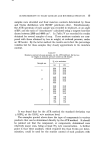
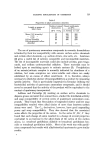
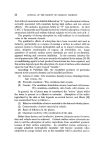
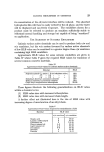
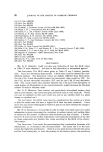
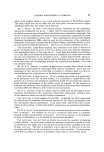
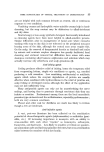
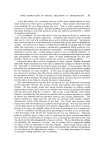
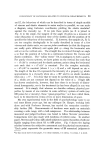
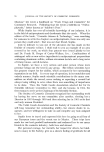
CATIONIC EMULSIFIERS IN COSMETICS 19 Table I Properties of alk' 71 ammonium chlorides Length or source of alkyl chain Mono C. 12 trimethyl ,, C.16 ,, C.18 Di•oco dimetl•l Dihydrogenated tallow dimethyl Surface tension (dynes/cm) 25øC 0.1% 33 34 34 30 37 Phenol coefficients at 37øC S. Aureus 25O 415 185 430 E. Coli 300 300 165 27O The use of quaternary ammonium compounds in cosmetic formulations is limited by their low compatibility with anionic surface active chemicals and certain other chemicals, e.g. sodium citrate, zinc salts, etc. Lawrence (2) gives a useful list of cationic compatible and incompatible materials. The list of incompatible materials could also include pectins, gum traga- canth, and sodium carboxymethyl cellulose. These materials may be looked upon as sensitizing agents to cationic systems ($). Precipitation of an anionic/cationic complex is normally indicated by cloudiness of a solution, but some complexes are water-soluble and others are easily solubilized by an excess of either constituent. It is, therefore, always necessary to check for absence of incompatibility in a product by measuring specific activity. This is particularly important in formulae utilizing the bactericidal activity of quaternary ammonium compounds, and it should never be assumed that the activity of the product will be equivalent to the content of quaternary incorporated. Addison and Furmidge (4) working on surface active chemicals to disperse grease and suint from animal fleece, studied the interfacial activity and soap compatibility of several series of quaternary ammonium com- pounds. They found that flocculation of suspended matter and low soap compatibility resulted when alkyl chains of more than fourteen carbon atoms were used. The C•4 derivatives, however, have good suspending power and soap compatibility. They also showed that the associated anion affects the properties of the cation. In the series Ci-, Br-, I- they found that each change of anion resulted in a change of overall properties equivalent to an increase in the alkyl chain of the cation of two carbon atoms, i.e. octadecyl pyridinium chloride ---- hexadecyl pyridinium bro- mide ---- tetradecyl pyridinium iodide. Most of the work was with pyridi-. nium compounds but results with alkyltrimethyl quaternaries gave similar results.
Purchased for the exclusive use of nofirst nolast (unknown)
From: SCC Media Library & Resource Center (library.scconline.org)