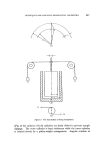
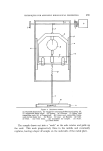
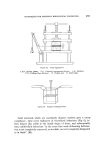
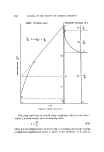
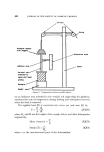
462 JOURNAL OF THE SOCIETY OF COSMETIC CHEMISTS (5) Williams, J. c. and Fulmer, E. J. J. Appl. Phys. 9 760 (1938). (6) McKennell, R. Anal. Chem. 28 1710 (1956). (7) Sherman, P. J. Soc. Cosmetic Chemists 111 591 (1965). (8) Rebinder, P. A. and Semenenko, N. N. Doklady Akad. Nauk. SSSR, tt4 835 (1949) (9) American Society for Testing Materials, ASTM 5-25 D217-52T. (10) Haighton, A. J. J. Am. Oil Chemists Soc. 311 345 (1959). (11) Sambuc, E. and Naudet, M. Rev. Franc. Corps Gias 11 10 18 (1959). (12) Herschel, W. H. and Buckley, R. Kolloid Z. 39 291 (1926). (13) Green, H. Ind. Eng. Chem. Anal. Edn. 13 632 (1944). (14) Green, H. Industrial Rheology and Rheological Structures Chapter 9 (1949) (Chapman and Hall, London). (15) Wood, J. H., Giles, W. H. and Catacalos, G. J. Soc. Cosmetic Chemists 15 564 (1964). (16) Autard, P. to be published. (17) Kolbanovskaya, A. S. and Mikhailov, V. V. Colloid J. U.S.S.R. 23 606 (1961). (18) Van Holde, E. K. and Williams, J. w. J. Polymer sci. 11 243 (1953). (19) Fredrickson, A. G. Principles and Applications of Rheology (1964) (Prentice-Hall Inc., New York). (20) Saunders, P. R. and Ward, A. G. Proc. 2nd Intern. Congr. Rheology 284 (1954). (21) Scott-Blair, G. W. and Burnett, J. Lab. Pract. 11 570 (1957). (22) Ben-Arie, M. M. J. Polymer Sci. 17 179 (1955). (23) Szczesniak, A. S. and Farkas, E. ]. Food Sci. 27 381 (1962). (24) Prentice, J. H. British Food Manufacturers Research Association Research Report No. 69 (1956). (25) Ferry, J. D. in F. Eirich Ed. Rheology, Theory and Applications 2 433 (1958) (Academic Press, New York). DISCUSSION MR. A. Mogs: When one establishes with the aid of a viscometer the rheogram of a non-Newtonian fluid, for example pseudoplastic, can one tell from a graphical interpretation, or by calculation, the viscosity of this fluid at rest, i.e. for a rate of shear equal to zero, or for very low stresses such as those induced by solid particles settling in the vehicle? THE LECTURER: No, because it could well be that the pseudoplastic at rest is in fact not showing any viscosity, it might only have elasticity. A pseudoplastic at rest system consists of particles, or individual components, which are linked together, and as the rate of shear is increased this attraction is progressively broken down until eventually each of the particles acts independently, and simple Newtontan flow prevails. The structure at zero rate of shear is, however, quite different. There- fore by measuring the condition where there is complete breakdown and independent flow of particles, one obviously cannot get any information of the stationary structure where one has interaction and linkages between the particles. MR. Mogs: Could you tell me if a particular method exists to investigate the structure of sediments of flocculated particles in coarse suspensions? THE LECTURER: One of the methods is described under the heading of "Study of Stationary Structure" (page 446). This gives a simple method, involving a quite easily designed coaxial cylinder viscometer, for studying the elasticity of the structure in the steady state where there is linking between the particles. If one does not want to become so academic there is another method which can be carried out with a suitable commercial viscometer, where one first of all subjects the system to very high rate of shear to break down all the structure and get Newtontan flow, and one can then measure the rate of recovery of the structure at a very much lower rate

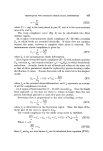
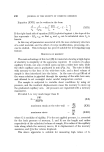
TECHNIQUES FOR ASSESSING RHEOLOGICAL PROPERTIES 463 of shear. One normally finds, for this very low rate of shear, if plotting the viscosity of the system against time, that initially the viscosity will be a minimum but it then will gradually build up with time to a steady maximum value. In the case of a simple w/o emulsion of medium concentration this takes something like 30 sec, but nevertheless one can get quite a number of readings in between. With pigment and other materials present in the continuous phase it takes rather longer. One then applies an equation to this data to find out what apparent volume fraction of material is actually present, i.e. one has the original particles which will once again link up in the stationary state. I am assuming that all the particles are approx. the same size but this need not be the case-and in between the particles one gets a certain amount of liquid which is bound to be held within the particles therefore the effective volume fraction disperse phase is higher than the actual volume of particles present. This apparent volume fraction can be determined from the equilibrium viscosity at the low rate of shear. This method was originally introduced by Mooney (26), who gave an empirical equation for determining the theoretical relationship between viscosity and volume fraction. All he did was to take this equilibrium viscosity measurement, transfer it to this graph, and find the apparent corresponding volume fraction. This was always higher than the theoretical value, and it gives some idea of the amount of liquid held within the aggregates. But unfortunately Mooney's equation was a very empirical one, he did not appreciate that particle size has a great influence. Because his equation held for some old data, he assumed that it could be applied to systems with quite different particle sizes, which is not true. I have discussed this question (7) and given an alternative equation which can be used. MR. N. ]. VAN ABBI•: It seems to me that rotational viscometers, which are quite elaborate and expensive instruments, are basically dependent upon delicate mechan- isms such as torsion springs. How often should calibration checks be made ? THE LECTURER: Most of the instruments described are quite simple, possibly apart from the commercial viscometer. The one described in p. 447 operates on a coaxial cylinder principle with a simple torsion wire. Obviously with any instru- ment one must periodically check whether the wire or spring is functioning correctly. It can be replaced and one can still get reproducible results. This raises just one point. Very often it is extremely difficult to reproduce a particular consistency. Even within a single batch of material there might be a wide range of consistencies, e.g. in a simple, spherical, baked cake, consistency measurements at different points reveal a wide variation from the centre to the . outside of the cake. This complicates matters because one is never certain that a stating panel and the instrument are testing the same product. MR. R. CLARK: Certain toilet preparations are now being consumed in sufficient quantities to merit their consideration for production by continuous methods, toothpaste for instance. Which of the various techniques mentioned would you recommend as a continuous viscometer for simple process control? TH• LECTURER: This is a very old problem for which there is no solution at present. The only instrument I know of which will function satisfactorily in a pipeline is the Ultraviscoson viscometer, but unfortunately this is only suitable for (26) Mooney, M. y. Colloid Sci. 1 195 (1946).
Purchased for the exclusive use of nofirst nolast (unknown)
From: SCC Media Library & Resource Center (library.scconline.org)