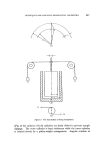
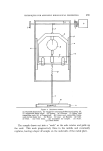
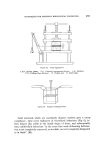
THIN-LAYER CHROMATOGRAPHIC TECHNIQUES IN RESIDUE ANALYSIS 469 the type of spreading apparatus to be used 20 x 20 cm and 10 x 20 cm are popular sizes for use with commercial applicators but any convenient size may be suitable for hand layering. The apparatus commercially available may be readily divided into two classes :--(a) Moving spreader, stationary plate (b) stationary spreader, moving plate. All methods depend upon placing on the carrier plate a slurry of the adsorbent in water, alcohol or some other volatile liquid and smoothing it out to form a layer of the required thickness by some suitable means. The "moving spreader" type of apparatus is of wide versatility and is easily used by unskilled hands to prepare satisfactory chromato- plates. The apparatus of this type designed by Stahl (14) and manufactured by Desaga G.m.b.H., Heidelberg [available from Camlab (Glass) Ltd., Cambridge• is universally used for the preparation of layers up to 2 mm thick and some 2000 cm • in area can be layered in one operation. A very detailed account of its use for the preparation of chromatoplates for pesticide residue analysis has been given by Kovacs (18). One slight disadvantage of this apparatus is that the thickness of the carrier plates to be sequentially layered must be very uniform if smooth operation is to be achieved. Variations in surface level as the spreader is drawn across the plates causes "jumping" to occur with consequent irregularity of the layer thickness. An apparatus based on a similar principle is available from Shandon Scientific Co. Ltd., London, which endearours to overcome this drawback. The template on which the carrier plates are laid consists of an inflated plastic bag which presses them against two rails, thus ensuring that the uppermost surfaces are level (19). Badings (20) has described an applicator which may be employed with plates of differing widths. Dilute slurries of adsorbent have been sprayed on to the carrier plates (8,21), layer thickness being decided by the number of "passes" made by the spray gun across the plate. These systems have the advantage of readily allowing the use of plates of various sizes and thicknesses in- discriminately. Smooth layers are obtained in this way but the point to point variation in thickness is liable to be greater than that given by a correctly prepared plate made by using a moving spreader. A dsorbents and binding agents Any adsorbent which is used for columnar separations can be adapted for use as a thin-layer (or "open-column"). Kirchner et al (5) investigated layers of silica gel, alumina, magnesium oxide, calcium hydroxide, dicalcium phosphate, bentonite, calcium and magnesium carbonates, Florisil, Filtrol,

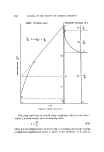
47O JOURNAL OF THE SOCIETY OF COSMETIC CHEMISTS talc and starch, usually with the aid of 5% starch or 20% plaster of Paris added as a binder. Of the many possible materials, silica gel and alumina have since proved to be of widest applicability, with appreciable usage of kieselguhr and cellulose also. Other adsorbents of more recent introduction include dextrangel, DEAE-Sephadex and acetylated cellulose (22), microcrystalline cellulose (25), ion exchange materials (24), polyamides (25) and basic zinc carbonate (20). The choice of stationary phases for thin-layer chromatography has been discussed by Schorn (26), and reviewed by Mangold (27) and Russell (28). Reactivation of the layer Following the spreading of the adsorbent slurry over the carrier plates, these are usually left in a horizontal position at ambient temperature until the surface takes on a matt appearance (10-20 min). The manner and degree of reactivation then required will depend upon the adsorbent and the purpose for which the chromatoplates are required. The one important fact is that a definite procedure must be chosen and adhered to if consistent results are to be obtained. It has been shown (29) that during the heating of silica gel at 110øC the activity at first falls, being at a minimum after about 15 min, and then rises to a maximum value at about $0 rain, remain- ing constant thereafter. Alumina requires higher temperatures in order to reach its maximum adsorptive power, B•iumler and Rippstein (30) heated for 4 hr at 200-220øC to obtain an activity equivalent to Brock- man II. At these temperatures, however, the binding power of gypsum tends to fail, dehydration to the hemihydrate beginning at about 120øC while formation of the anhydrous salt occurs over the range 150ø-200øC. For these reasons it is preferable to activate at 120øC when using alumina G although consistency of activation is not as good as that given by silica gel at this temperature. Special applications Preparative-layer chromatography The use of chromatographic techniques for the preparation of pure specimens of organic compounds has until comparatively recently been confined to columnar separations. The introduction of gas-liquid chromato- graphy on a preparative scale has been invaluable in many cases but its use is limited to compounds that are stable at the temperatures required to ensure their volatility. Thin-layer chromatoplates offer an excellent
Purchased for the exclusive use of nofirst nolast (unknown)
From: SCC Media Library & Resource Center (library.scconline.org)