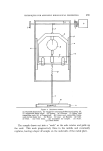
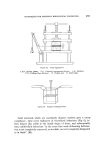
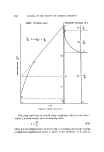
THIN-LAYER CHROMATOGRAPHIC TECHNIQUES IN RESIDUE ANALYSIS 479 mixture of kerosene-diethylamine-acetone as mobile solvent, found that the observed RF values were strongly temperature dependent they advised the use of a controlled 25øC as being most convenient and suitable for their purpose. Similar effects were described by Harthon (5.9) who advised the inclusion of a reference compound on each chromatoplate to act as a check against variations in R•., value due to temperature fluctuation. Use of the effect of temperature on R F value has been made by Malins and Mangold (t30) in their separation of palmitic and oleic acids on silica gel chromatoplates developed at 4-6øC, these compounds being unresolved at normal ambient temperatures. Stahl (138) has recently devised a chamber for isothermal operation at temperatures ranging from --50 ø to + 50øC. Development at low temperatures allows the use of low boiling solvents as mobile phase and also renders p6ssible the chromatographic separation of compounds that are appreciably volatile at room temperatures. His results indicate that the effect of variation of temperature on R F value is more dependent on the nature of the mobile solvent than upon the material under investigation. The procedures described above relate in general to a single linear development in one direction. Thin-layer chromatography is also suitable for two-dimensional separations, either by means of different mobile sol- vents in directions perpendicular to one another (131), or by a combination of normal solvent development with an electrophoretic separation (132). Multiple or step development techniques may also be applied, either by repeated application of the same solvent (1313) 9r by sequential use of different solvents (134,135). Gradient elution techniques, whereby the polarity of the mobile solvent is continually changed while the develop- ment proceeds, have also been used, suitable apparatus having been described by Rybicka (1313). Visualization of residues The application of a visualization reagent is usually required before the developed chromatogram may be properly observed. Most reagents suitable for paper chromatographic indication purposes may similarly be applied to thin-layer chromatograms. Additionally, corrosive reagents and elevated temperatures may be used where necessary. Visualization agents fall readily into two classes, general or universal reagents and specific or semi-specific indicators. The reagent is usually applied in the form of a spray for the best results the droplet size must be very small and also uniform, the reagent must be evenly applied and only the minimum

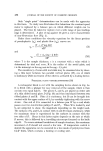
48O JOURNAL OF THE SOCIETY OF COSMETIC CHEMISTS quantity required to produce the desired effect should be used. In order to retain the compactness of the located spot, and hence conserve sensi- tivity, the compound sought should not be soluble in the solvent used for the spray and should not form soluble complexes with the reagent. It is usual to remove as much as possible of the mobile solvent before spraying the developed chromatoplate with the visualization reagent. However, it is preferable to spray loose-layer chromatograms while they are still wet with mobile phase which acts as a binding agent and prevents the dispersal of the layer materials by the mechanical force of the spray. Some visuali- zation agents may be incorporated in the layer-mix when spreading the plates, fluorescent compounds in particular may be used in this way. Sometimes, however, such "built-in" indicators interfere with the normal development of the chromatogram. Sulphuric acid may be used either alone (67) or in combination with other compounds, such as nitric acid (5), sodium dichromate (68), potassium permanganate (69) or vanillin (12). Following suctx acid sprays it is usual to heat the treated plate to 100-200øC, various colour changes frequently being observed {27) which aid in the identification of the compounds under examination. Beroza (70) sprayed with sulphuric acid containing either chromotropic acid or furfural during a study of pyrethroids synergists. Although it is not usual to use starch-bound chromatoplates when sulphuric acid is included in the spray reagent, Yamamura and Niwaguchi (71) made use of such a combination when investigating the separation of aldrin, dieldrin, endrin and endosulfan. Alkaline potassium permanganate was found to be preferable to sulphuric acid for the location of pesticides of the aldrin-dieldrin type (72). Other reagents of general applicabihty include antimony trichloride or pentachloride (11), iodine (60) and various fluorescent compounds, the latter being frequently used together with a bromine vapour treatment. In the pesticide field the above-mentioned antimony chlorides have been used to locate pyrethroids (61) and chlorophenoxyacid esters (63). Iodine vapour has been used as a general visualization indicator by Conkin (73) the appearance of the brown spots is reversible and the located compound is unaffected by the reagent, a useful attribute if the material is required for further study. Walker and Beroza (74) list the limits of detection for 62 pesticides and associated compounds located by exposure to iodine vapour for five minutes the values quoted range from 0.1 to 5 [zg with an average of about 1.5 [zg. Iodine vapour has also been used by Stammbach et al (75) for phenkapton and its commercial impurities, by
Purchased for the exclusive use of nofirst nolast (unknown)
From: SCC Media Library & Resource Center (library.scconline.org)