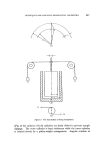
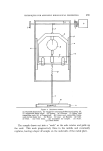
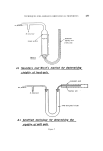
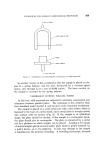
THIN-LAYER CHROMATOGRAPHIC TECHNIQUES IN RESIDUE ANALYSIS 477 Development techniques Thin-layer chromatoplates are normally developed by means of an ascending mobile solvent, the plate being held in an approximately vertical position. Descending- solvent chromatographic techniques are reserved for the separation of substances of low R F values, extended runs being obtained by allowing excess solvent to drip from the bottom of the chromatoplate (55). Horizontal development may also be used but since a wick of some sort is required to maintain the supply of the mobile solvent, this mode is somewhat more difficult to apply. There are many factors governing the successful development of a thin-layer chromatoplate. To ensure even running of the solvent front it is advisable to remove adsorbent from both side edges of the plate, leaving about 5 mm of clear carrier plate. If many samples are spotted closely across the plate it may also be necessary to rule channels between each pair of adjacent spots in order to ensure that no cross contamination can occur should a sample contain an unduly large amount of residue. The mobile phase chosen for the development will depend upon the nature of separation required, and also upon the activity of the adsorbent material. When dealing with a new or unknown compound, preliminary tests should be made using an active adsorbent together with a non-polar solvent such as hexane. Successive small proportions of a polar solvent may then be added as necessary to obtain the required R F value or degree of resolution if a mixture is being studied. Microscope slides bearing layers produced by a spray technique are very suitable for tests of this nature. Development by the ascending-solvent technique is obtained by placing the prepared chromatoplate bearing the sample spots into a tank contain- ing the chosen solvent in such a way that the origin line is parallel to the solvent surface and about 1 cm above it, i.e. a depth of immersion of about 0.5 to 1 cm is obtained. The tank should be sealed by some suit- able means, a well-fitting ground glass cover being frequently employed. Development is then usually allowed to proceed at ambient temperature until the solvent front has traversed a fixed distance or has taken a certain time. It is frequently recommended that the tank should be lined with filter paper dipping into the mobile solvent and should be left to stand for at least one hour before inserting the chromatoplate. Lining the tank in this way serves to ensure that the solvent and its vapour quickly reach equilibrium within the confines of the chamber, a state which assists in maintaining a level solvent front across the layer (14).

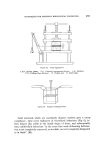
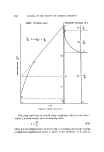
478 JOURNAL OF THE SOCIETY OF COSMETIC CHEMISTS An often-overlooked factor in thin-layer chromatography is that of the volume of the development chamber. Tanks supplied with the various types of commercial spreading apparatus are usually only slightly larger than the standard 20 x 20 cm carrier plate and about 5 to 10 cm wide. Paper chromatographic development chambers are usually rather larger than this and since they are already available in most pesticide residue analytical laboratories, their conversion to thin-layer use has frequently occurred. Whichever size of tank is chosen it must be closely adhered to for all accurate comparative work. Provided that known standard pesticides are spotted on to every plate and that confirmation of identity is all that is required, small variations in tank-volume will be relatively unimportant. The humidity of the atmosphere within the development chamber has been found to have a profound influence on the separation of some 2, 4- dinitrophenyl-hydrazones (20). In the absence of water vapour excellent resolution of six compounds was obtained, while all substances migrated with the solvent front when atmospheric moisture was not excluded. In order to obtain such satisfactory separations it was necessary to devise a tank through which dry nitrogen could be circulated prior to allowing the mobile solvent to contact the chromatoplate. This apparatus was similarly found useful for preventing oxidation effects during the chromato- graphy of methyl esters of some unsaturated fatty acids. Geiss and Schlitt (56) have also shown the variation of R F value of polyphenyl hydrocarbons which could be induced by large changes in the relative humidity of the development chamber atmosphere. Differing views have been expressed in the literature as to the extent of the effect of variations in the temperature at which development proceeds upon the R F values observed on thin-layer chromatoplates. Stahl (10), studying essential oils on silica gel chromatoplates developed in a hexane- acetic acid mixture, found no alteration in running time on changing the temperatures from 20 ø to either 4 ø or 28øC. The effects of insecure closure of the tank and variation in the depth of immersion of the layer in the mobile solvent were found to be more important. Brenner et al (57) similarly found that raising the temperature of development from 18 ø to 38øC had virtually no effect on the RF values of a nmuber of amino-acids developed with a phenol-water mixture, although the reproducibility of these values became poorer. Muller and Honerlagen (58), on the other hand, in their study of the thin-layer chromatography of cinchona bark alkaloids developed with a
Purchased for the exclusive use of nofirst nolast (unknown)
From: SCC Media Library & Resource Center (library.scconline.org)