THIN-LAYER CHROMATOGRAPHIC TECHNIQUES IN RESIDUE ANALYSIS 483 in scope, the need for a documentation system became recognized. The number and variety of suggested systems implies that this is not an easy matter. This is one field in which paper chromatography usually scores over thin-layer procedures the filter papers are readily marked, should the spots be transient, and can be stored almost indefinitely for future reference as required. The fragile nature of the layer of material, however, and the relative expense of carrier plates makes prolonged storage of thin- layer chromatoplates impractical and uneconomic. Published methods for preserving or recording thin-layer chromatograms can be divided into four main classes :--(i) Preservation of the layer (ii) simple tracing processes (iii) photographs or photocopies (iv) direct documentation on to sensitized papers. Meinard and Hall (4) preserved their chromatograms by applying a length of transparent adhesive tape to the layer in such a way that the two ends were free for notebook mounting while the layer surface bearing the located spots adhered to the tape. Complete chromatoplates were also protected by covering them with a film of transparent material. For the fixation and preservation of loose-layer chromatograms, Mottier and Potterat (89) employed impregnation with paraffin wax or cetyl alcohol at 104øC spraying with collodion (90) or polyvinylacetate was found to be successful only in fixing the surface of the layers. For bound-layers on plastic plates, Squibb (17) used a spray of Tuffilrn No. 545 which gave the surface an acetate-film finish and enabled the plates to be sliced into strips for radioactivity counting purposes. Lichtenberger (91) found that a spray of a polyvinylpropionate solution could be used to fix the layer material together in such a way that the entire chromatogram could be peeled off the plate or floated off after a short immersion in water. Similar sprays are available commercially (Neatan, E. Merck and Co.), but in our hands only limited success has been achieved, fragmentation readily occurring. The use of tracing paper or cloth (8,92) to document chromatograms has the benefit of simplicity, but manual processes of this nature can only yield an approximate representation and the rather soft nature of the layer surface makes the procedure somewhat indecisive. Similarly a copy- drawing (11), of the plate, while adequate for the reproduction of the observed colours of spots and their relative position, is unlikely to yield an accurate document in terms of R F value, size of spots, etc. Photography, in black and white or in colour, has been widely used for the production of copies or slides for projection (8,11). Brown and

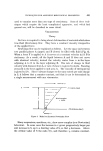
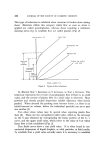
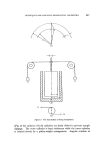
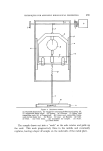
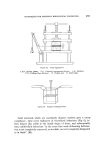
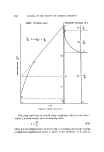
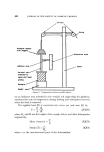
484 JOURNAL OF THE SOCIETY OF COSMETIC CHEMISTS Benjamin (68) recommend illuminating the chromatograms by transmitted as well as by reflected light in order to obtain the clearest representation by photographic means. Such methods, however, require expensive apparatus and experienced workers if true records are required the time involved in processing the developed film and preparing prints is comparatively long and the process is wasteful if only one or two copies are required at a time. Since some visualization agents rapidly fade, the camera must always be available when required and therefore cannot be put to other use. Commercial automatic copying machines have also been brought into use for documentation purposes. Getz and Lawson (93) found the "Photo- rapid" diffuse transfer process suitable and Hilton and Hall (94) made use of a "Xerox 914" office copier to obtain positive replicas of thin-layer chromatograms in about 30 sec. Once again these machines are costly and can hardly be justified for the purpose of copying chromatograms alone, although where they are available they may be put to good use. The direct use of photosensitive papers provides a rapid and inexpensive way of documentation. Gordon (95) described a method for recording uv-absorbing spots on paper chromatograms by ferric ferricyanide blue- print paper, development with water being required Zeitman (96) also used a blueprint process. Photographic contact paper was similarly used by Abelson (97) for thin-layer plates. Activated zinc oxide papers were used by Sprenger (98) together with a triboluminescent compound, but darkroom facilities are essential. The use of diazo dry process papers, as suggested by Eisenberg (99), offered a simple method. A combination of photoflood illumination with pre-ringing of the developed spots (85) has reduced the elapsed time required from over 10 min to less than 1 min. In view of its simplicity and wide applicability the procedure is described here in some detail. Diazo or ammonia process papers are, in general, insensitive to normal levels of illumination and can therefore be freely handled under ordinary laboratory lighting conditions. Papers of various degrees of sensitivity are available, the fastest papers giving the best contrast. When intense light falls on the paper, the diazo-compound is destroyed and can there- fore no longer couple with the built-in coupling agent on exposure to ammonia vapour. Where the light has not fallen, coupling occurs and coloration quickly appears blue, black and red papers are widely available. "Ammonax" 8.M13 Positive Diazo Paper (Hall-Harding Ltd., London) is a very sensitive blue paper and "Densblack" Ammonia Process Paper, type 45, 9x (E. Mason and Sons, Ltd., Colchester) is a black paper giving
Purchased for the exclusive use of nofirst nolast (unknown)
From: SCC Media Library & Resource Center (library.scconline.org)