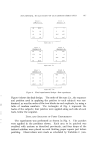
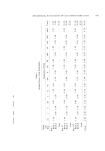
768 JOURNAL OF THE SOCIETY OF COSMETIC CHEMISTS better, more subtle, and more reliable means of predicting consumer ac- ceptance of new products and new fragrances. The tests will be the more valuable the more different the new product is from existing, fa- miliar ones. Finally, and maybe most importantly: if both the laboratories and marketing groups start using these tests and adopt the relationship to the consumer which the tests imply, a better understanding and closer cooperation between the two groups will be the inevitable outcome. No one can deny that this would be a good thing. (Received March 20, 1967) (12) (13) (14) (15) REFERENCES (1) Osgood, C. E., Suci, G. J., and Tannenbaum, P. H., The Measurement of Meaning, Uni- versity of Illinois Press, Urbana, Ii1., 1957. (2) Jellinek, P., Die psychologischen Grundlagen der Parfumerie, 2nd ed., Huthig Verlag, Heidelberg, 1965. (3) Paukner, E., Parfuem. Kosmetik, 39,759 (1958). (4) Paukner, E., J. Soc. Cosmetic Chemists, 11, 517 (1960) cf. Am. Perfumer, 79 (2), 37 (1964). (5) Poffenberger, A. T., Psychology of Advertising, New York, 1932. (6) Paukner, E., J. Soc. Cosmetic Chemists, 16, 515 (1965). (7) Steffire, V., Am. Behavioral Scientist, 8 (9), 12 (1965). (8) Randebrock, R., J. Soc. Cosmetic Chemists, 16,653 (1965). (9) Wenzel, B. M., and Sleek, M. H., Ann. Rev. Physiol., 28,381 (1966). (10) Torgerson, W. S., Theory and methods of scaling, John Wiley & Sons, Inc., New York, 1958. (11) Woskow, M. H., Multidimensional Scaling of Odors, Ph.D. thesis, Univ. of Calif., Los Angeles, 1964 University Microfilms, Ann Arbor, Mich. /•!64-6198. Schutz, H. G., Ann. N.Y. •4cad. Sci., 116 (2), 517 (1964). Yoshida, M., Japan. Psychol. J., 6 (3), 115 (1964). Arnoore, J. E., and Venstrom, D., J. Food Sci., 31, 118 (1966). Barnctt, N. L., Market structure analysis: An exploratory application to the market for market research techniques and services, Ph.D. thesis, Harvard University, Chap- ter 2 (1966).

J. Soc. Cosmetic Chemists, 18, 769-775 (Dec. 9, 1967) Hand Degerming Evaluation Utilizing A Split-Use Method JAMES BROWN, JR., M.S., RONALD .J. ERIKSSON, B.S., FRANK YACKOVICH, Ph.D., and DAVID TABER, Ph.D.* Presented November $0, 1066, New York City Synopsis--Utilizing a modified split-use method, two baeteriostatie soaps were evaluated for their utility in degerming the hands. One soap contained 0.75% (by weight) of hexaehloro- phene and 0.75• of 3,4,4'-triehloroearbanilide the other consisted of equal parts by weight of 3,5-di- and 3,4', 5-tribromosalieylanilides, 4,4'-diehloro-3- (trifiuoromethyl)earbanilide, and 3,4,4'-triehloroearbanilide for a total concentration of 2%. A significant reduction in bac- terial counts was achieved by both soaps as compared to a nonmedicated soap. It is empha- sized that rigorous handling of data requires that the confidence interval be identified xvhen per cent reduction is used as a basis for describing degerming efficiency. INTRODUCTION To investigators in the field of soap germicides, many techniques are available for evaluating skin degerming after use of an antibacterial soap. Among these are clinical observations, tape strippings, swab methods, contact plate methods, and plate counts obtained from hand- washings. Four of these methods involve counting bacterial colonies, while clinical trials involve observations of the progress of bacterial dis- eases of the skin. The moderation or the prevention of skin diseases is one of the at- tributes of an effective bacteriostatic soap. However, for the initial evaluation of a new bacteriostatic system in soap, the length of time needed for a meaningful clinical study makes this tool of questionable value. * Armour Grocery Products Company, 3115 S. Benson St., Chicago, Ill. 60609. 769
Purchased for the exclusive use of nofirst nolast (unknown)
From: SCC Media Library & Resource Center (library.scconline.org)