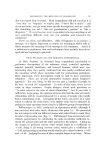
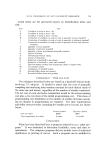
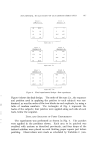
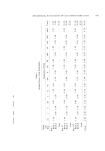
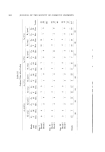
772 JOURNAL OF THE SOCIETY OF COSMETIC CHEMISTS EXPERIMENTAL The procedure provides for two types of washing sessions: applica- tion and sampling. Application washing sessions are those in which both the medicated and nonmedicated soaps are applied to the hands. These sessions make certain that panelists are exposed to the test soaps several times each day. Sampling washing sessions are identical to ap- plication sessions except that nonmedicated soap is applied to both hands and the basin water from each hand is plated and cultured for bacteria. The daily application is as follows: 1500 ml of tap water are added to each of two basins. Each subject covers his right hand with a sterile neoprene glove and wets both the gloved and ungloved hands. Twenty milliliters of a 10% solution of nonmedicated soap are poured into the cupped hands which the subject then washes up to the wrists. After 20 seconds of washing, additional water is taken up and the washing con- tinued for another 75 seconds. Hands are then rinsed in the wash basin for 20 seconds and the water is allowed to drain into the basin for 20 seconds. The procedure is repeated, but this time the left hand is covered with a sterile glove and a 10% solution of bacteriostatic soap is used. During the sampling periods, both hands are washed individually with nonmedicated soap solution only. The panelist is instructed to follow the same washing procedure at home, which includes the use of neoprene gloves with medicated and nonmedicated soap bars. Soap solutions are used in the laboratory be- cause quantitative dispensing and lathering are made easier. For colony counting, aliquots of wash water are added to Tryptic Soy Agar* containing 0.07% lecithin and 0.5% Tween-80©,t both of which are used as bacteriostat neutralizers. Plates are run in duplicate and incubated for 48 hours at 37 øC before counting. Basin sampling sessions for bacterial counts are conducted on Mon- day, Wednesday, and Friday noons. The schedule of washing and sampling is shown in Table I. For the experiments reported here, a nonmedicated soap•: was used as the control. Two medicated soaps were evaluated, the first (Soap A) * Difeo Laboratories incorporated, Detroit, Mich. t Polyoxyethylene (20) sorbitan mono-oleate. Registered trade mark of Atlas Chenfical Industries, Wilmington, Del. 19899. { Ivory ©, Procter & Gamble, Cincinnati, Ohio.

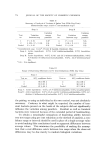
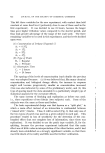
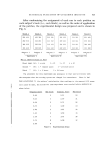
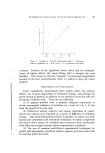
ItAND DEGERMING EVALUATION Table [ Split-Use Washing and Bacterial Sampling Schedule Day Ti•ne Left hand Right hand 773 Monday am Ivory Ivory Noon Ivory (count) Ivory (count) pm Ivory Test soap Tuesday am Ivory Test soap Noon ivory Test soap pm Ivory Test soap Wednesday am Ivory Test soap Noon s Ivory (count) Ivory (count) test soap pm Ivory Test soap Thursday am Ivory Test soap Noon Ivory Test soap pm Ivory Test soap Friday am ivory Test soap Noon Ivory (count) Ivory (count) After count wash on Wednesday, right hand washed with test soap. containing 0.75% hexachlorophene and 0.75% 3,4,4'-trichlorocarbani- lide, a synergistic bacteriostatic system. The second bacteriostatic soap (Soap B) contains equal parts by weight of 3,5-di and 3,4',5-tribro- mosalicylanilides, 4,4'-dichloro-3- (trifiuoromethyl) carbanilide, and 3,4, 4'-trichlorocarbanilide for a total of 2%. RESULTS AND DISCUSSION A total of twenty-four men and women of various occupations were divided into four panels for the experiment. Two methods of analyzing the data were used to determine degerming efficiency of the two medi- cated soap bars: per cent reduction and an analysis of variance. Be- fore analyzing the data by an analysis of variance, logarithms of the bacterial counts were taken. In Table II are presented the results of the analysis. A statistically significant difference was found between the degerming properties of the two bacteriostatic soaps as compared to the nonmedicated soap. For this test to show a statistical difference between medicated and non- medicated soaps, the probability that a difference does not exist should be less than or equal to 0.05. The analysis also showed that there was no significant variation among panelists for all four tests. This indicates that in these panels
Purchased for the exclusive use of nofirst nolast (unknown)
From: SCC Media Library & Resource Center (library.scconline.org)