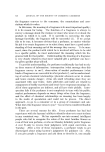
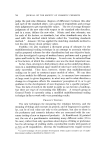
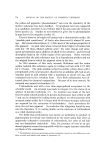
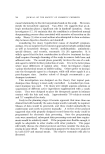
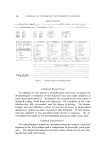
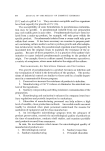
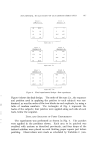
812 JOURNAL OF THE SOCIETY OF COSMETIC CHEMISTS d. 8 J.l• in. square Plastic Patch '• with gauze • ••qulr I Saran square • I af / 1/1//////t/tit/lift7///////////////////// t• -•in. square blotting paper Skin containing irritant Figure 2. "Regular" patch pieces of blotting paper to which a constant quantity of irritant solu- tion (4 drops) was applied. The skin was swabbed thoroughly with acetone just prior to patching. Several different areas of the body were used. These patches were found unsatisfactory for reasons which included the following: 1. In many cases the solution evaporated or soaked into the gauze backing after a few hours. 2. There was much apparent variation in pressure exerted on the blotting paper due to the shape of the patch and a tendency for the adhesive to creep. Following this, •/5 in. sq. plastic Band-Aids ©'* were tested. These were much more satisfactory for adhesion and pressure variation, but loss of solution by evaporation or absorption into the patch was still a problem. Finally, the blotting paper was occluded by the application of a a/g in. sq. of Saran©t film under the Band-Aid, as shown in Fig. 2. This arrangement was adopted as one of the final two types of patch used, and appeared to solve the problem of loss of solution blotters re- mained moist even after 24 hours. Although this degree of occlusion is not usually employed in patch testing, the results of this and subsequent work have indicated that this arrangement, under the conditions of these experiments, may be generally superior to the customary type. There was strong evidence that the reproducibility of reactions to the new "regular" patch was superior to that of those previously used. Hypothesizing that this may have resulted from maintenance of more constant and intimate skin contact, it was decided to try a further modification designed to have a slightly increased pressure against the skin, and, it was hoped, a much more uniform degree of contact. This * Band-Aids©--Johnson and Johnson & Co., New Brunswick, N.J. 08903. t S aran©--The Dow Chemical Co., Midland, Mich. 84641.

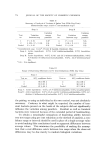
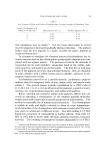
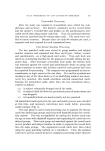
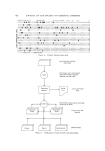
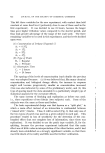
STATISTICAL EVALUATION OF CUTANEOUS IRRITANTS 813 "pressure" patch consisted of the regular patch plus two gauze squares, then a taped-on plastic poker chip (Fig. 3). Preliminary experiments indicated that substantially different results might be expected from this arrangement. Since the pressure difference was believed slight, we attributed this to the presumed greater uniformity of contact. The authors are not necessarily recommending this arrangement for general use, of course, and are aware that the use of any substantial degree of pressure is frequently believed undesirable. However, it is felt that this experience, especially when viewed in the light of the two formal experiments to be described belo•v, demonstrates the importance of maintaining a constant contact. Selection of Variables Preliminary work indicated that the degree of irritation was prob- ably also influenced by the period of time following the removal of the patch. It was therefore planned to use this factor as an additional variable. Further, contact time and irritant concentration were relevant factors, since it was well known that these variables would affect the system however, nothing was known to the authors of their interaction with each other and with the other two variables. To summarize, preliminary experimental evidence suggested use of the following four variables in the first formal experiment: A. Concentration of irritant B. Type of patch C. Patch contact time D. Observation time (after removal) In this first factorial experiment, the following potential variables were to be carefully controlled at as constant a level as possible from run to run: 1. Single judge (scorer)* 2. Type of irritant 3. Pre-treatment of site (5-second swabbing with facial tissue wet with acetone) 4. Four drops of solution on each blotter square 5. All patches applied in a single session * All scoring in the work to be described was done by an experienced pharmacologist, al- though a small preliminary study indicated no significant difference, and very high correla- tion (over 95%) between his scores and those of a technician who had been instructed by the pharmacologist and had had less than one day's practice.
Purchased for the exclusive use of nofirst nolast (unknown)
From: SCC Media Library & Resource Center (library.scconline.org)