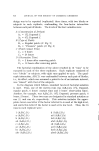
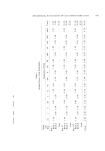
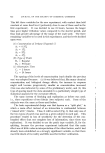
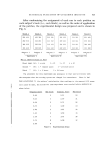
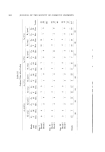
814 JOURNAL OF THE SOCIETY OF COSMETIC CHEMISTS 6. Solutions of irritant carefully prepared in an analytical laboratory 7. All tests done at same time of year (within a 2-month period) 8. All tests done on subjects' backs. 9. All subjects male 10. All subjects 18 to 45 years old 11. All subjects healthy Caucasians 12. Extremely hirsute subjects excluded 13. All patch characteristics (dimensions, etc) held to close tolerances for each type of patch 14. All subjects laboratory workers 15. All subjects on overnight tests asked to keep patches dry 16. All patches applied by one person 17. All subjects limited to eight patches for comfort DESIGN OF FIRST EXPERIMENT General The simplest possible design which would incorporate the four selected variables and allow elimination of intersubject response dif- ferences was planned. This goal, together with the eight patches per subject restriction, determined the general outline of the design used. A careful search of the literature did not disclose the previous use of design techniques similar to those contemplated. The authors there- fore felt it doubly important to make the initial trials with as simple a factoffal design as possible, without sacrificing the major advantages of multi-factor experimental designs as compared to classical (one-factor- at-a-time) procedures. Objects of the Experiment The principal purposes of this experiment, which determined the design, were: 1. To minimize experimental error by isolating subject-to-subject differences. 2. To determine the suitability of analysis of variance techniques for handling the data resulting from the experiment. 3. To determine "significance" (i.e., probability of reality) of the variables tested (and their interactions). Only a small number of subjects were to be used in this initial formal design, because it was important to determine whether any of the selected factors could be tested in a small experiment, and it was desir-

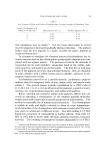
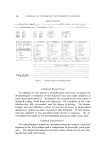
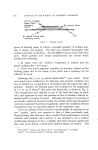
STATISTICAL EVALUATION OF CUTANEOUS IRRITANTS 815 d 8 d, IL• in square crossed Lzm adheg,ve tape str,ps with guaze'• ker chip I In Iquore Saran f \ • 2 ,n x • m gauze pads .,,,,,,•,•r,,,,,,.,,,/,,,x,•,•,,•,, •in. lquare bloHing poper Figure $. "Pressure" patch able to make future comparisons with other small groups as a measure of the variability among separate experiments. The preliminary work had already suggested that such variability would be small once the subject-to-subject effect was removed. Isolation of subject differences called for the use of "blocking" and "confounding," which are widely used in statistical designs in bioassay and in chemical applications research. Essentially, blocking is a technique whereby, in the present case, the influence of subject-to- subject differences on the results is isolated, so that, if successful, it has little or no effect upon the differences of interest represented by such factors as irritant concentration, contact time, etc. Confounding is a technique of "mixing" effects of minor interest with blocks or subjects in order to increase the precision of measurement of more important variables. If it is assumed before an experiment that intersubject differences are substantially greater than intrasubject variation, smaller values of experimental error can be expected when these techniques are used.* The remaining intrasubject error, once this major source is eliminated is that likely to result from relatively small differences in location on the skin, patch application techniques, estimation of scores, etc. It is not intended that this presentation provide a complete "cook- book" description of the experimental design and statistical analyses used these may be obtained from several sources listed in the bibliog- raphy (7-15). Therefore, the experimental design, final analysis of variance tables, and conclusions are given, but the statistical calcula- tions are omitted This experiment was to include the above four variables, each to be tested at two levels in a four variable factorial design. The whole * The sensitivity of the experimental design and analysis in testing the various factors for significance depends: (a) upon the magnitude of the apparent effect due to changing a factor from one level to the next, and (b) upon the magnitude of the experimental error. The former is controllable only by the spacing set between two levels of the factor and upon its inherent ability to cause variation, but the latter depends upon the design characteristics.
Purchased for the exclusive use of nofirst nolast (unknown)
From: SCC Media Library & Resource Center (library.scconline.org)