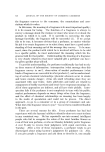
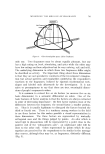
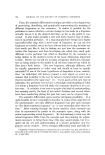
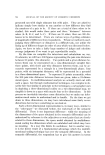
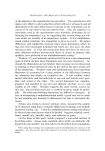
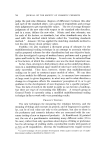
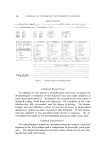
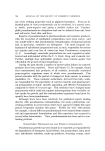
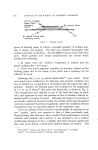
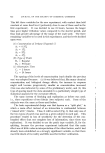
76O JOURNAL OF THE SOCIETY OF COSMETIC CHEMISTS exciting st rong passive friendly loud empty beautiful stern deOressing dull De•lree of Appropriateness 1 2 3 4 5 6 soothing weak active aggressive soft full ugly mild exalting biting Figure 2. Partial profile of amber (after Paukner) should make the composition increasingly sexy but does the public agree? Paukner tested it and found it to be so. In these tests, he used a mathematical extension of the profile generation technique: He applied a factor analysis to his scores and thus obtained a semantic differential (1). We are here getting into territory that may seem obscure to the nonpsychologist and the nonstatistician the underlying ideas, however, are fairly simple. If we take a number of odors, each of which is described in terms of the appropriateness of a series of adjectives, we can, by carefully looking at the data, discover certain patterns. Odors which are described as fresh, warm, or cheerful, are likely also to have high ratings on the adjectives pleasing and harmonious and to have low ratings on poor or artificial. This is because the words fresh, warm, and cheerful have overtones of goodness and pleasantness which are also inherent in pleasing and harmonious but not in poor and arti•cial. This underlying notion of pleasantness, which will tend to make the ratings on adjectives such as fresh, warm, cheerful, and harmonious move together as we pass from one fragrance to another, is, in a mathematical sense, a factor which can account for a certain proportion of the dif- ference between different odors. In a psychological sense, it is one of the basic dimensions in terms of which odors are perceived. Certainly, pleasantness is usually a very important factor, but it is by no means the

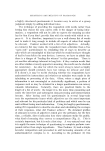
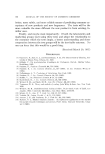
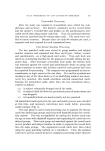
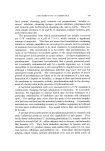
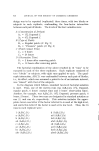
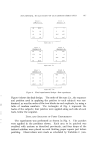
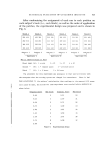
MEASURING THE MEANIN( OF FRAGRANCE I ACTIVITY* J 761 Figure 3. Odor description space (after Paukner) only one. Two fragrances may be about equally pleasant, but one has a high rating on fresh, stimulating, and spicy while the other may have low ratings on these adjectives but be very calming, soft, and mild. The underlying dimension in which these two fragrances differ might be described as activity. The important thing about these dimensions is that they are not speculative contructs of the investigator's imagina- tion but actual patterns and regularities underlying the respondent's reactions to the fragrances, isolated by rigorous mathematical tech- niques and labeled only afterwards by the investigator. It is not naive or presumptuous to say that these are true, meaningful dimen- sions of people's responses to odors. It is common to extract five or six factors (or uncover five or six basic dimensions) in a semantic differential on odors. One of the basic features of factor analysis is that the factors are always extracted in order of decreasing importance: the first factor explains most of the differences between the responses, the second factor a smaller portion, etc. Thus it is usually legitimate to disregard the factors beyond the third or fourth one. There is a tendency among workers in the field to use three factors for this makes possible a visual representation in three dimensions. The three factors are represented by mutually orthogonal axes and the things judged by points. An odor which is rated high in pleasantness will be represented by a point close to the positive end of the "pleasantness axis" an unpleasant odor will lie close to the other end. Odors represented by points which lie close together are perceived by the respondents to be similar in the message they convey, although they may be, as fragrances, distinctly different (Fig. 3).
Purchased for the exclusive use of nofirst nolast (unknown)
From: SCC Media Library & Resource Center (library.scconline.org)